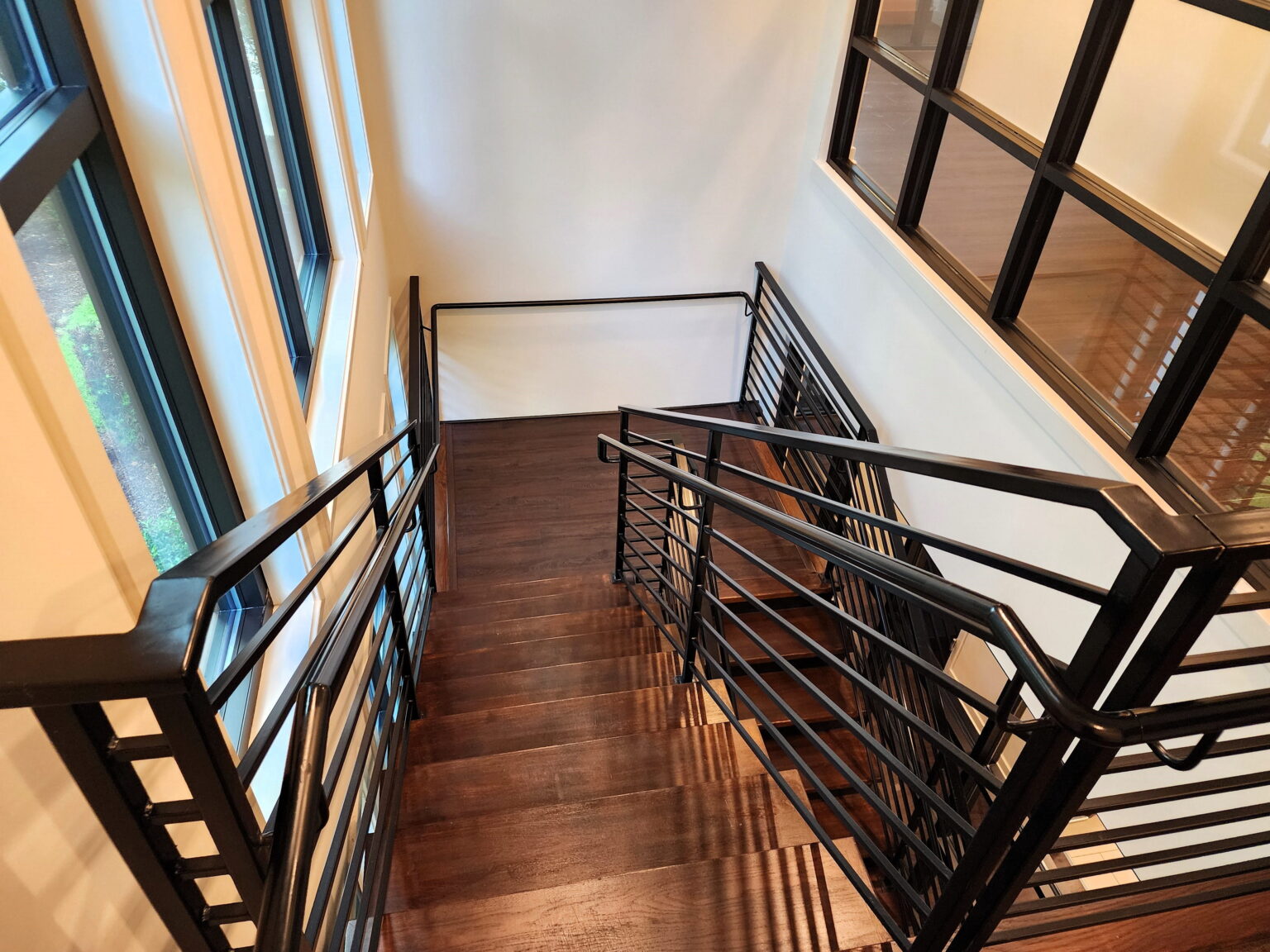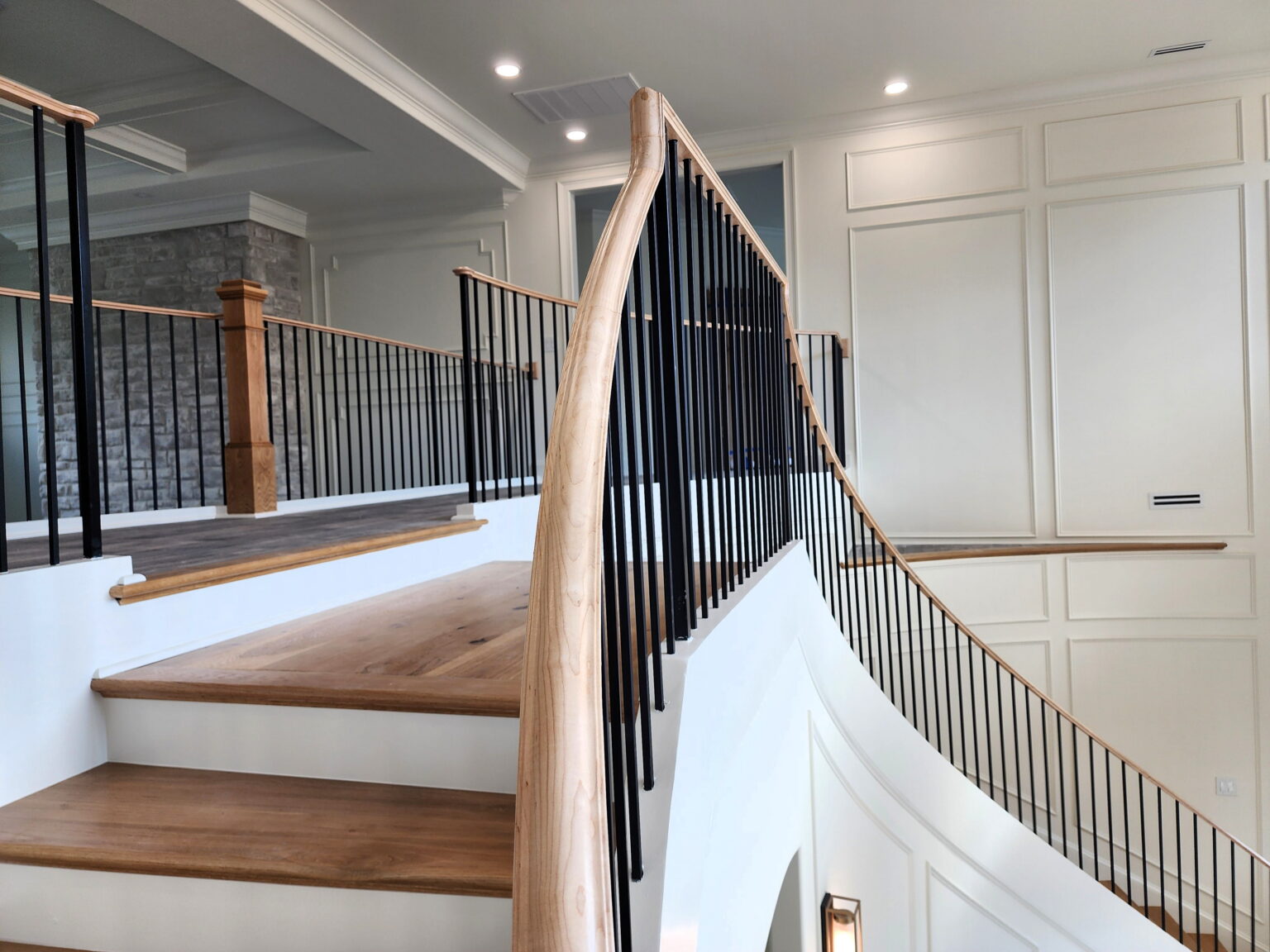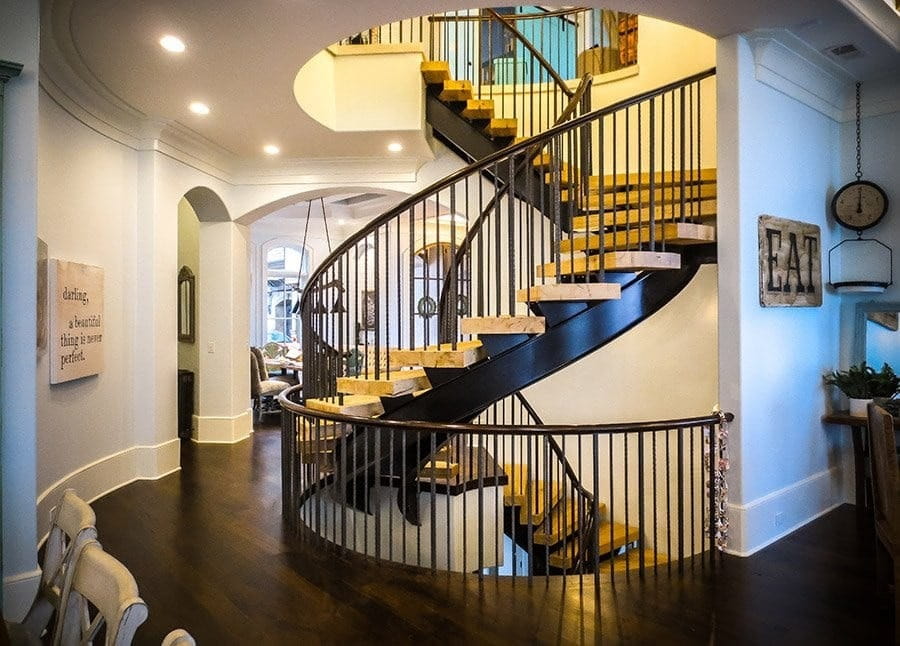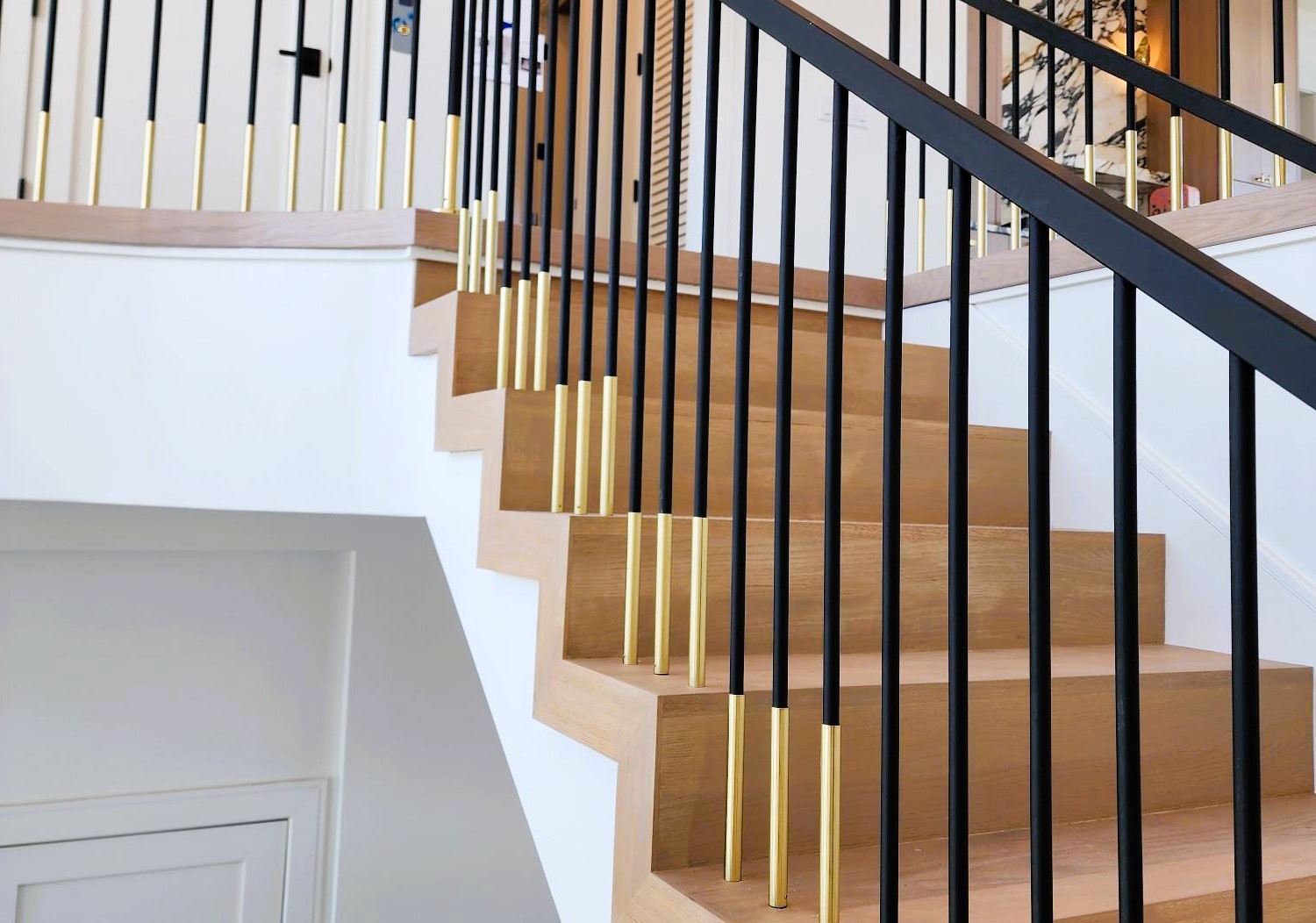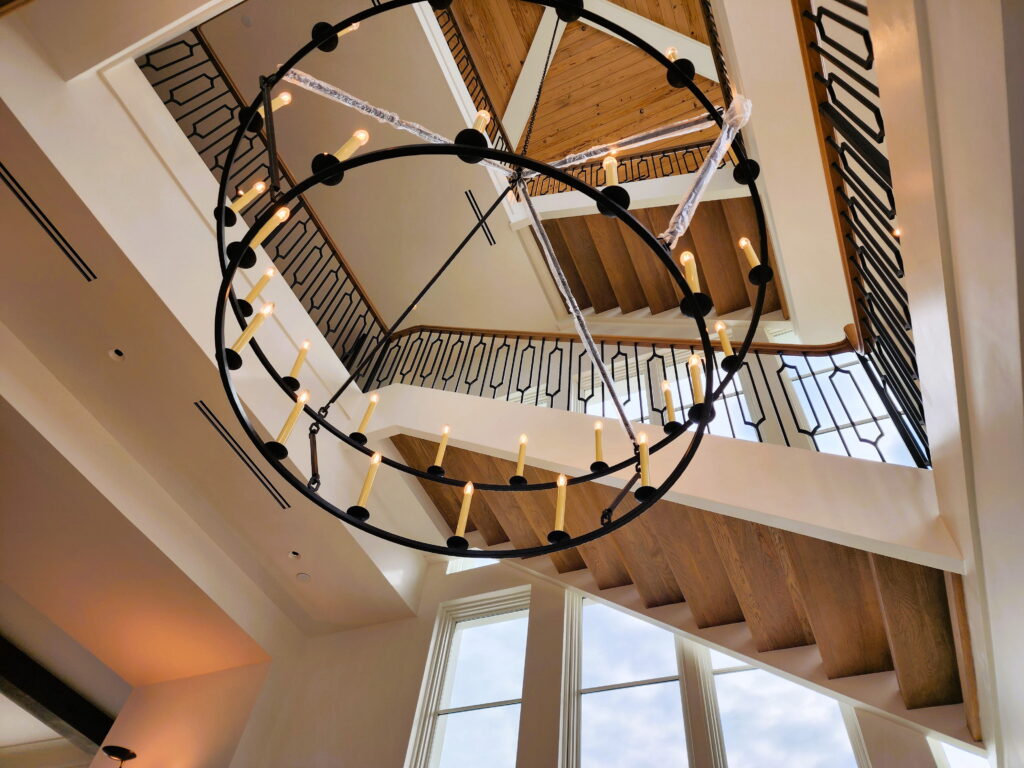
For custom builders, architects, and designers, a floating staircase is a coordinated architectural system rather than a late-stage product selection. Southern Staircase helps the project team align the design vision, support concept, materials, railings, engineering coordination, fabrication, and installation so the staircase fits both the home and the construction plan.
In high-end residential design, floating stairs can open sightlines, bring light through the interior, and create a defining architectural feature. Southern Staircase works with builders and design professionals to translate that visual goal into a coordinated stair and railing solution for the project.
How Southern Staircase Supports Floating Stair Projects
- Brings the staircase into the design conversation while openings, structure, and finishes can still be coordinated.
- Helps the project team evaluate mono-stringer, dual-stringer, concealed, and cantilevered design directions.
- Connects stair and railing decisions with the project’s engineering, code, and inspection requirements.
- Coordinates design, fabrication, installation, project management, and engineering inputs with the builder and design team.
- Keeps the design intent, material selections, field information, and installation planning connected throughout the project.
What Is a Floating Staircase?
A floating staircase is a stair system designed to minimize visible structural support. The stairs may appear to hover, but the load is transferred through engineered steel, reinforced framing, or concealed support systems. Common floating stair types include monostringer stairs, dual-stringer open-riser stairs, concealed steel systems, and cantilevered stairs.
Southern Staircase helps the project team select a floating stair direction that supports the architecture while accounting for the concealed structure, railing integration, material choices, and installation conditions behind the finished appearance.
How Early Collaboration Protects the Design
Southern Staircase can support the project while the opening, floor-to-floor height, landing conditions, support concept, railing direction, materials, and surrounding finishes can still be coordinated. Bringing these inputs together early helps the staircase become part of the architecture rather than a feature added after key conditions are fixed.
The builder, architect or designer, engineer, and Southern Staircase each retain the responsibilities assigned to the project. A coordinated process gives the team clear review points for design decisions, field information, approvals, and installation planning.
Defining the Design Intent
Southern Staircase works with the project team to clarify what the floating effect should contribute to the home. The staircase may serve as a sculptural focal point, preserve an open sightline, connect material palettes, or create a lighter transition between levels.
That design direction helps guide the choice of support system, treads, railings, metalwork, and finishes so the completed staircase feels integrated with the architecture.
Floating Staircase Systems for High-End Residential Projects
Southern Staircase helps builders, architects, and designers evaluate floating stair systems against the architectural intent, structural conditions, railing direction, material palette, and project requirements.
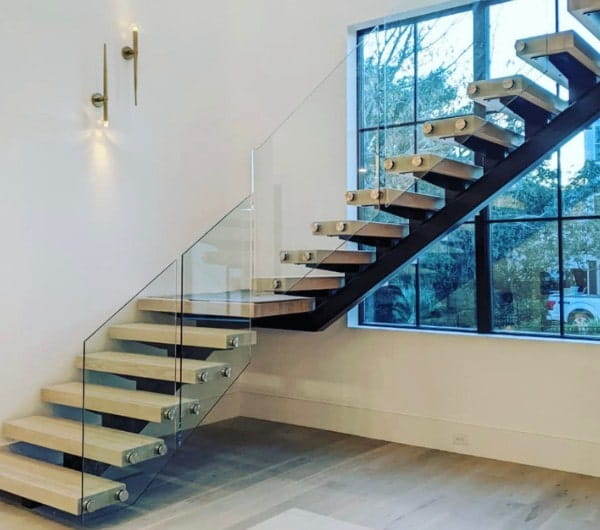
Mono Stringer Floating Stairs
Mono stringer stairs use one central steel beam beneath the treads. This gives the stair a clean, open look while still providing a clear structural path. Mono stringer systems are often more flexible than fully cantilevered designs because the support is concentrated beneath the stair rather than hidden entirely within a wall.
For luxury residential projects, Southern Staircase can coordinate a mono-stringer stair with the selected treads, railing system, surrounding finishes, and architectural sightlines.
Cantilevered Floating Stairs
Cantilevered stairs create one of the most minimal floating effects. Each tread appears to project from the wall with no visible support below. This design requires a reinforced structural wall, usually with embedded steel, to support each tread.
Southern Staircase works with the project team to align a cantilevered concept with the wall conditions, tread design, railing direction, and approved engineering before fabrication and installation.
Learn about cantilevered vs. floating stairs.
Concealed Steel Floating Stairs
Some floating stairs rely on hidden steel inside walls, framing, or stair assemblies. These systems can create a refined architectural appearance while still providing the strength needed for daily use.
Southern Staircase helps coordinate concealed-support concepts with the builder and design team so the stair, railing, treads, and surrounding construction are reviewed as one system.
Dual Stringer Open Riser Stairs
Dual stringer open riser stairs can offer a lighter look than traditional closed stairs while maintaining visible side support. This can be a practical option when the project calls for openness but does not require the extreme minimalism of a cantilevered stair.
Project Requirements and Code Coordination
Southern Staircase brings stair-design and code knowledge to the design and build process. Because structural, code, and inspection requirements vary by location and project, the builder, design team, engineer, and appropriate authorities should confirm the final requirements for the selected system.
Southern Staircase can coordinate the stair design, railings, materials, fabrication, and installation with those approved project requirements. This keeps project-specific decisions connected without presenting one set of measurements or details as universal.
Railing Options Integrated with the Floating Stair Design
Southern Staircase offers glass, cable, metal, stainless steel, wood, and custom iron railing options that can be coordinated with the floating stair system and the home’s design language.
Glass Railings
Glass railings can preserve open sightlines and allow light to move through the stairwell. Southern Staircase coordinates the glass system with the stair structure, treads, floors, and approved project details.
Cable Railings
Cable railings create a clean, linear appearance with less visual weight. Southern Staircase helps integrate the cable system with the stair design and the project’s approved structural and code requirements.
Metal and Stainless Steel Railings
Metal and stainless steel railings can give a floating staircase a refined architectural profile. Southern Staircase coordinates the railing design, finish, and attachment approach with the complete stair system.
Materials and Finishes Coordinated as One System
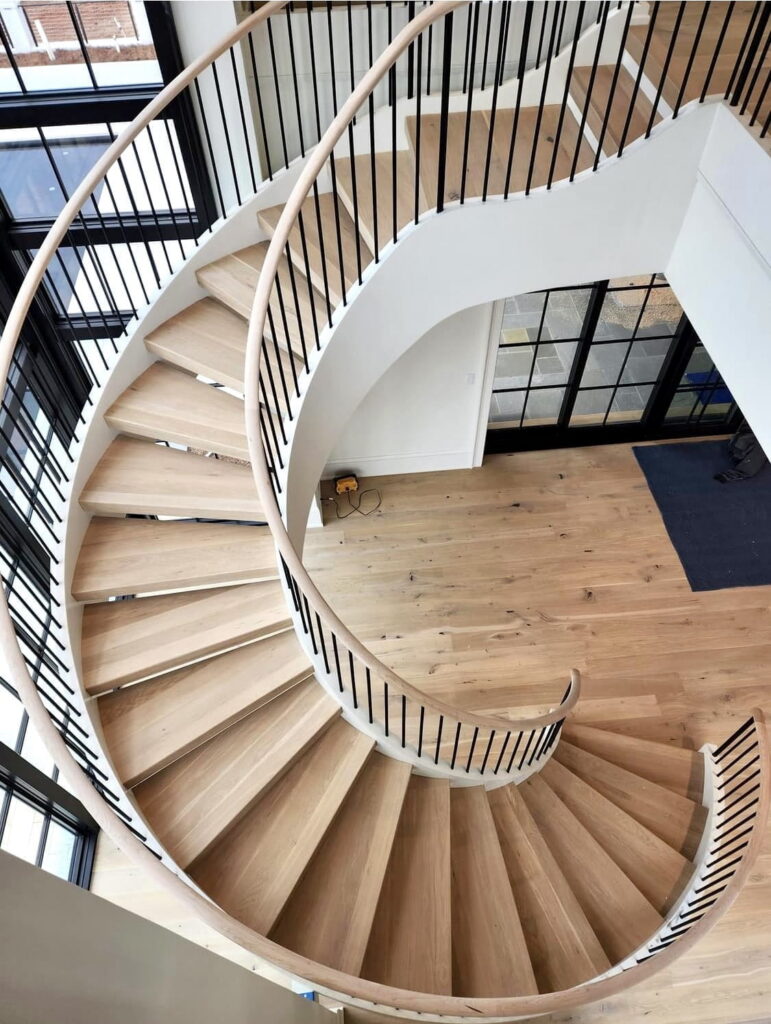
Because floating stairs reveal more of each component, the tread, stringer, railing, and finish selections should read as one architectural composition. Southern Staircase helps project teams coordinate those choices with the surrounding flooring, millwork, metalwork, and interior palette.
Southern Staircase works with wood and steel stair carriages and railing systems in wood, glass, stainless steel, cable, and custom iron. The available combination can be selected to support the home’s architecture and the approved project requirements.
Coordinated Design, Fabrication, and Installation
Southern Staircase supports high-end residential project teams through design, engineering coordination, fabrication, installation, and project management. This gives the builder, architect, and designer a stair partner who can carry the approved design direction through the major project stages.
Custom projects may require more design coordination for unique geometry, finishes, and architectural details. Production work benefits from repeatable processes and schedule control. In both cases, Southern Staircase works with the project team to keep field information, selections, approvals, fabrication, and installation connected.
How Southern Staircase Helps Reduce Project Conflicts
When Southern Staircase joins the conversation before framing and finish decisions are locked, the project team can address the stair opening, support concept, railings, flooring transitions, materials, finishes, and installation access together.
This collaborative approach helps translate the architectural intent into a buildable stair system while keeping the builder, architect, engineer, and other project professionals connected to their assigned responsibilities.
Why High-End Residential Teams Partner with Southern Staircase
Southern Staircase works with builders, architects, and designers on design, engineering coordination, fabrication, installation, and project management for custom stair systems in luxury homes. For floating stair projects, that experience matters because the design must be visually refined, structurally sound, code-aware, and buildable in real site conditions.
Builders benefit from a stair partner who can support:
- Design collaboration
- Engineering coordination
- Code-focused planning
- Shop drawings
- Material selection
- Fabrication
- Installation
- Railing coordination
- Project management
For custom builders, architects, and designers, Southern Staircase provides a coordinated path from concept through installation for a floating staircase that supports the home’s architecture and the project team’s goals.
Common Questions on Floating Staircase Installation
Q: When should the project team involve Southern Staircase?
A: Southern Staircase should be involved while the opening, support concept, railing direction, materials, and surrounding finishes can still be coordinated with the builder and design team.
Q: Are floating staircases safe for luxury homes?
A: Floating staircases can be appropriate for luxury homes when the design, engineering, fabrication, installation, and inspection process follows the approved requirements for the project.
Q: What is the difference between floating and cantilevered stairs?
A: Floating stairs are a broad category with minimal visible support. Cantilevered stairs are a type of floating stair in which each tread is anchored to a reinforced wall.
Q: Do floating stairs always require steel?
A: Support materials and methods vary by stair design and site conditions. Southern Staircase can review the design direction with the project team and coordinate the selected approach with the appropriate professionals.
Q: What is the biggest installation challenge with floating stairs?
A: The central challenge is keeping the architectural vision and project conditions aligned. Southern Staircase supports that coordination across the stair system, railings, materials, fabrication, and installation.
Bring Southern Staircase into the project while the design direction and construction inputs can still be coordinated. Our team works with builders, architects, and designers to move high-end residential floating stair concepts through design, engineering coordination, fabrication, and installation.