Custom staircases are structural systems. They are not decorative features applied late in construction. Every custom stair must resolve load transfer, dimensional accuracy, finish integration, and inspection compliance before it is installed.
Southern Staircase designs, engineers, fabricates, and installs custom stair systems for remodels and new construction throughout the Southeast. The focus is on buildable design, code alignment, and structural performance.
Remodel conditions introduce constraints that do not exist in new construction. Existing framing, ceiling heights, floor transitions, and load-bearing walls must be evaluated before design direction is finalized.
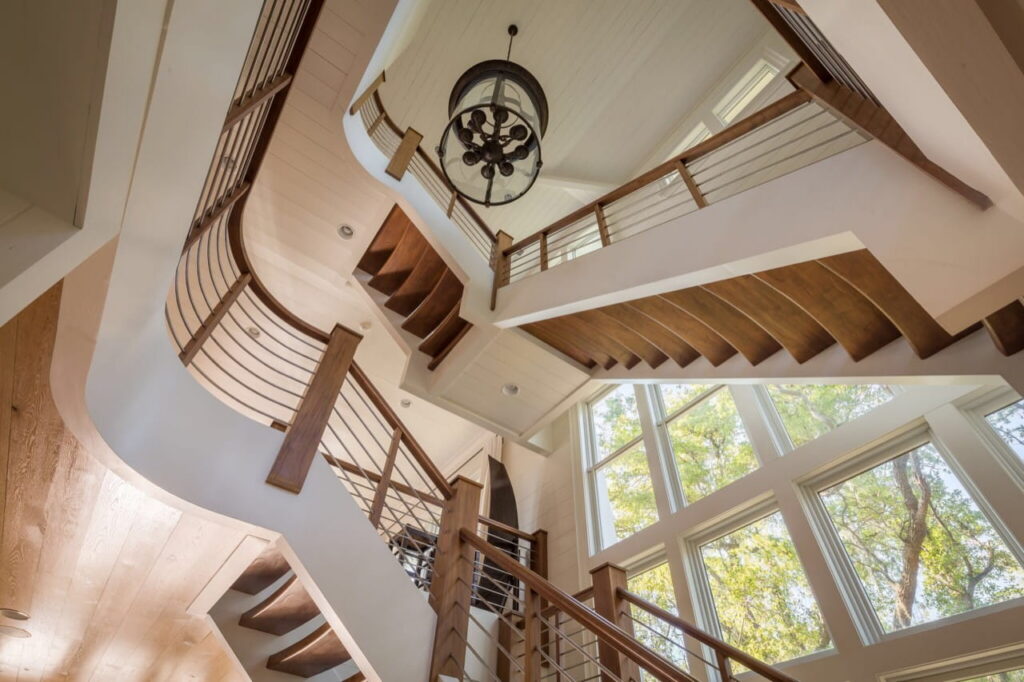
The custom staircase design process begins with field verification. Accurate floor-to-floor measurement, framing analysis, and structural review establish feasibility. Geometry is calculated to comply with staircase building code requirements, including:
Ignoring these fundamentals early in planning can lead to redesign, inspection delays, or structural modifications.
A staircase must safely transfer vertical and lateral forces into the structure. That requires engineered detailing.
Structural considerations include:
Open-riser and cantilever systems require reinforced framing or concealed steel support. Projects that consider these assemblies should review floating staircase safety during design development. Structural concealment does not eliminate inspection standards.
Engineering decisions determine whether a staircase remains stable and quiet over time.
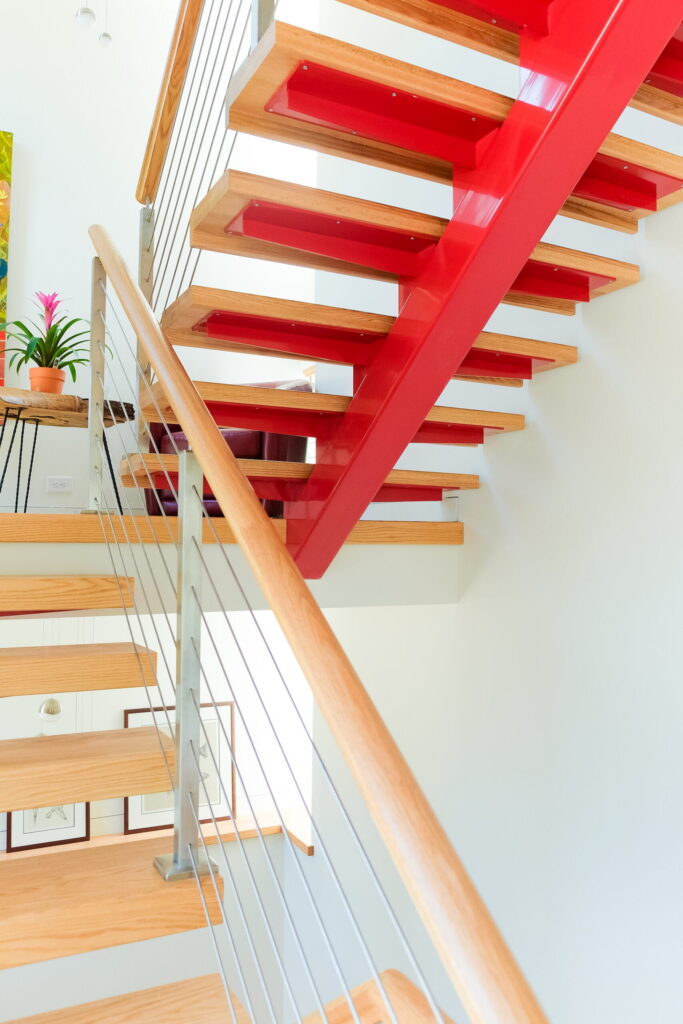
Material choice affects structural behavior, durability, and long-term maintenance.
Typical stair components include:
Material coordination should occur before shop drawings are finalized. Regional humidity and seasonal movement must be accounted for, particularly in Southeastern homes. These Southern staircase design considerations affect wood expansion, finish adhesion, and long-term alignment.
A detailed comparison of species, metals, and guard systems is addressed within modern staircase materials and finishes. Selection impacts both performance and compliance.
Custom stair fabrication occurs in controlled environments to maintain precision. Dimensional tolerances matter. Even a minor variation in riser height can create an inspection failure.
Fabrication typically includes:
All fabrication aligns with staircase building code requirements before delivery to the site.
Installation requires coordination with framing, drywall, flooring, and finish trades. Improper sequencing can compromise alignment or damage finishes.
Installation includes:
The custom staircase design process incorporates installation checkpoints to reduce field modification and inspection risk.

Custom staircases must satisfy measurable standards. Inspectors evaluate:
Floating systems must meet the safety considerations for floating staircases and the structural inspection criteria. Visual minimalism does not reduce engineering obligations. Compliance is structural, not aesthetic.
A well-designed custom staircase aligns with the home’s structural rhythm and material palette. It should not appear added. It should function as part of the architecture.
Southern Staircase builds stair systems that:
The objective is structural integrity, dimensional precision, and architectural integration.
Every custom stair system begins with structural clarity. If you are planning a remodel or evaluating feasibility, Southern Staircase can review your dimensions, framing conditions, and architectural goals before fabrication begins. Submit your drawings or schedule a consultation to confirm alignment with staircase building code requirements and long-term performance standards.
Q: What is the difference between mono-stringer, double-stringer, and housed stringer stairs?
A: Mono-stringer uses one central spine, double-stringer uses two side supports, and housed stringer captures treads inside routed stringers for a more traditional built-in look.
Q: Are floating stairs safe and code-compliant?
A: Yes, when properly engineered and installed. Key factors include tread strength, attachment points, guardrail design, and limiting openings to meet code.
Q: What measurements are needed to start a custom staircase?
A: Floor-to-floor height, total run, opening size, landing conditions, and surrounding wall constraints. A site measure is the best way to confirm what is feasible.
Q: What are the most common mistakes homeowners make when planning a custom staircase?
A: Choosing a style before confirming structure, underestimating railing impact on openness, and waiting too long to coordinate with builders, flooring, and drywall.
Q: How do I choose the right custom stair builder near me?
A: Look for design-build capability, code knowledge, clear shop drawings, engineering coordination when needed, and a track record of clean installs and durable finishes.
HAVE A PROJECT IN MIND?

We partner with designers, builders, and architects to design and build custom stair systems for interior and exterior spaces.
©2026 Southern Staircase | All Rights Reserved.