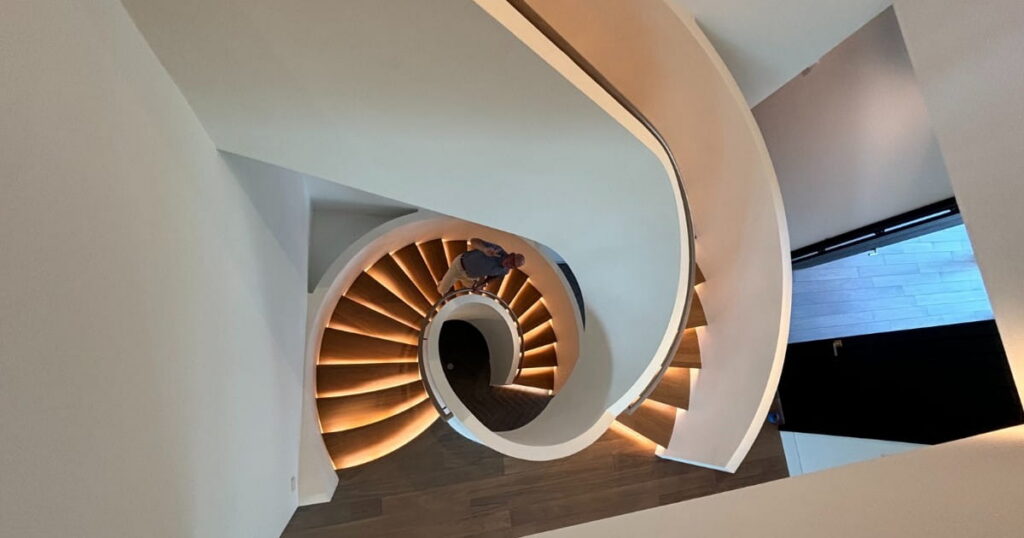
Choosing between curved staircases vs. mono-stringer stairs is really a choice between two very different architectural statements. Both can elevate a luxury home, both require expert engineering, and both can become the centerpiece of the floor plan. The difference is how they shape the space.
Southern Staircase designs, engineers, fabricates, and installs custom stair systems for high-end residential projects, including curved stairs and mono-stringer floating stairs.
Key Takeaways on Curved Staircases vs. Mono-Stringer Stairs
- Curved staircases create a graceful, formal, and architectural focal point for luxury homes.
- Mono-stringer stairs deliver a modern floating effect with one central steel support.
- Curved staircases require precise geometry, site measurements, handrail transitions, and fabrication planning.
- Mono-stringer stairs require careful steel sizing, anchoring, vibration control, and open-riser code coordination.
- The right choice for your staircase depends on the home’s style, space, budget, engineering conditions, and desired design impact.
Comparing Curved Staircases vs. Mono-Stringer Stairs
What Is a Curved Staircase?
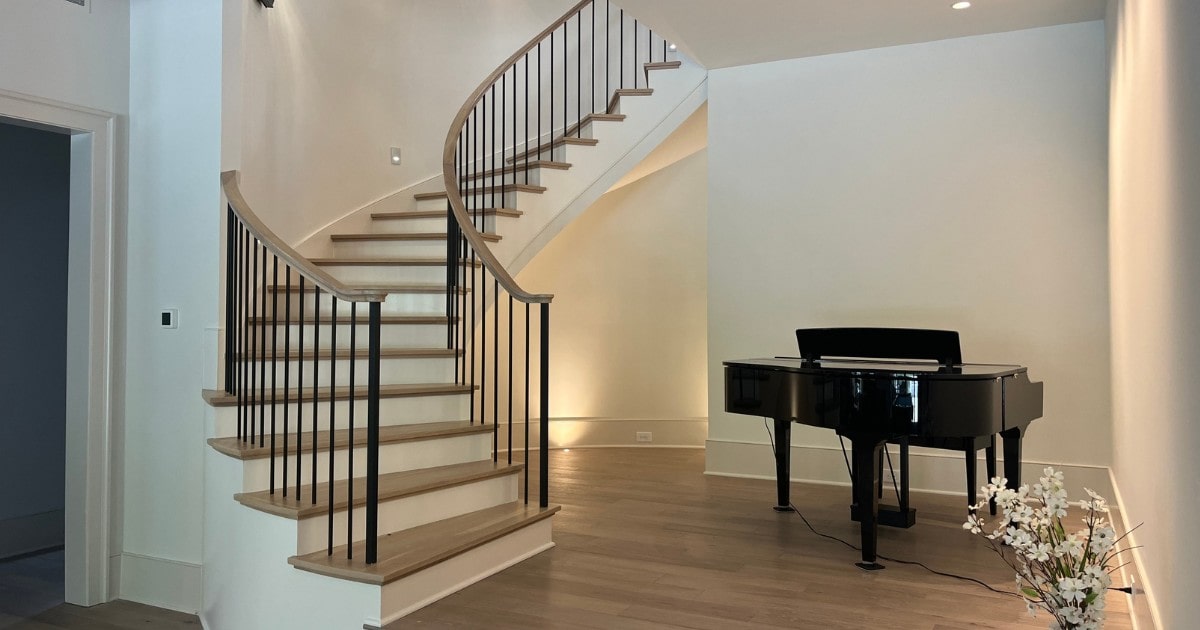
A curved staircase follows a sweeping radius instead of a straight run. The curve may be subtle and flowing, or it may create a dramatic architectural feature in a two-story foyer. Unlike straight stairs, curved staircases require highly precise layout planning because each tread, riser, handrail, stringer, and balustrade must follow the same controlled geometry.
Curved staircases are especially effective when the home needs a sense of movement. They guide the eye upward, soften the entry sequence, and create a strong first impression without needing heavy ornamentation.
A curved staircase is often the better choice when the design goal is:
- Grand foyer presence
- Formal luxury
- Transitional or traditional elegance
- A sweeping architectural focal point
- A softer alternative to a straight modern stair
- A custom stair that feels integrated into the home’s volume
Southern Staircase’s curved stair work combines design consultation, precise measurement, engineering coordination, advanced fabrication, and craftsmanship to create stair systems that fit the architecture rather than forcing a standard stair into a custom home.
What Is a Mono-Stringer Staircase?
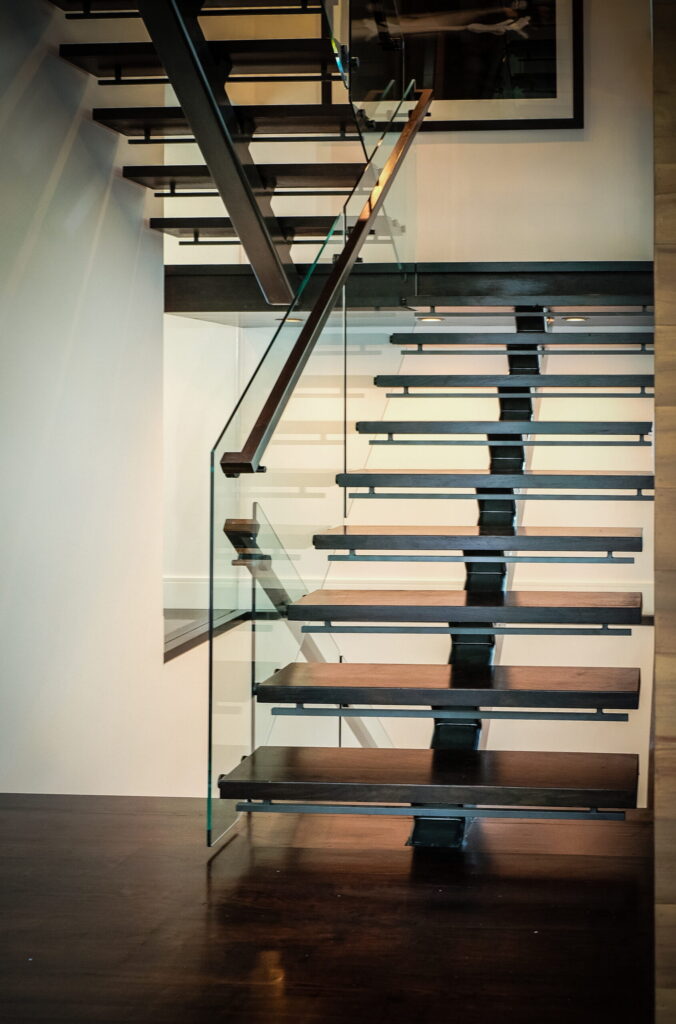
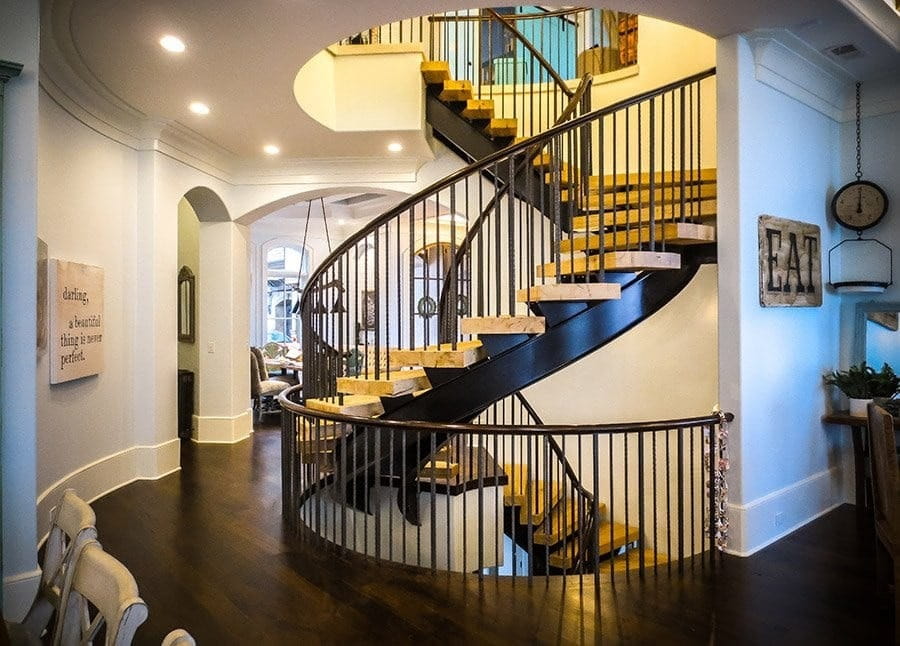
A mono-stringer staircase uses one central steel spine to support the stair treads. This single structural member carries the load, while the open risers and exposed tread layout create the appearance of stairs floating in space. Straight floating stairs commonly have a mono-stringer, but curved stairs commonly have a double stringer for support.
Mono-stringer stairs are popular in modern luxury homes because they feel open, clean, and sculptural. They allow light to pass through the stairwell, preserve sightlines, and reduce the visual bulk of a traditional staircase.
A mono-stringer stair is often the better choice when the design goal is:
- A modern floating aesthetic
- Open sightlines
- Minimal visual weight
- Strong linear architecture
- Contemporary or industrial design
- A staircase that feels like functional sculpture
- A clean contrast with wood, glass, metal, or stone finishes
Southern Staircase’s mono-beam or mono-stringer systems are built around a single steel stringer with an open-rise look. They can be paired with multiple tread styles and railing systems, including glass, cable, and horizontal metal.
Design Impact: Graceful Movement vs. Modern Minimalism
Curved Stairs | Mono-Stringer Stairs |
Curved staircases bring movement, elegance, and a sense of arrival. | Mono-stringer stairs create a cleaner, more modern visual. |
Curved stairways are often used in grand foyers, estate homes, formal entries, and transitional interiors where the staircase should feel graceful and sculptural. | A single steel spine supports open treads, giving the staircase a floating, architectural look that works beautifully in contemporary and open-concept homes. |
Curved staircases and mono-stringer stairs both make a statement, but their emotional effects differ.
Curved Staircases Feel Grand and Fluid
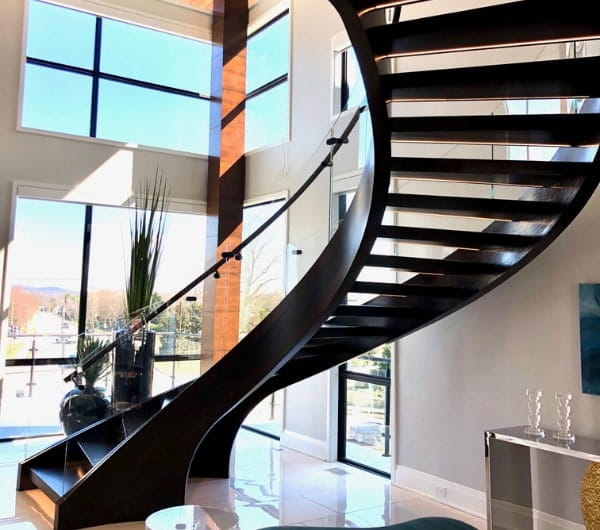
A curved staircase creates motion. It draws people through the entry and up through the home with a sense of ceremony. The curve can make a foyer feel more layered, refined, and custom. In luxury residential design, curved stairs are often chosen because they immediately communicate craftsmanship.
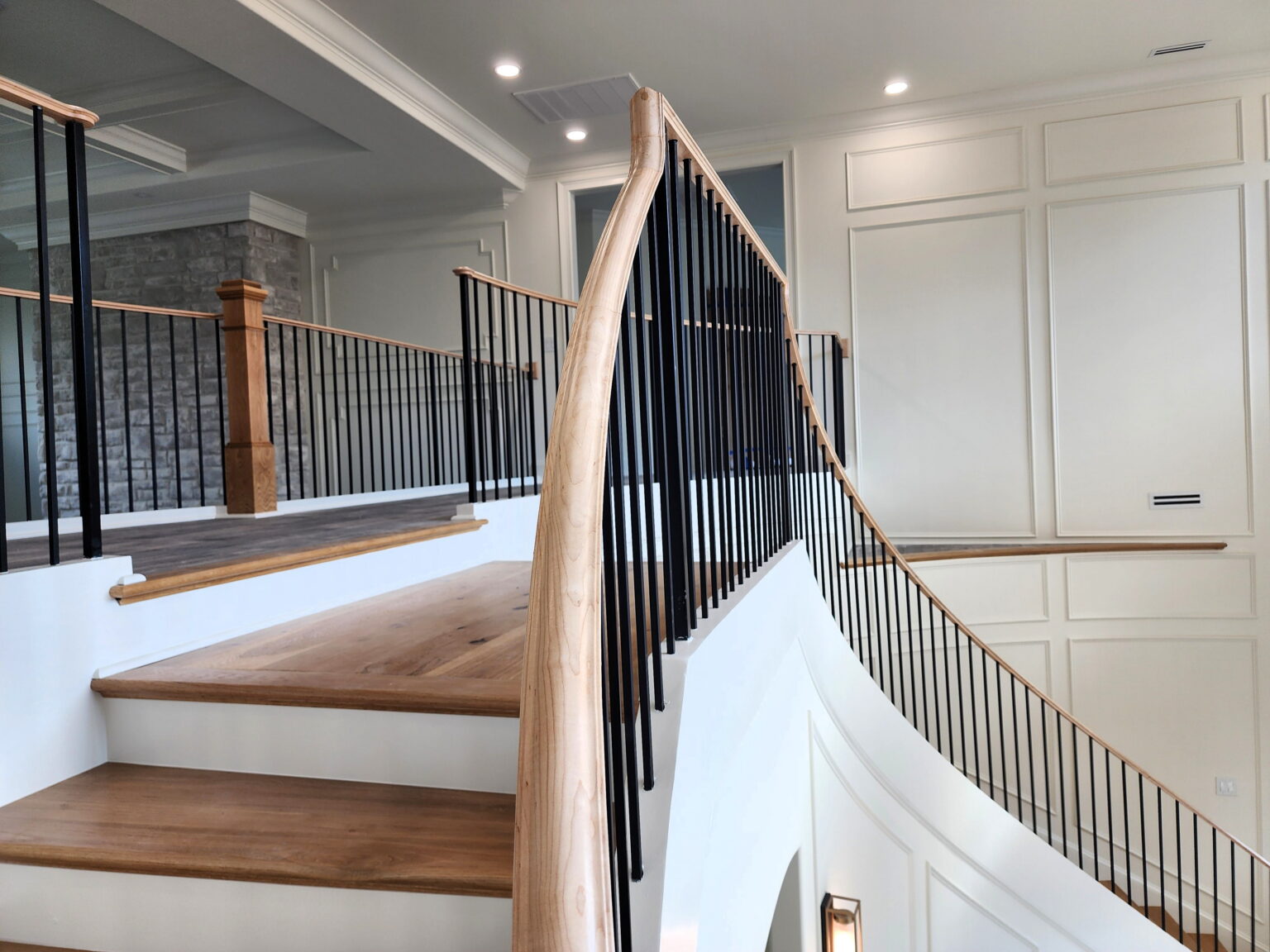
Curved staircases are not limited to traditional homes. Modern curved stairs can use clean wood treads, glass railings, metal balusters, and simplified profiles to create a more contemporary look. The key is controlling the radius, proportions, and railing design so the stair feels intentional from every angle.
Mono-stringer Stairs Feel Open and Architectural
Mono-stringer stairs create a more minimal expression. The single steel spine gives the stairs a crisp structural identity, while the open treads make the system feel lighter. This works especially well in modern homes with large windows, open living areas, tall ceilings, and clean material palettes.
A mono-stringer staircase can be quiet and understated, or it can become a bold sculptural centerpiece. The visual tone depends heavily on the tread material, stringer finish, railing selection, and lighting plan.
Engineering Differences Builders Should Understand
Both stair types require professional engineering, but they solve different structural challenges.
Curved Staircase Engineering
Curved staircases require careful planning because the stairs must fit a specific radius while maintaining comfort, code compliance, and structural performance. Accurate site measurements, floor-to-floor height, tread layout, handrail geometry, and support conditions are essential.
Southern Staircase’s curved stair planning emphasizes the relationship between vision and engineering. Modern curved stairs require precise measurements, spatial understanding, structural integration, material selection, fabrication planning, and coordination with other trades.
Builders should pay close attention to:
- Radius and stair opening
- Tread width and walk line
- Riser consistency
- Curved stringer fabrication
- Handrail transitions
- Baluster or panel alignment
- Landing conditions
- Structural support and anchoring
- Lighting integration
- Finish protection
Curved staircases can be complex because every part of the system needs to align across a changing geometry. A small measurement issue can affect the entire stair.
Mono-Stringer Stair Engineering
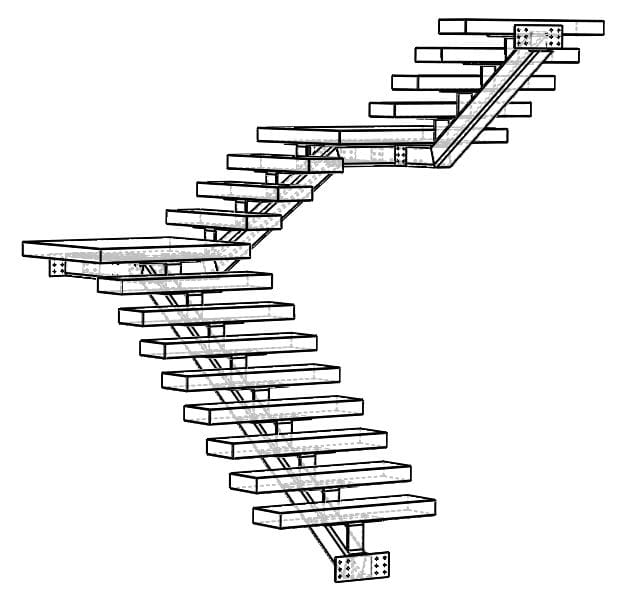
Mono-stringer stairs place significant structural responsibility on one central steel support. The engineer must control load transfer, deflection, vibration, anchoring, and connection points. The finished stair may look simple, but the central spine must be sized and installed correctly so the stair feels stable underfoot.
Builders should pay close attention to:
- Steel stringer size
- Span and support points
- Tread attachment
- Open-riser spacing
- Guardrail anchorage
- Floor and landing connections
- Vibration control
- Stair opening dimensions
- Code compliance
- Installation sequencing
Because mono-stringer stairs use open risers, railing and guard details should be coordinated early. Glass, cable, and metal railings all affect attachment planning and inspection readiness.
Space Planning: Which Stair Fits the Floor Plan? Curved Staircases vs. Mono-Stringer Stairs
The floor plan often decides which stair type makes the most sense.
Curved staircases usually need more room to breathe. They work best when the home gives the stairs enough visual space to show their sweep. A cramped curved stair can feel forced, while a well-scaled curved stair can define the entire entry.
Mono-stringer stairs can work well in tighter or more open modern layouts because the stair has less visual mass. The open risers and central spine help the stairs feel lighter, even when they occupy a prominent location.
Choose a curved staircase when:
- The foyer or central volume is large enough for the curve.
- The home needs a graceful first impression.
- The stairs should guide movement through a formal space.
- The architecture supports a sweeping feature.
Choose a mono-stringer stair when:
- The design calls for minimal visual obstruction.
- Natural light and sightlines are priorities.
- The home has a modern or open-concept plan.
- The stair should feel sleek, exposed, and architectural.
Materials, Railings, and Finishes
The stair materials you choose can push either a traditional, transitional, or modern stair style. Southern Staircase emphasizes that staircase materials, railings, and finishes should be coordinated early because they influence structure, backing, sequencing, and long-term performance.
Best Materials for Curved Staircases
Curved stairs often use hardwood treads, custom handrails, curved stringers, wrought iron, glass, stainless steel, or metal balustrades. Wood adds warmth and craftsmanship. Iron can support a formal or estate-style look. Glass can modernize the curve and preserve sightlines.
Curved staircases also place heavy visual emphasis on handrail flow. The handrail should move smoothly with the curve, without awkward transitions or visual breaks.
Best Materials for Mono-Stringer Stairs
Mono-stringer stairs commonly pair steel with wood, metal, stone-style, or engineered treads. Hardwood treads soften the modern structure. Glass railings maximize openness. Cable railings add a crisp linear pattern. Horizontal metal creates a stronger architectural rhythm.
Mono-stringer stairs usually benefit from simplified material palettes because the structure is already highly visible. A clean tread, a refined stringer finish, and a well-planned railing system can make the stairs feel luxurious without feeling busy.
Cost and Complexity Considerations: Curved Staircases vs. Mono-Stringer Stairs
Curved staircases and mono-stringer stairs can both sit at the premium end of custom stair design. The cost depends on size, geometry, materials, railing systems, engineering requirements, finish level, and installation complexity.
Curved staircases can become more complex due to the radius, custom fabrication, handrail shaping, curved railing alignment, floating stair design, and the precision required for finishes. They often involve more craft labor and more detailed field coordination.
Mono-stringer stairs can become more complex due to steel engineering, connection details, open-riser code requirements, vibration control, glass or cable railing coordination, and the need for clean, exposed finishes.
Neither option should be selected on appearance alone. The best stair choice is the one that fits the project’s architecture, structure, schedule, and budget.
Which Staircase Is Better for a Luxury Home?
There is no universal winner in the curved staircases vs. mono-stringer stairs conversation. The stronger choice depends on what the home needs to express.
A curved staircase is better when the home calls for elegance, movement, softness, and a refined entry experience. It is ideal for grand foyers, traditional estates, transitional luxury homes, and spaces where the staircase should feel timeless and graceful.
A mono-stringer staircase is better when the home calls for openness, modern structure, minimalism, and a bold floating effect. It is ideal for contemporary homes, open-plan spaces, glass-heavy interiors, and areas where the stair should feel streamlined and sculptural.
Some luxury home staircases can even combine both ideas through a curved mono-stringer stair, but that is a more fabrication-intensive option that requires advanced planning and precise engineering.
Planning Questions Before Choosing
Before choosing between curved staircases vs. mono-stringer stairs, architects, builders, and homeowners should answer these questions:
- Is the home’s style traditional, transitional, modern, or contemporary?
- Should the staircase feel grand, minimal, sculptural, or understated?
- How much floor space is available?
- What sightlines should remain open?
- What level of structural support is available?
- Will the stairs need glass, cable, iron, wood, or metal railings?
- Are open risers acceptable for the household and code requirements?
- How early can the stair specialist be involved?
- What finish quality is expected?
- What is the installation sequence?
The earlier these details are resolved, the easier it is to protect the design intent and prevent field changes.
Why Builders and Architects Partner with Southern Staircase
Southern Staircase brings together design expertise, engineering coordination, fabrication skill, material knowledge, and installation experience.
- For curved staircases, the team understands complex geometry, structural integration, craftsmanship, and quality control.
- For mono-stringer stairs, the team understands steel support, open-riser performance, modern railing systems, and code-aware installation.
When the staircase is planned early, it can become one of the home’s defining features. When it is planned too late, it can create structural conflicts, finish issues, and installation delays. The right stair partner helps avoid those problems before they reach the jobsite.
FAQs: Curved Staircases vs. Mono-Stringer Stairs
Q: Are curved staircases more traditional than mono-stringer stairs?
A: Usually, yes, but not always. Curved staircases often feel more classic or transitional, while mono-stringer stairs feel more modern. Materials and railings can shift between styles.
Q: Are mono-stringer stairs considered floating stairs?
A: Yes. A mono-stringer stair is a type of floating stair that uses one central steel spine to support open treads.
Q: Which stair type is better for a grand foyer?
A: A curved staircase is often better for a grand foyer because it creates movement, elegance, and a strong sense of arrival.
Q: Which stair type is better for a modern open-concept home?
A: A mono-stringer stair is often better for a modern open-concept home because it preserves sightlines and creates a clean floating effect.
Q: Can curved staircases use modern railings?
A: Yes. Curved staircases can pair with glass, metal, stainless steel, cable, or simplified wood railings for a more modern appearance.
Q: Are curved staircases or mono-stringer stairs more complex to build?
A: Both are complex in different ways. Curved staircases require precise geometry and craftsmanship. Mono-stringer stairs require careful steel engineering, anchoring, and coordination with open risers.
For architects, builders, and homeowners, the best choice depends on the home’s architecture, floor plan, structural conditions, materials, railing preferences, and desired level of visual impact.
Choose the staircase that fits the architecture, not just the inspiration photo. Southern Staircase helps builders, architects, and homeowners design, engineer, fabricate, and install custom curved staircases and mono-stringer stairs that elevate luxury homes from the first step.
Together, let’s turn an architectural idea into a buildable, durable, and visually striking stair system.