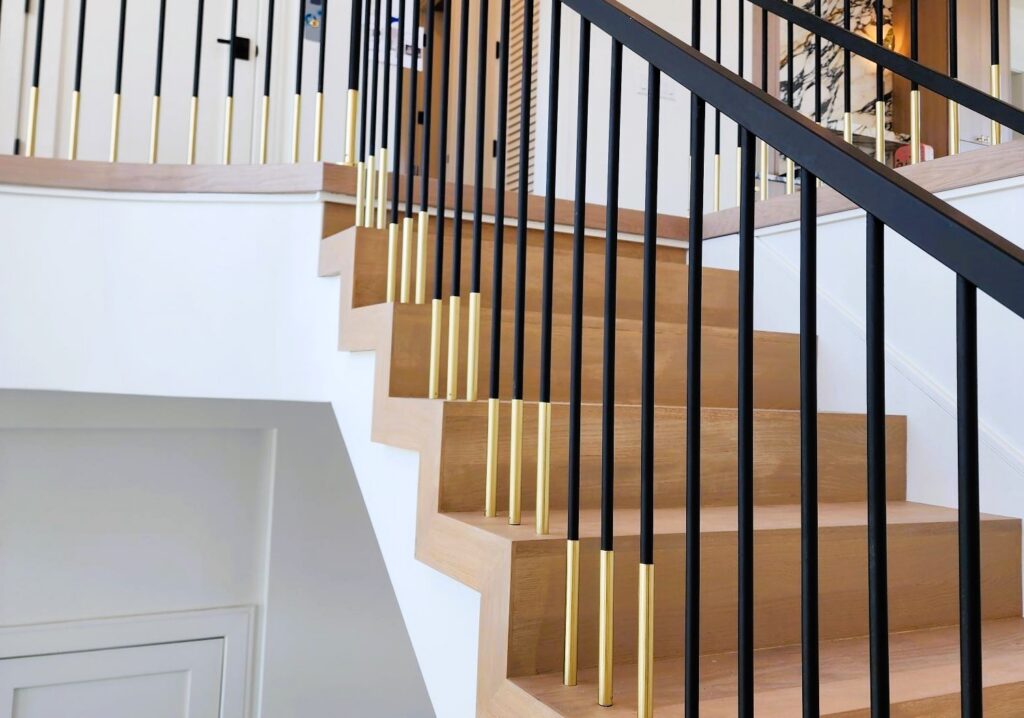
Home builders are focusing on the custom staircase design in luxury homes earlier in the design process. The high-end stairway is a structural, architectural, and visual centerpiece that affects framing, circulation, engineering, materials, railings, finishes, inspections, and installation sequencing.
In luxury homes, the staircase may anchor a grand foyer, connect open living levels, frame a major sightline, or become the sculptural feature that gives the home its identity. For builders, waiting too long to coordinate the stairs can lead to costly conflicts with structural, drywall, flooring, railing systems, lighting, and finish schedules.
Southern Staircase partners with luxury custom builders to design, engineer, fabricate, and install high-end stair systems that align with the architecture from the beginning. The result is a staircase that looks intentional, performs reliably, and supports the expectations of high-end residential construction.
Key Takeaways on the Design Process for Luxury Custom Staircases
- Custom staircase design should be addressed before framing and finish selections are finalized.
- Luxury staircases affect structure, layout, sightlines, railing systems, code compliance, and installation sequencing.
- Early coordination helps prevent field changes, inspection delays, finish conflicts, and missed design opportunities.
- Modern railing, pre-finished stair components, and material selections should be planned as part of the full stair system.
- Builders benefit from a stair partner who can support design, engineering, fabrication, finishing, and installation.
Why the Custom Staircase Design Process Cannot Wait
In a luxury home, the staircase touches too many parts of the build to be treated as a late decision. Floor openings, ceiling heights, walls, landings, structural backing, finished flooring, railings, and lighting all need to work together. When a custom staircase design is delayed, the builder may discover too late that the original vision does not fit the available space or structural conditions.
Early stair planning helps confirm:
- Floor-to-floor height
- Total stair run
- Tread and riser layout
- Opening size
- Headroom clearance
- Landing conditions
- Stringer or carriage design
- Guard and railing requirements
- Wall backing and anchorage
- Flooring transitions
- Finish schedule
- Installation access
The earlier these details are resolved, the easier it is to protect the architectural intent while keeping the construction process efficient.
Custom Staircase Design as an Architectural Anchor
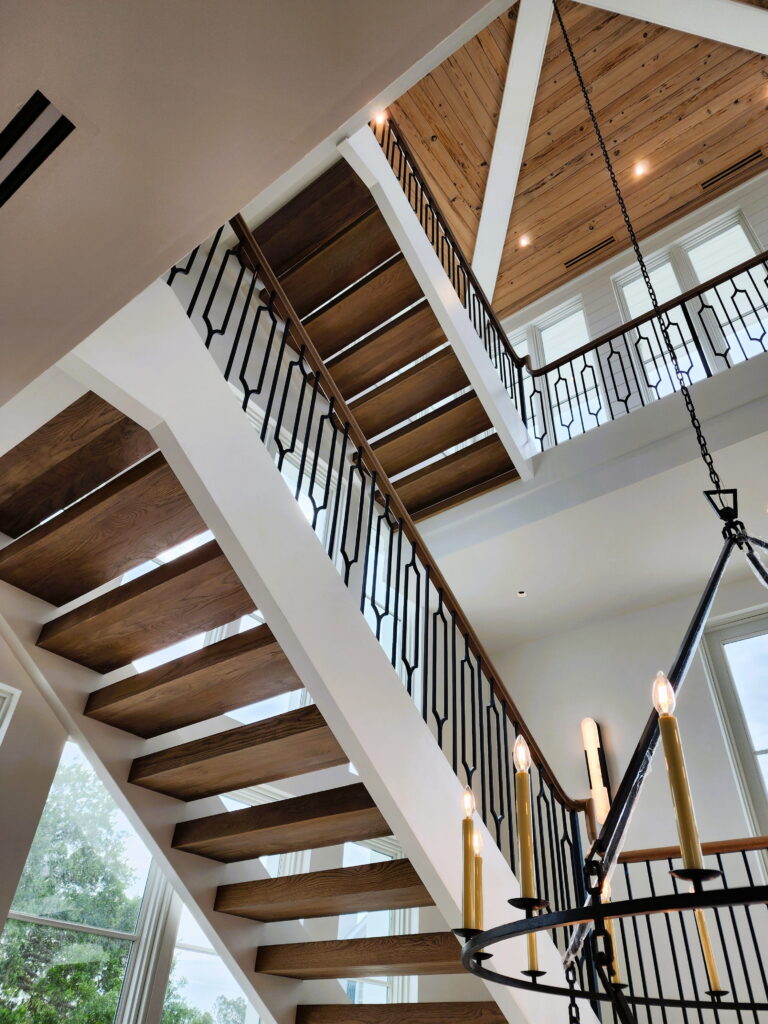
Luxury builders understand that a staircase can set the tone for the entire home. It can make an entry feel grand, make an open floor plan feel lighter, or create a strong visual connection between levels.
High-end staircase design is crafted to feel:
- Dramatic and sculptural
- Clean and modern
- Traditional and timeless
- Transitional and refined
- Open and light-filled
- Warm and handcrafted
- Formal and estate-level
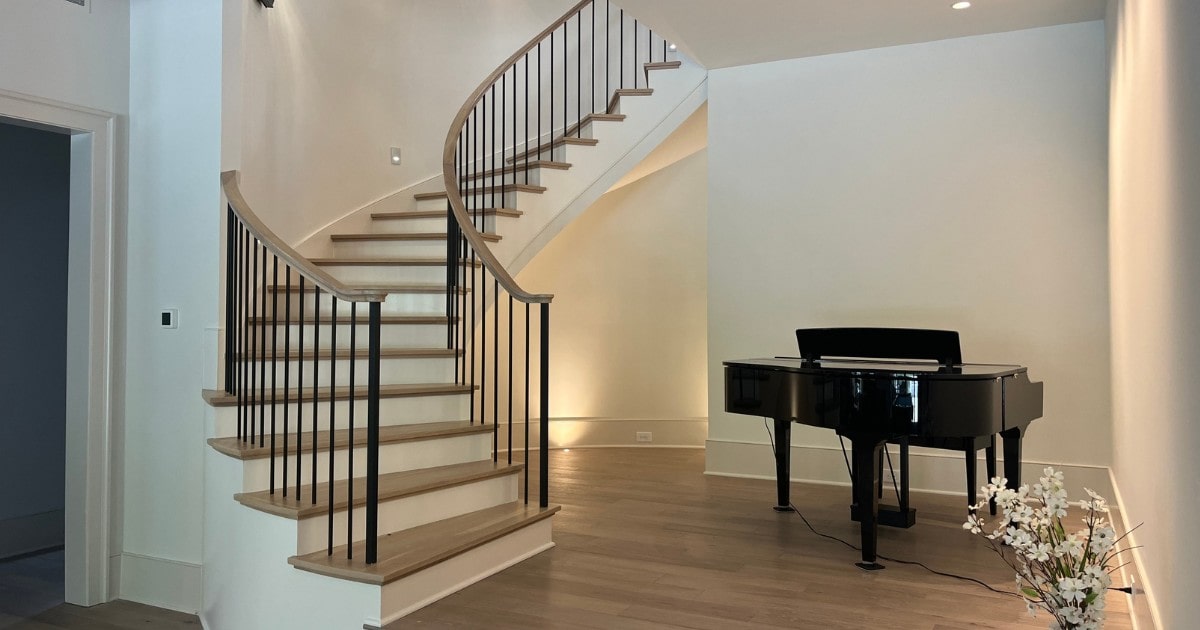
The right design depends on the home’s architecture, not just the homeowner’s inspiration photo. A curved staircase may be ideal for a grand foyer. A floating stair may be better for a modern open-plan home. A straight stair with a glass railing may offer the right blend of simplicity and impact. The key is to choose the stair type while there is still time to coordinate the structure around it.
What Luxury Home Builders Should Decide Early for Custom Staircase Design
Luxury staircase design becomes easier when builders identify the major design and construction decisions before the job site is too far along.
Stair Shape and Style
The stair shape should support the architecture and floor plan. Straight stairs, curved stairs, floating stairs, open-riser stairs, flared stairs, and grand staircases each have distinct structural and visual requirements.
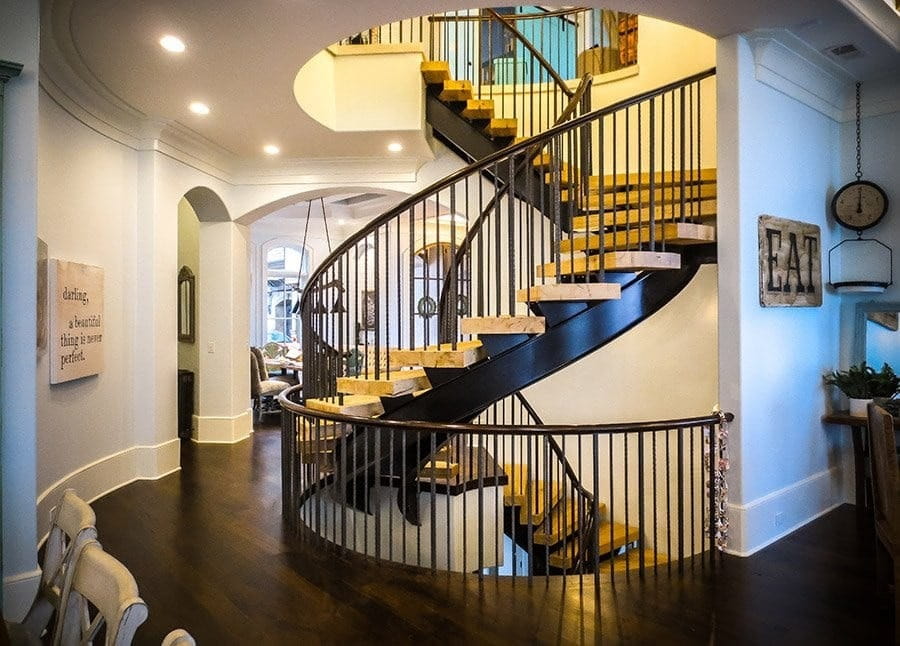
For example, a modern floating staircase may require concealed steel, reinforced framing, open-riser coordination, and precise railing anchorage. A curved stair may require more detailed geometry, custom rail transitions, and advanced fabrication planning.
Structural Support
Every staircase must transfer loads safely into the home’s structure. Builders should coordinate stringers, carriages, walls, landings, anchorage, steel support, and guard load requirements early.
The more minimal the stair looks, the more important the hidden structure becomes. Clean modern staircases often rely on steel, precise connections, and careful engineering to achieve their final appearance.
Railing System
Stair railings are among the most visible parts of a staircase, but they are also structural and code-compliant. Glass, cable, metal, stainless steel, wood, and iron railings all require different attachment methods, spacing considerations, and finish coordination.
Tread Materials and Finishes
Wood species, tread thickness, finish type, and flooring transitions should be selected early. Waiting too long can affect lead times, installation sequencing, and the final visual match between the staircase and surrounding interior materials.
Modern Luxury Staircase Trends Builders Are Seeing
Luxury staircase trends continue to move toward cleaner profiles, stronger material integration, and more architectural intent.
Open and Light-Filled Staircases
Open-riser stairs, floating stairs, and glass railings are popular because they allow light to move through the home. These designs work especially well in modern homes with large windows, two-story spaces, and open living areas.
The planning challenge is that open designs leave less room to hide structural and finish issues. Every connection, tread, stringer, and railing detail becomes more visible.
White Oak and Warm Wood Tones
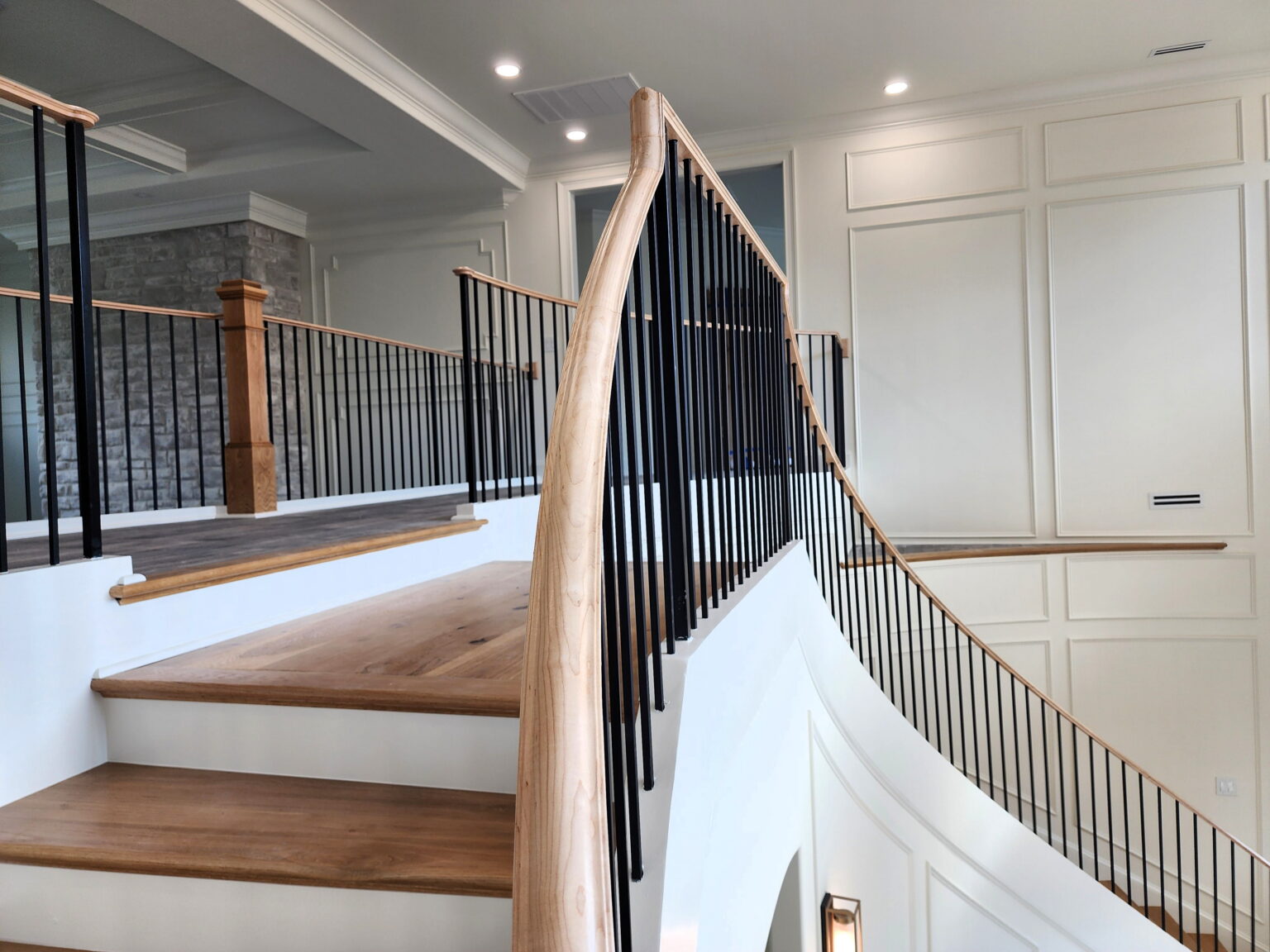
White oak remains a strong choice for luxury interiors because it feels warm, clean, and versatile. Walnut, maple, hickory, and other hardwoods can also be used, depending on the home’s style and durability needs.
Wood selection should be coordinated with flooring, cabinetry, beams, trim, and lighting. The staircase should feel connected to the material palette, not like a separate feature.
Glass, Cable, and Metal Railings
Modern railings help define the stairs’ final character.
- Glass railings create transparency and openness.
- Cable railings offer a crisp, linear look.
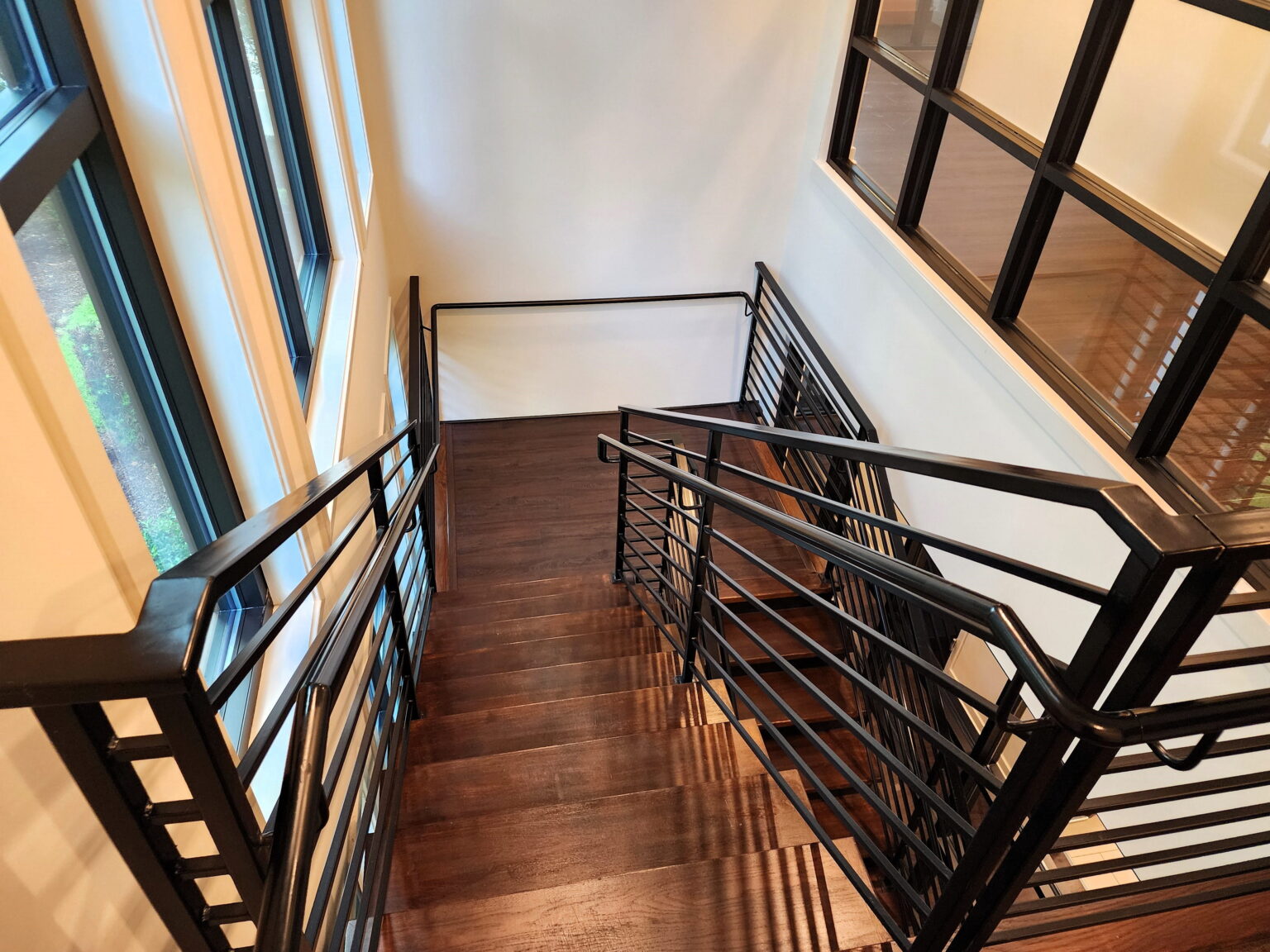
- Metal stair railings, such as stainless steel and wrought iron, provide durability and a sleek architectural finish. Custom iron can create a more formal or estate-level appearance.
- Wood stair railings add warmth.
Pre-Finished Stair Components
Pre-finished custom stair treads and other components can help builders control quality, reduce on-site finishing disruption, and improve consistency. This is especially valuable when the project has a tight schedule, premium finish expectations, or a need for better jobsite efficiency.
Why Early Stair Planning Helps Protect the Schedule
Schedule control matters on luxury builds. Delays in one area can quickly affect multiple trades. Staircases are especially schedule-sensitive because they connect framing, flooring, railings, painting, finishing, drywall, and inspections.
Early custom staircase design helps builders avoid:
- Framing changes after construction begins
- Railing attachment issues
- Finish delays
- Incorrect opening dimensions
- Flooring transition conflicts
- Late steel coordination
- Guard or handrail code problems
- Field modifications during installation
- Damage to finished components
- Missed inspection requirements
When the stair specialist is involved early, builders can confirm the design before it becomes difficult or expensive to change.
How Custom Staircase Design Supports Code Compliance
A beautiful staircase still has to meet residential stair code requirements. Luxury design does not remove the need for riser consistency, tread depth, headroom, guard height, handrail placement, railing spacing, and structural load performance.
Code-related stair details often include:
- Consistent riser height
- Proper tread depth
- Required headroom clearance
- Safe handrail placement
- Guard height compliance
- Railing opening limits
- Open-riser spacing
- Structural support for guards
- Slip-resistant walking surfaces
- Secure connections at landings and floors
These details should be built into the stair design, not corrected at the end. Early planning helps builders avoid inspection delays and protects the finished appearance of the stair system.
Materials, Railings, and Finishes Should Work as One System
One of the biggest mistakes in luxury stair planning is choosing materials separately. The treads, stringers, rails, balusters, handrails, finish system, and surrounding architecture need to function together.
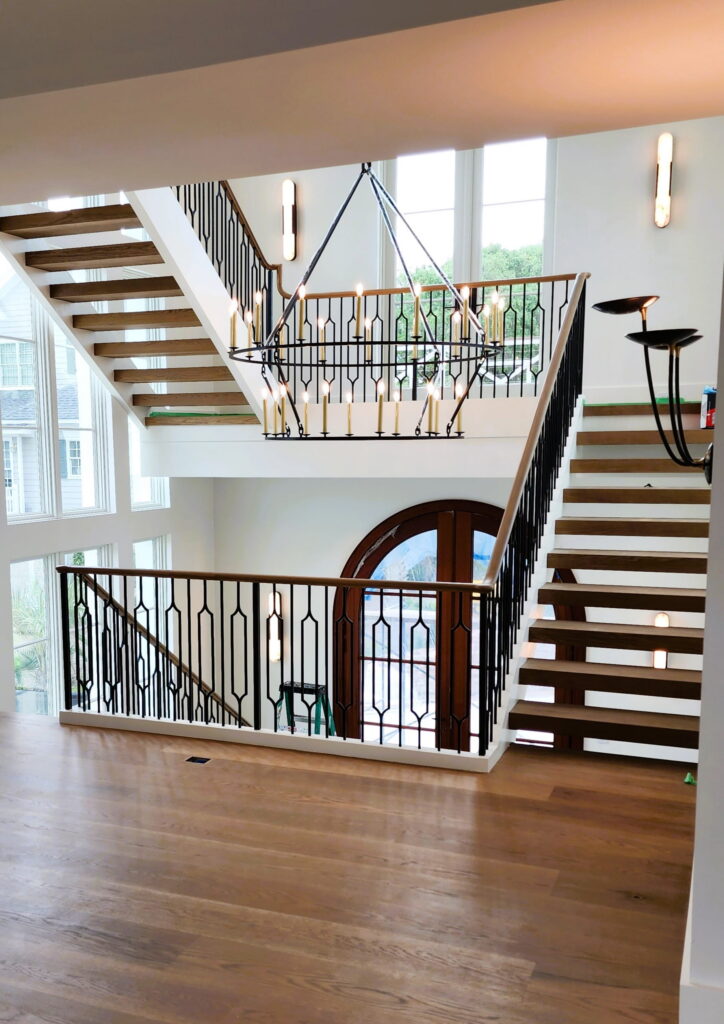
- A glass railing may require specific backing and anchorage.
- A cable railing needs proper spacing and tension planning.
- A steel stringer may need coordination with the finish floor and landing.
- A stained wood tread needs to coordinate with flooring, humidity, and protection during construction.
Builders should coordinate:
- Hardwood species
- Tread dimensions
- Railing material
- Handrail profile
- Guard attachment
- Steel finish
- Wood finish
- Lighting integration
- Flooring transitions
- Wall and trim details
- Construction protection
A luxury staircase is successful when the final system feels seamless. That level of finish starts with early decisions.
Pre-Finished Custom Stairs and Jobsite Efficiency
Pre-finished custom stairs can be a strong solution for builders who want greater finish consistency and less on-site disruption. Instead of relying entirely on field finishing, selected stair components can be finished in a controlled environment before installation.
This can help with:
- Finish consistency
- Reduced jobsite mess
- Cleaner scheduling
- Better protection planning
- Shorter finishing timelines
- More predictable results
- Premium tread appearance
Pre-finished solutions are especially helpful when a project includes unique stair components, custom tread selections, or specific finish expectations. Builders still need to plan carefully, but the right pre-finished approach can support a smoother construction process.
Why Builders Need a Stair Partner, Not Just a Stair Supplier
Luxury builders need more than parts. They need a staircase partner who understands design intent, engineering, code requirements, fabrication, finishing, installation, and field coordination.
Southern Staircase supports custom builders through a process built around communication, planning, craftsmanship, and execution. That matters because luxury staircase projects often involve complex geometry, premium materials, custom railings, tight schedules, and high client expectations.
A strong stair partner can help builders:
- Review architectural plans
- Identify stair feasibility issues
- Coordinate engineering requirements
- Confirm material selections
- Prepare shop drawings
- Plan railing integration
- Support finish decisions
- Reduce field conflicts
- Improve installation outcomes
- Deliver a stronger client experience
In luxury construction, the staircase is too visible and too important to leave unresolved.
The Best Time to Start Custom Staircase Design
The best time to start custom staircase design is during architectural planning or early builder coordination. The stairs do not need to be fully finished at that stage, but the main decisions should be addressed before framing, structural support, and major finish schedules are locked in.
Builders should involve a stair specialist when:
- The floor plan includes a visible main stair
- The homeowner wants an open-riser or floating stair design
- The staircase includes glass, cable, metal, or custom iron railings
- The design includes curved, flared, or monumental stair geometry
- The project requires pre-finished stair components
- The staircase affects major sightlines
- The stair opening or headroom is tight
- The builder wants to reduce field changes
Early planning gives the staircase room to become part of the architecture instead of a problem to solve after construction begins.
What a Well-Planned Custom Staircase Delivers
A well-planned custom staircase improves more than just the home’s look. It supports the build process, protects the schedule, improves coordination, and gives the homeowner a feature that feels intentionally designed.
The strongest custom staircase design delivers:
- Better architectural integration
- Cleaner structural coordination
- More predictable installation
- Stronger finish consistency
- Safer code-aware detailing
- Better material alignment
- Fewer late-stage changes
- A more elevated homeowner experience
Luxury builders prioritize custom staircase design early because they know the staircase is not just one trade package. It is a defining feature of the home.
FAQs on Custom Staircase Design for Luxury Builders
Q: When should builders start custom staircase design?
A: Builders should start custom staircase design during architectural planning or early pre-construction, before framing and finish selections are finalized.
Q: Why is early stair planning important in luxury homes?
A: Early planning helps coordinate structure, openings, railings, materials, code requirements, finishes, and installation before changes become expensive.
Q: What staircase styles are popular in modern luxury homes?
A: Floating stairs, open-riser stairs, curved stairs, glass railings, cable railings, white oak treads, and clean metal details are popular in luxury homes.
Q: Are pre-finished custom stairs a good option for builders?
A: Yes. Pre-finished custom stairs can improve finish consistency, reduce on-site finishing disruption, and support cleaner scheduling.
Q: What makes Southern Staircase a strong partner for custom builders?
A: Southern Staircase supports design, engineering, fabrication, finishing, project coordination, and installation for luxury custom stair systems.
Start the staircase before the field forces the decision. Southern Staircase helps luxury builders design, engineer, fabricate, finish, and install custom stair systems that make high-end homes feel complete from the first step.