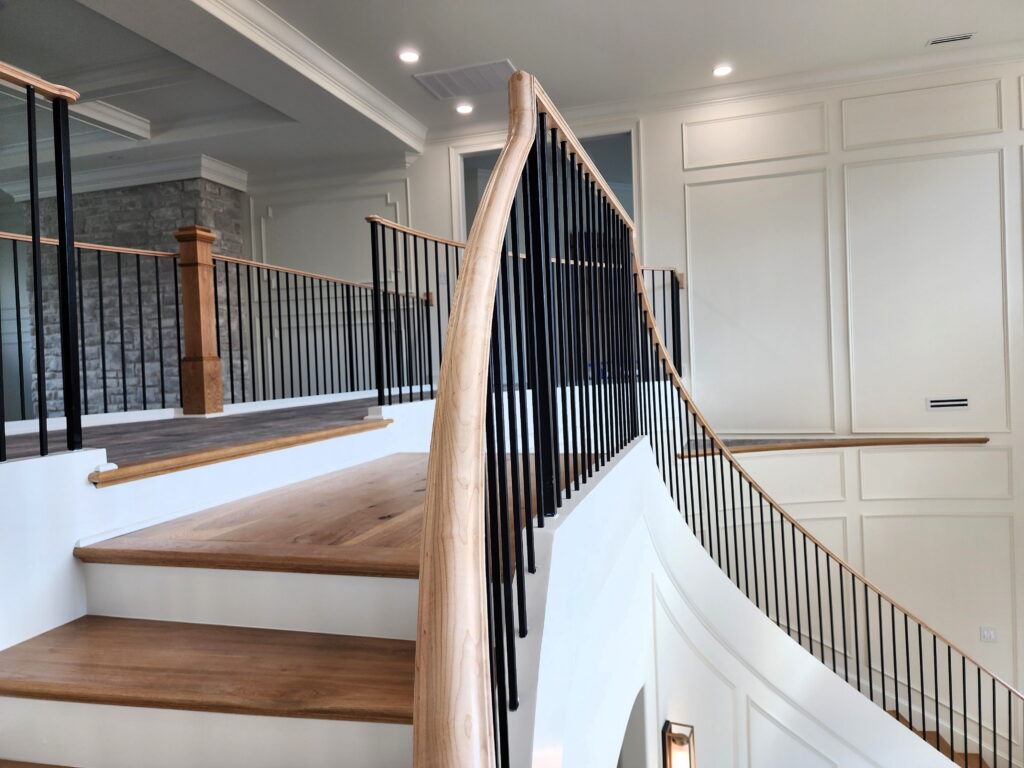
Luxury staircases do more than connect one floor to another. In a high-end home, the staircase shapes the entry sequence, defines the architectural rhythm, and often becomes one of the most photographed features in the residence. For architects, the best stair design requires early coordination between design intent, structural engineering, material selection, code requirements, finish sequencing, and installation planning.
A well-integrated statement staircase should look like it belongs to the home’s architecture, not like a decorative feature added after the floor plan was complete. That is where experienced stair specialists become essential.
Southern Staircase works with architects, designers, and custom builders to design, engineer, fabricate, and install custom stair systems for luxury homes, including curved, floating, modern, traditional, and pre-finished stair solutions.
Key Takeaways on Statement Staircases in Luxury Home Stair Design
- Luxury stairways should be planned early so that structure, layout, railing, materials, and finishes work together.
- Architects use staircases to control movement, sightlines, natural light, and architectural impact in high-end homes.
- Custom stair design requires engineering, code knowledge, precise fabrication, and coordinated installation.
- Materials such as hardwood, steel, glass, cable, stainless steel, and custom iron change both the appearance and performance of the stair system.
- The best luxury stairways feel fully integrated into the home’s architecture, not added as an afterthought.
Why Do Luxury Staircases Matter in High-End Architecture?
In luxury home design, a staircase can set the tone for the entire property. It may greet guests in a grand foyer, float beside a glass wall, wrap through a curved volume, or create a sculptural transition between living spaces. The staircase influences how people experience scale, light, movement, and craftsmanship.
For architects, luxury staircases often serve several purposes at once:
- They create a strong first impression.
- They organize circulation between floors.
- They introduce architectural drama without unnecessary ornament.
- They connect materials used throughout the home.
- They support the client’s expectations for custom craftsmanship.
- They help define whether the home feels modern, transitional, traditional, or estate-level formal.
A staircase can be quiet and minimal or monumental. The right choice depends on the home’s floor plan, ceiling heights, sightlines, structural conditions, and overall design language.
What is an Architect’s Design Process for Luxury Staircases?
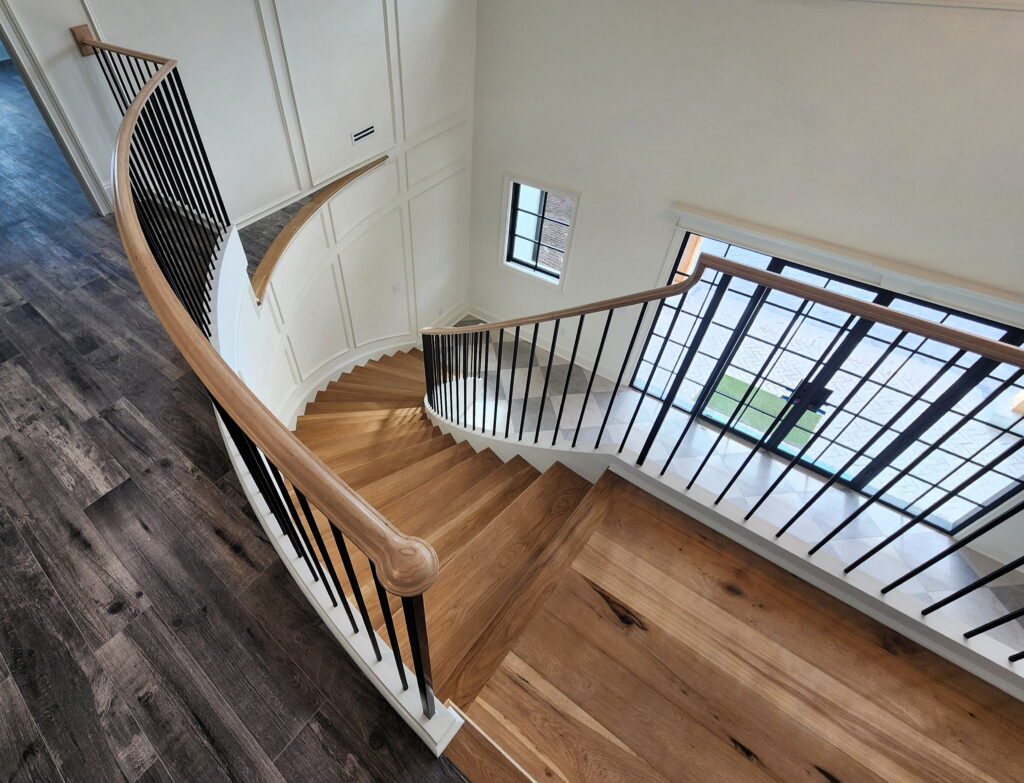
Architects typically begin by identifying what role the staircase should play in the home. Is it a showpiece in the main entry? A floating stair connecting open living spaces? A curved stair designed to soften a formal foyer? A secondary stair that still needs custom-grade detailing?
The design process usually starts with these questions:
- Where will the staircase be viewed from?
- How much visual weight should it carry?
- Should it feel open, sculptural, traditional, or transitional?
- How will it interact with windows, lighting, flooring, walls, and ceiling details?
- What type of railing system supports the architectural style?
- What structural support will be needed?
- What codes and inspection requirements apply?
Once those decisions are made, the staircase can be incorporated into the architecture rather than treated as a late-stage finish selection.
Integrating Stair Geometry into a Luxury Staircase Floor Plan
The geometry of a staircase affects far more than its shape. It influences the home’s circulation, ceiling volumes, framing layout, and finish transitions. Architects must coordinate stair placement with structural openings, landings, wall locations, windows, and adjacent rooms.
Straight Stairs in Luxury Settings
Straight stairs are clean, efficient, and well-suited for modern or transitional homes. In luxury settings, they can be elevated through oversized treads, refined railing systems, open risers, integrated lighting, or a dramatic wall treatment.
Curved Stairs in High-End Design
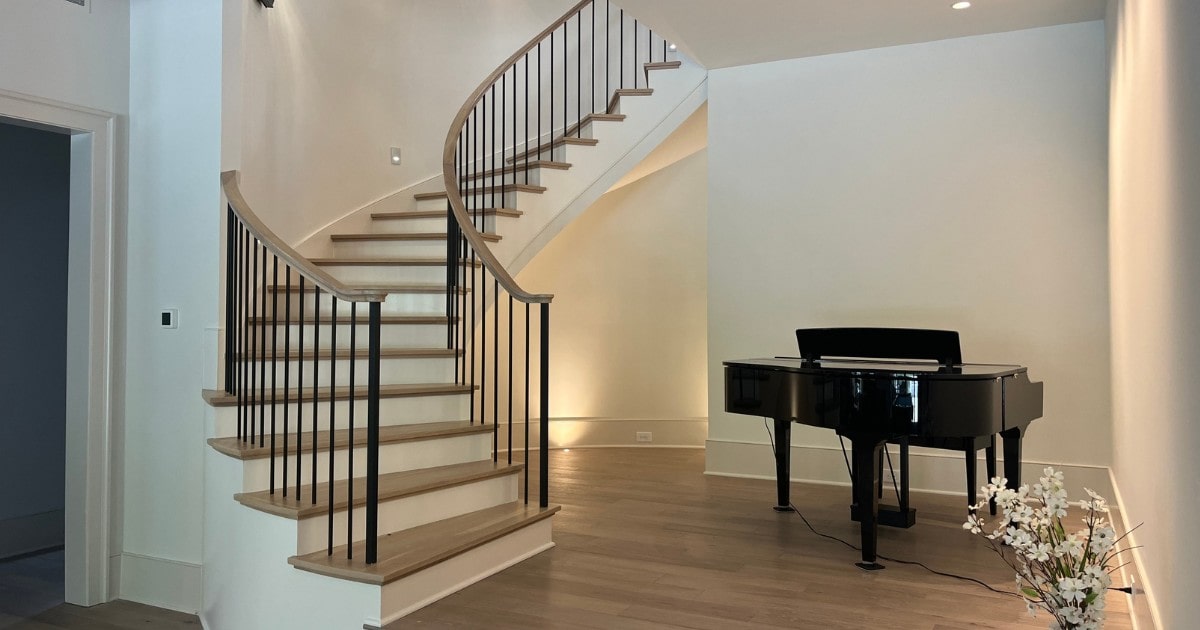
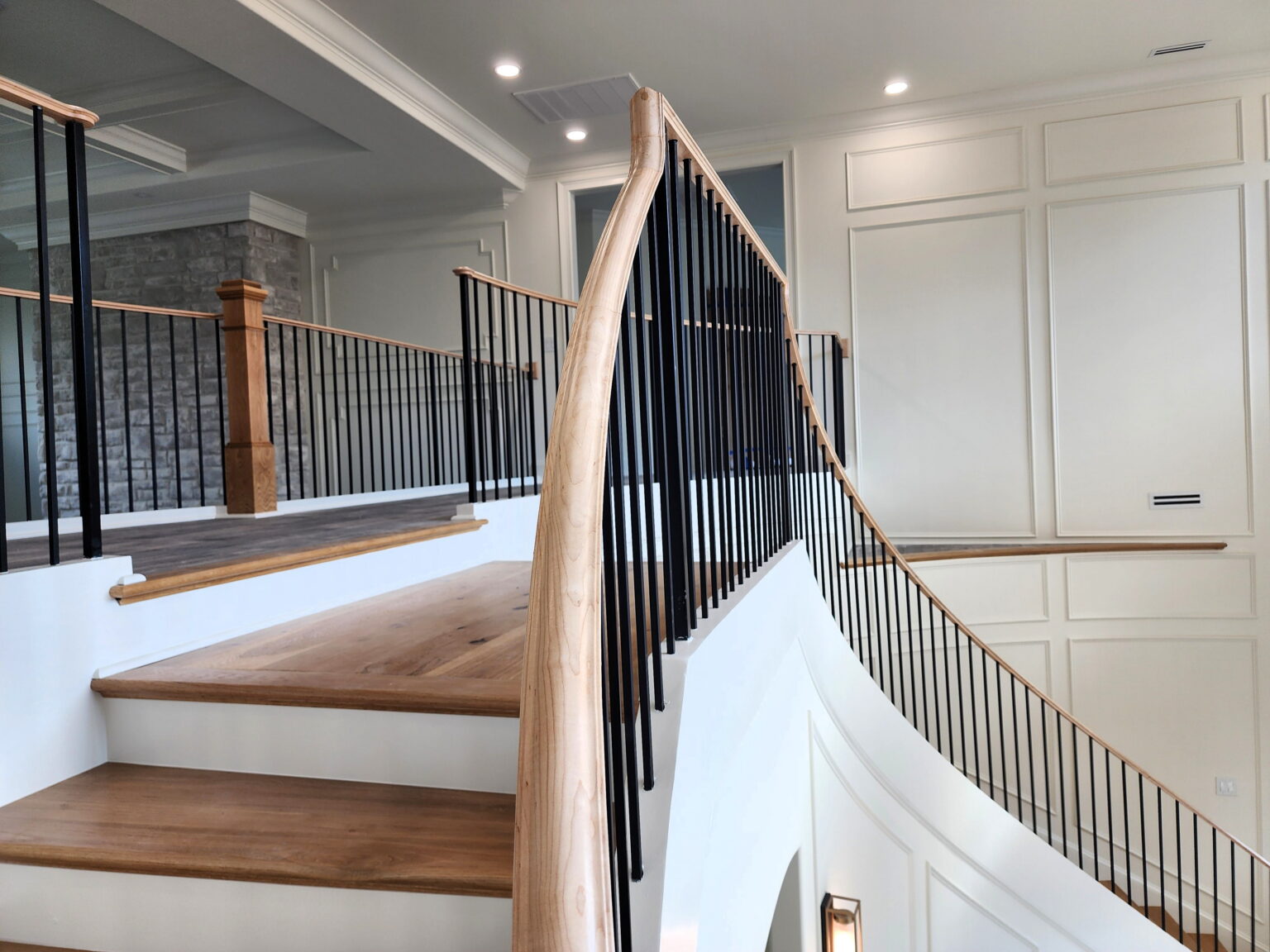
Curved stairs are often used in high-end foyers because they create movement and elegance. Their geometry requires advanced planning because the curve affects tread shape, railing fabrication, handrail flow, and installation tolerances. A curved staircase should feel graceful from every angle, especially when viewed from the entry, balcony, or upper landing.
Modern Floating Stairs
Modern floating staircases are designed to appear light and minimal, but their engineering must be exact. Concealed steel, reinforced framing, tread attachment, guardrail loads, and inspection requirements must be resolved early. Floating stairs are especially effective in homes with open floor plans, large windows, and contemporary interiors.
Grand and Monumental Stairs
In estate homes, the staircase may become the primary architectural feature. These stairs often involve wider runs, custom railings, curved or flared geometry, premium hardwoods, and a strong relationship to the foyer, balcony, and main living areas.
Structural Engineering Behind Luxury Staircases
The most beautiful staircases are also carefully engineered. A luxury staircase must support daily use, withstand movement, meet code requirements, and remain stable over time. For architects, this means the stair cannot be reduced to a mere visual concept.
Structural planning may include:
- Stringer design and span
- Connection to floor systems
- Wall anchoring
- Guardrail load resistance
- Tread thickness and attachment
- Steel reinforcement
- Deflection control
- Framing coordination
- Headroom and opening requirements
This is especially important for floating stairs, open-riser stairs, curved stairs, and glass railing systems. The more minimal the staircase appears, the more precise the concealed structure must be.
Southern Staircase’s custom stair process supports this level of coordination through design, engineering, fabrication, and installation expertise, helping architects and custom builders turn complex stair concepts into buildable systems.
Staircase Materials That Shape Architectural Stair Design
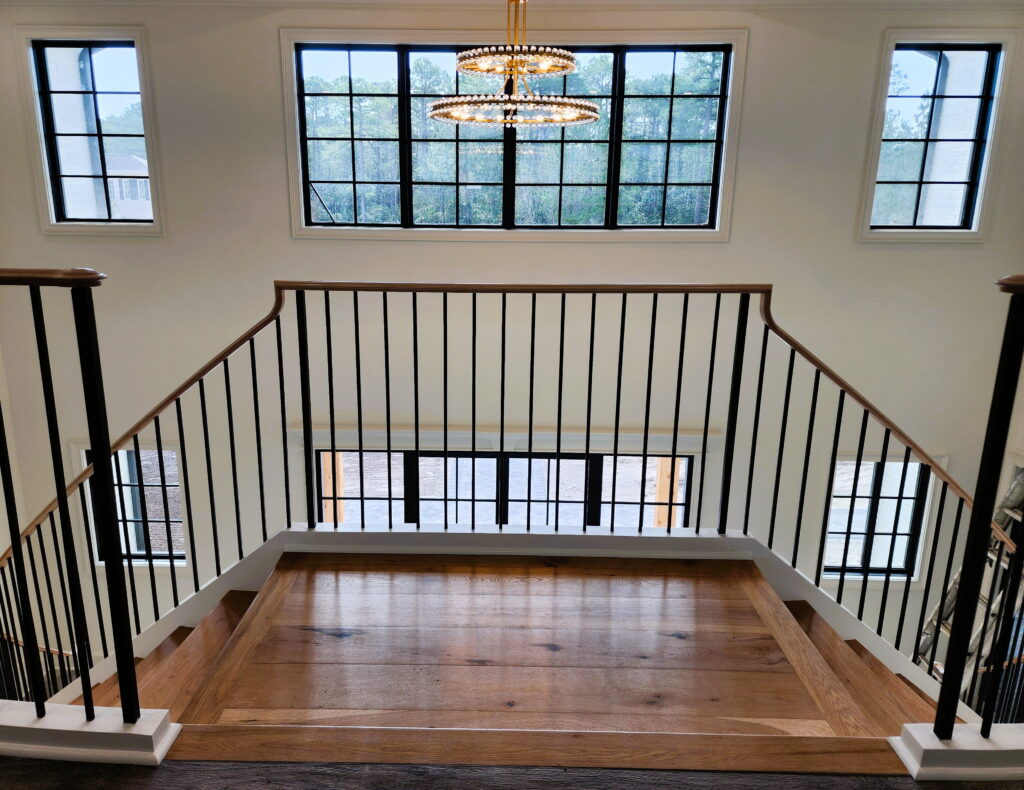
Material selection plays a major role in how luxury staircases look, feel, and perform. Architects often use the staircase to repeat or contrast materials found elsewhere in the home, including flooring, ceiling beams, metal accents, cabinetry, glass, stone, and lighting.
Pre-Finished Custom Hardwood Treads
Pre-finished custom hardwood treads bring warmth, durability, and a strong connection to the home’s interior palette. Common options include white oak, red oak, walnut, maple, and hickory. Each species affects grain character, color, density, and long-term performance.
White oak is a popular choice for modern and transitional homes because it offers strength, stability, and a refined grain pattern. Walnut creates a richer, darker look. Maple provides a cleaner surface but should be selected carefully for high-traffic conditions.
Stainless Steel Stringers and Carriages
Stainless steel stair railings allow architects to create thinner profiles, longer spans, floating effects, and modern sculptural forms. Depending on the design, steel may be exposed as part of the visual language or concealed inside walls and framing.
Steel is often used for:
- Mono-stringer stairs
- Floating stair systems
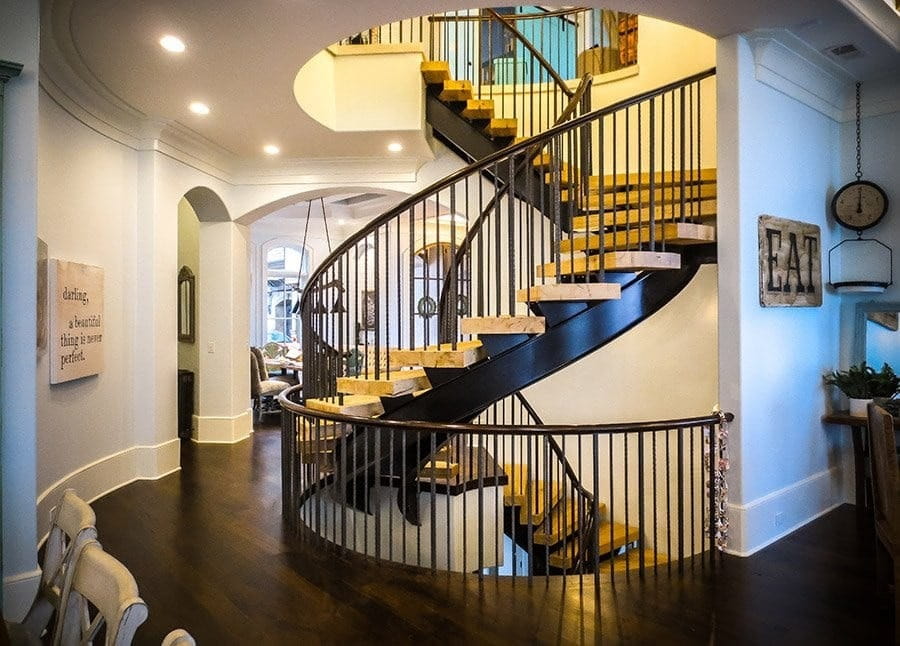
- Curved or helical stair structures
- Open-riser designs
- Glass or cable railing support
- Modern architectural stair systems
Glass Railings
Glass railings preserve views, let light into the stairwell, and create a clean, modern aesthetic. They work especially well in homes with open plans, large windows, and dramatic interior volumes. Proper anchoring is critical because glass systems require precise tolerances and structural backing.
Cable Railings
Cable railings reduce visual weight while still providing a defined guard system. They are often used in modern, transitional, and coastal-inspired interiors. Cable spacing, tension, and long-term maintenance should be considered early in the design process.
Custom Iron and Metal Railings
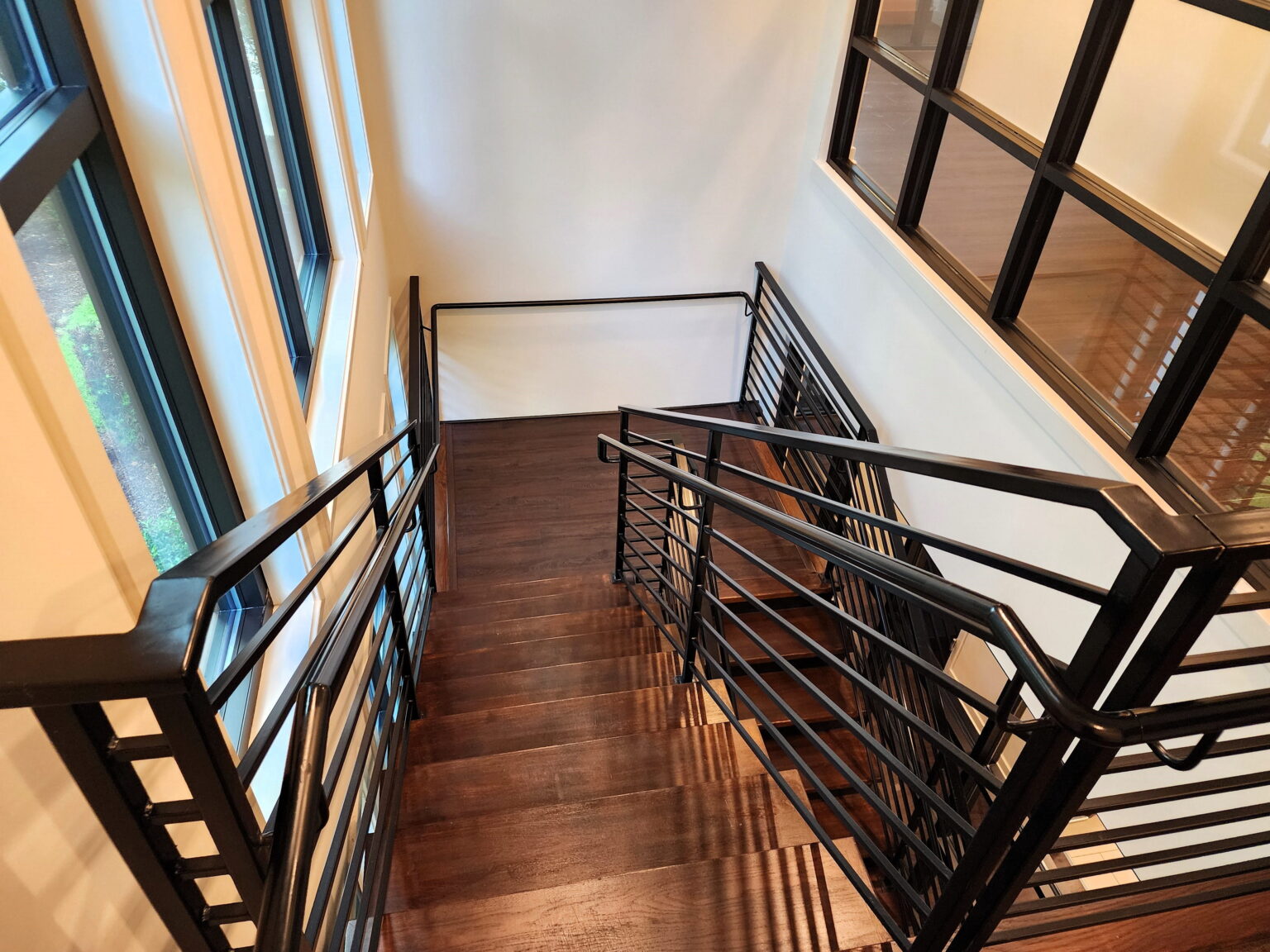
Custom iron, modern metal, and stainless-steel railing systems give architects a wide range of design possibilities. Ornamental iron may support a more traditional or estate-style home, while simple metal pickets, horizontal bars, or stainless-steel details can support a cleaner contemporary design.
Coordinating Railings with the Luxury Architecture
Railings are not an accessory. They are one of the most visible parts of the staircase and can dramatically change the feel of the home. Architects should coordinate railing style early because guard systems affect framing, code compliance, sightlines, material transitions, and installation sequencing.
For example:
- Glass railings require structural backing and precise alignment.
- Cable railings require tension control and spacing compliance.
- Custom iron railings require fabrication time and finish coordination.
- Wood railings must coordinate with flooring, trim, and stain selections.
- Stainless steel or metal systems need finish compatibility with other hardware and architectural details.
The strongest luxury stair designs treat the railing, tread, stringer, handrail, and surrounding architecture as one integrated composition.
The Role of Finishes in Luxury Staircases
Finishes influence the staircase’s final impression. They also affect durability, maintenance, and construction efficiency. In luxury homes, finish consistency matters because stair components often sit near premium flooring, custom millwork, natural stone, large windows, and designer lighting.
Pre-finished custom stair components can help improve consistency, reduce on-site finishing disruption, and support a cleaner installation process. For builders and architects, this can be valuable when schedules are tight or when the project requires precise finish control.
Finish planning should account for:
- Wood species and stain color
- Tread durability
- Sheen level
- UV exposure near windows
- Flooring transitions
- Metal coating or paint finish
- Jobsite protection during installation
- Long-term maintenance expectations
A luxury staircase should look refined on day one and continue to perform as the home ages.
How Architects Coordinate with Builders and Stair Specialists
High-end stair projects require collaboration. Architects establish the design vision, custom builders manage construction execution, and stair specialists help translate the concept into a buildable, code-compliant stair system.
The most successful projects involve stair coordination before framing is complete. This allows the team to confirm floor-to-floor heights, opening dimensions, landing locations, structural support, railing attachment points, and installation access.
Southern Staircase works with custom builders and architects through a process that may include design assistance, budgeting, CAD drawings, renderings, 3D modeling, submittals, engineering support, code expertise, fabrication, and installation.
Early coordination helps reduce:
- Field modifications
- Inspection delays
- Railing attachment problems
- Finish conflicts
- Framing changes
- Material lead time issues
- Stair geometry revisions
In luxury construction, the staircase is too important to leave unresolved until late in the project.
Design Trends in Luxury Staircases
Luxury stair design continues to move toward cleaner profiles, better material integration, and more intentional architectural impact. While every custom home is different, architects and builders are often requesting stair designs that feel refined, open, and highly personalized.
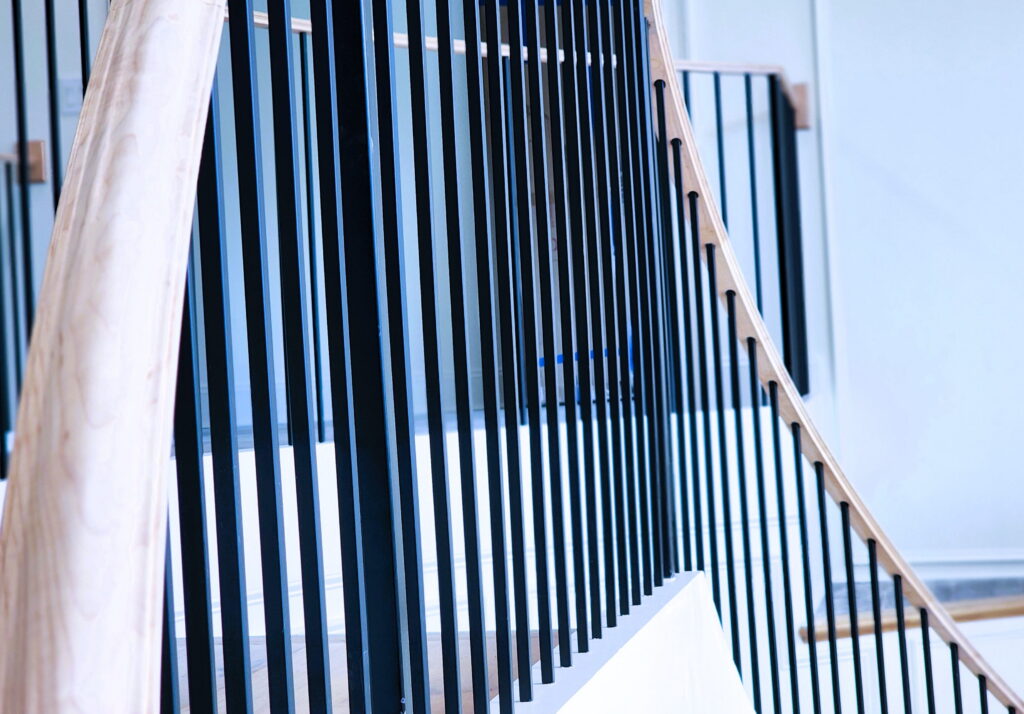 Common luxury staircase trends include:
- Floating staircases with concealed steel
- White oak treads with minimalist railings
- Glass railing systems for open sightlines
- Curved stairs with modern detailing
- Black metal or stainless-steel accents
- Open risers that allow light to pass through
- Integrated stair lighting
- Wider treads for a more substantial feel
- Custom ironwork for estate homes
- Pre-finished components for controlled finish quality
The best trend is the one that fits the architecture. A staircase should never feel forced. It should support the home’s scale, flow, and material story.
What Architects Should Finalize Before Fabrication of High-End Staircase Design
Before a custom staircase moves into fabrication, architects and builders should confirm the details that affect structure, appearance, and installation.
Important items include:
- Final stair location and dimensions
- Floor-to-floor height
- Total run and landing conditions
- Riser and tread configuration
- Open or closed riser design
- Stringer type
- Railing system
- Handrail profile
- Tread species and finish
- Metal finish
- Glass or cable specifications
- Lighting integration
- Wall backing and structural support
- Flooring transitions
- Installation schedule
- Inspection requirements
Clear decisions before fabrication help protect the design vision and reduce jobsite complications.
Luxury Staircases in High-End Homes
Q: What makes a staircase a luxury staircase?
A: A luxury staircase is custom-designed, precisely engineered, and built with premium staircase materials and finishes with refined railings that complement the home’s architecture.
Q: When should architects involve a stair specialist?
A: Architects should involve a stair specialist early in design development, before framing is finalized, so structure, dimensions, railings, and finishes can be coordinated.
Q: Are floating staircases safe for luxury homes?
A: Yes. Floating staircases are safe when properly engineered, structurally reinforced, code-compliant, and installed by experienced stair professionals.
Q: What railing styles work best for high-end staircase design?
A: Glass, cable, stainless steel, wood, custom iron, and modern metal railings can all work well. The best option depends on the home’s architecture and desired level of openness.
Q: Why are custom staircases important in luxury new construction?
A: Custom staircases allow architects and builders to match the home’s scale, style, materials, and structural requirements instead of forcing a standard stair into a custom design.
Why the Right Custom Stair Builder Matters
Luxury staircases require more than craftsmanship alone. They require design fluency, engineering knowledge, code awareness, fabrication precision, and field installation experience. Architects need a stair partner who understands how to protect the design intent while solving the technical demands behind the finished stair.
Southern Staircase brings together stair design, engineering, manufacturing, finishing, and installation capabilities for high-end residential projects. For architects and builders, that single-source expertise helps move complex stair designs from concept to completion with greater confidence.
When the staircase is planned early and built with precision, it becomes more than a functional element. It becomes a defining architectural feature of the home.
Bring the staircase into the conversation early. Southern Staircase helps architects and custom builders design, engineer, fabricate, and install luxury staircases that make the entire home feel intentional.