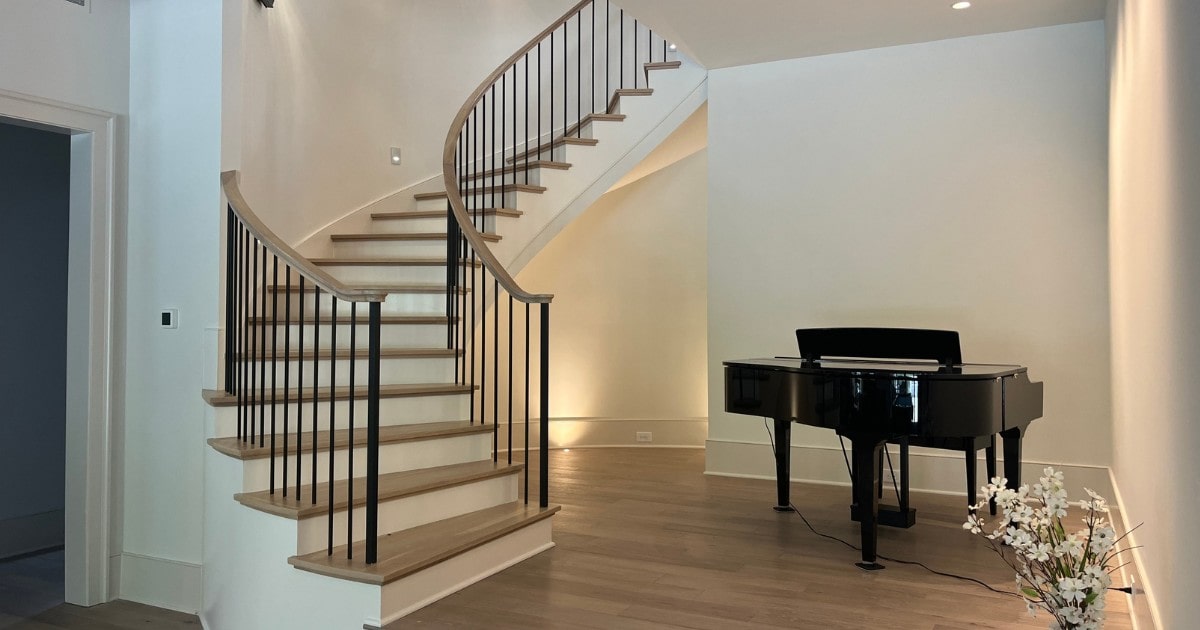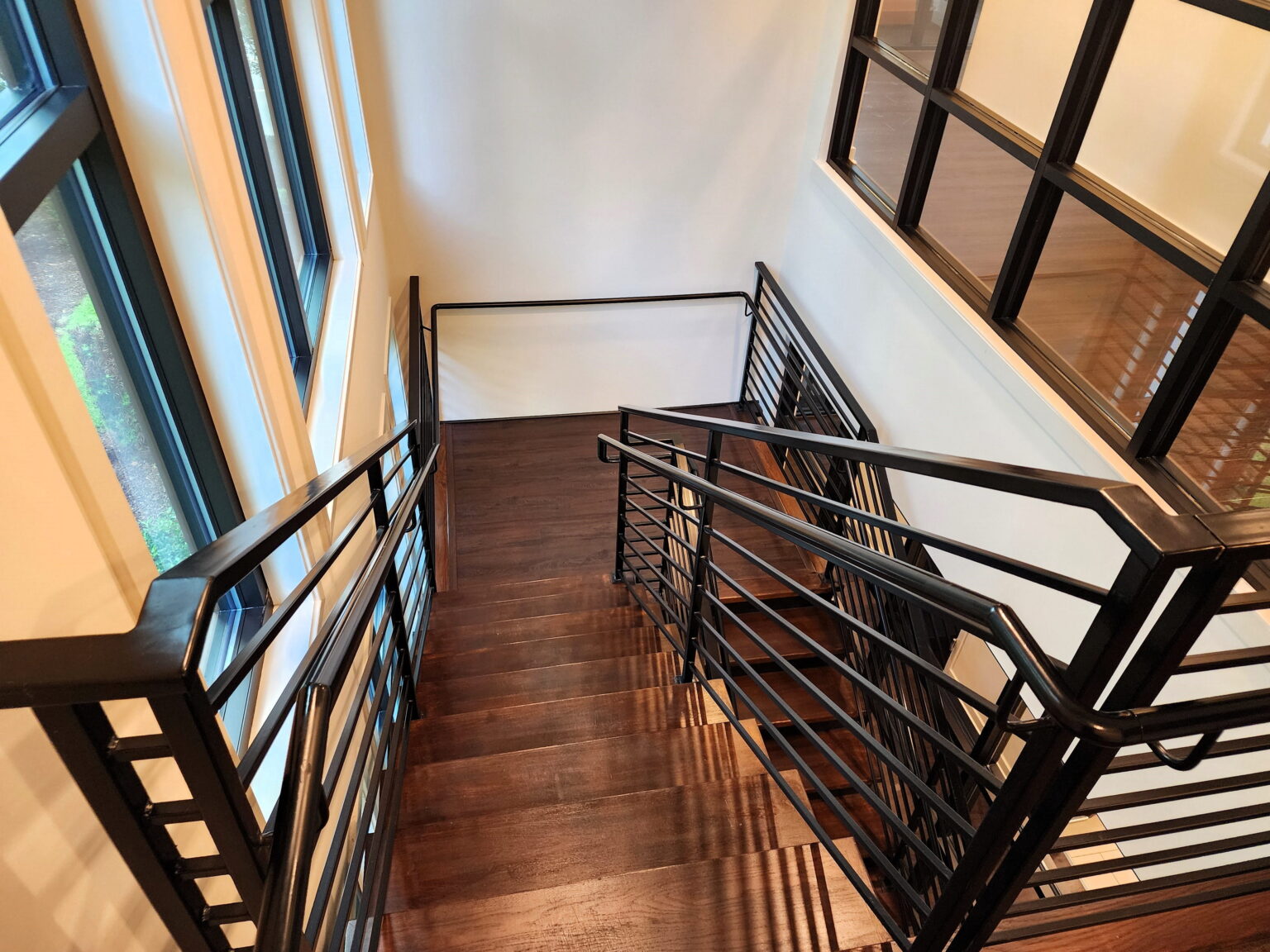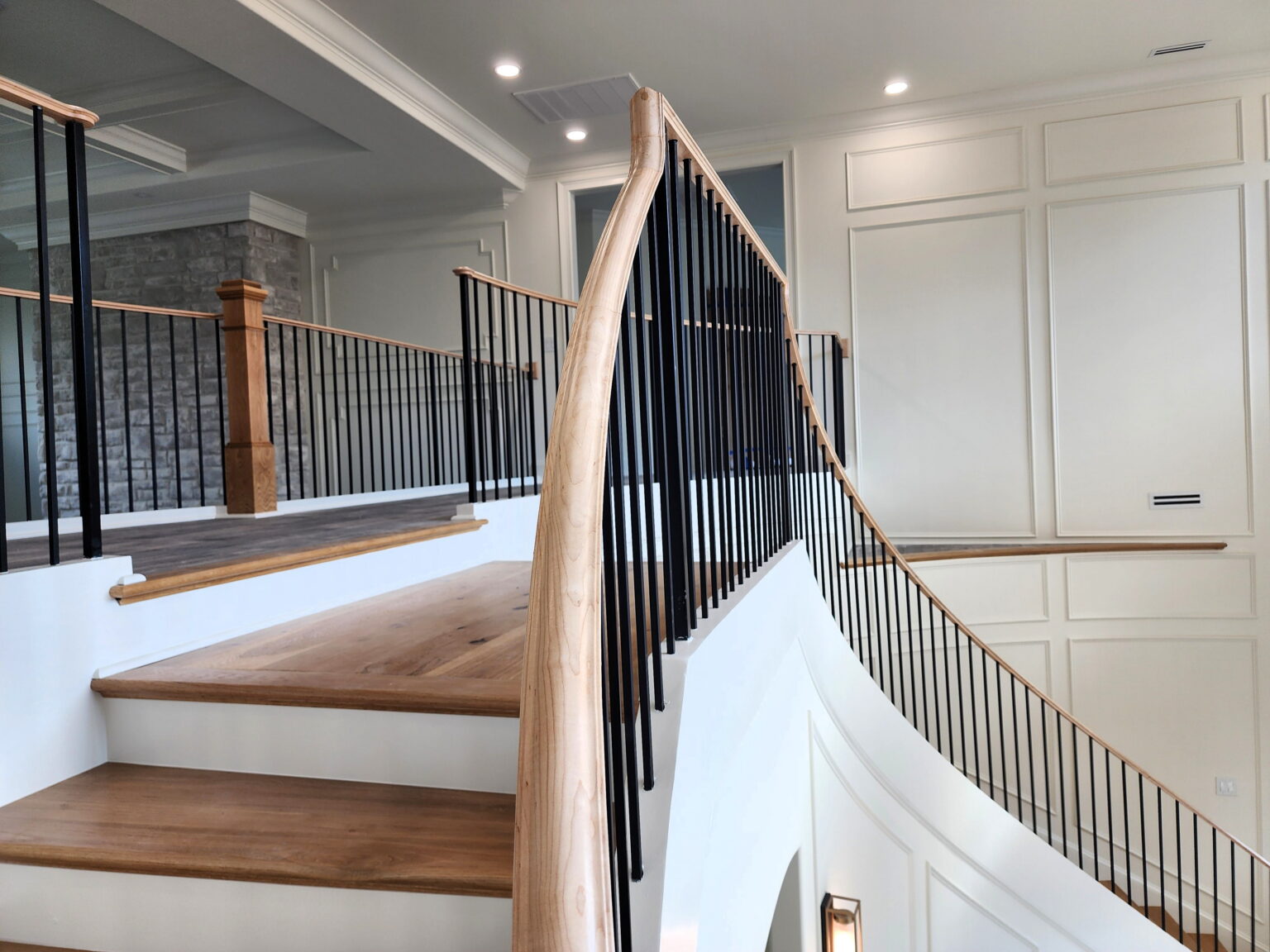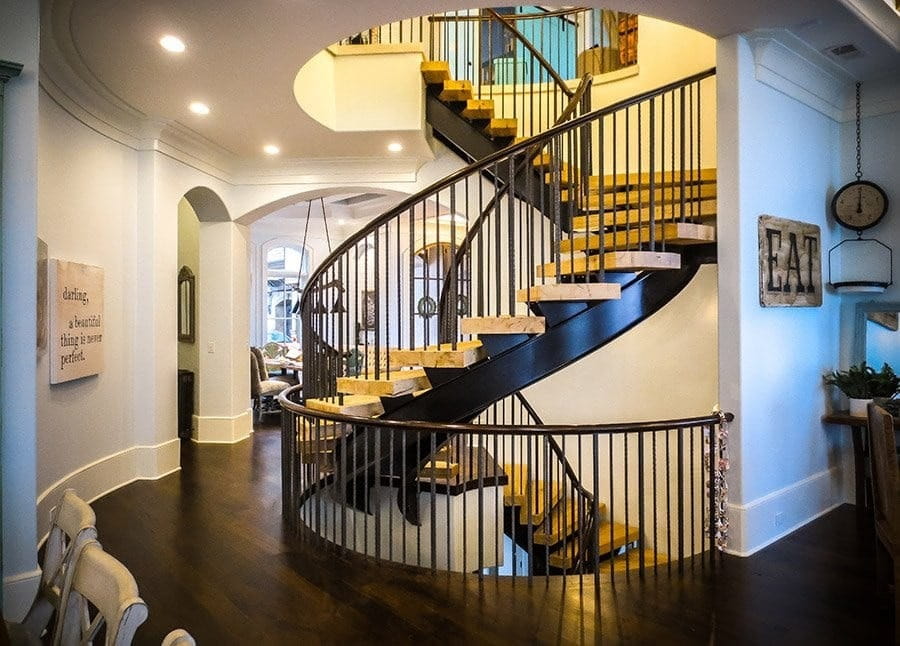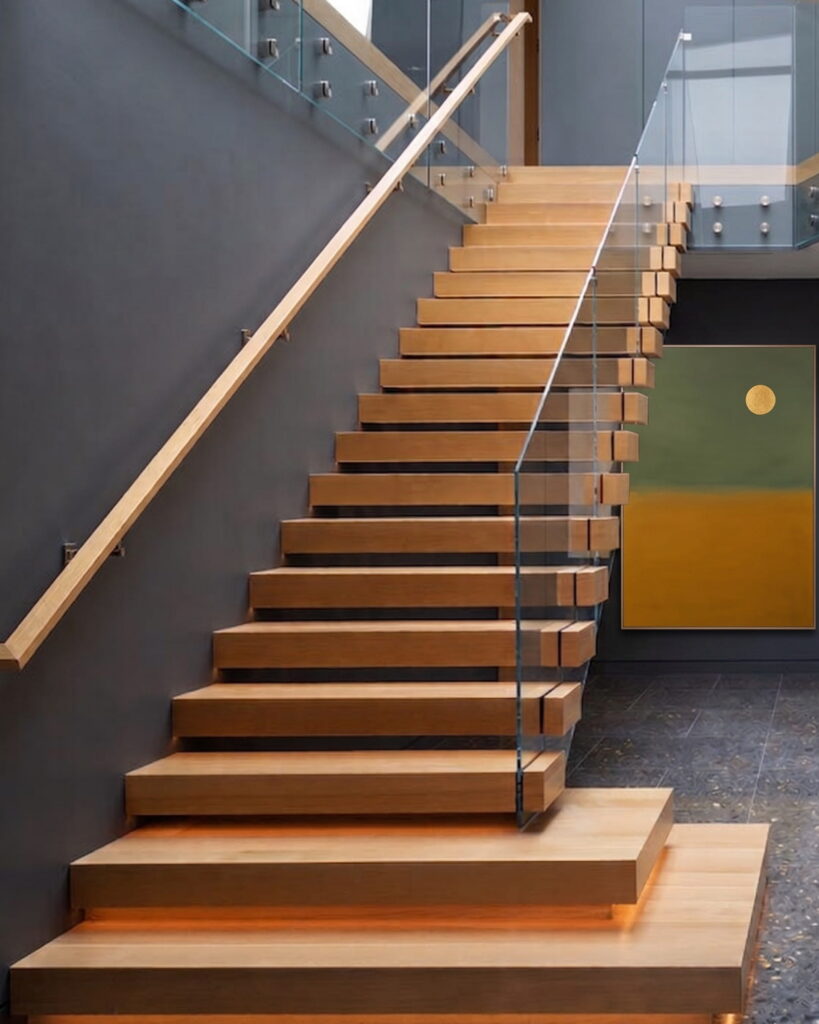
Comparing cantilevered vs. other floating stairs reveals a plethora of design conversations and construction discussions. While they share a clean, open, modern aesthetic, the way they are engineered, installed, and priced differs slightly; cantilevered stairs are a type of floating stairs. Decide whether a cantilevered system is the right type of floating staircase given structural elements, budget, and construction.
Key Takeaways:
- Floating staircases are a broad category defined by appearance, while cantilevered staircases are a specific structural type within the floating category.
- Cantilevered stairs create the most minimal look, but they require each tread to be anchored into a reinforced structural wall.
- Floating mono stringer stairs usually offer more flexibility in design, installation, and material options while still delivering a clean, modern aesthetic.
- Cantilevered staircases typically cost more because they require earlier planning, more engineering, custom steel fabrication, and tighter installation precision.
- The right choice depends on structural feasibility, budget, timeline, and design goals, not just the visual style.
Cantilevered vs. Other Floating Stairs
What is a Floating Staircase?
- A floating staircase is a broad term for any stair system designed to minimize visible structural support.
- This includes mono stringer systems, concealed steel supports, and cantilevered designs.
- The defining characteristic is the visual effect, not the structural method.
- Most floating staircases rely on a central support system or hidden framework that distributes load efficiently while maintaining a clean appearance.
What is a Cantilevered Staircase?
- A cantilevered staircase is a type of floating staircase in which each tread is anchored directly to a structural wall.
- There is no visible support beneath or beside the treads.
- The load is transferred entirely into the wall through embedded steel reinforcement.
- This creates the most minimal and dramatic floating effect possible, but it also introduces the highest level of engineering complexity.
- Cantilevered stairs must be designed early in the construction process, often before framing is complete.
Key Engineering Differences: Cantilevered vs. Other Floating Stairs
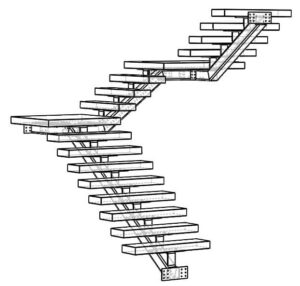
Structural Support Systems
Floating staircases, particularly mono-stringer stair designs, rely on a central steel beam that supports each tread. This beam distributes weight downward into the structure.
Cantilevered stairs, on the other hand, rely on lateral load transfer into a reinforced wall system. Each tread acts as an individual structural element anchored into the wall.
Installation Requirements
Floating stairs with a mono stringer can sometimes be installed later in the build process with proper planning.
Cantilevered stairs require early coordination with framing, engineering, and, in some cases, foundation design. Retrofitting a cantilevered system is significantly more complex and often not feasible without major structural changes.
Tolerance and Precision
Cantilevered systems require extremely precise fabrication and installation. Even minor inconsistencies can lead to visible misalignment or structural concerns.
Cost Differences
Cost is one of the most significant differences between these two systems.
Floating mono stringer stairs offer more flexibility and can often achieve a similar aesthetic at a lower cost. However, costs still vary depending on materials, railing systems, and project complexity.
Cantilevered staircases are typically more expensive due to the level of engineering required, the need for custom steel fabrication, and the structural reinforcement within walls.
For a broader understanding of design options that affect cost, review our catalog of modern staircase materials and finishes.
Code and Safety Considerations
Both cantilevered and floating staircases must meet strict building codes. These include:
- Tread depth
- Riser consistency
- Guardrail requirements
- Load-bearing standards
Floating staircases with central supports may be easier to design within standard code parameters.
Cantilevered systems often require additional engineering verification to ensure compliance because of their unique load-transfer method.
Design Flexibility
Floating staircases offer greater design flexibility. Mono stringer systems can accommodate a wide range of materials, railing styles, and layouts.
Cantilevered stairs offer the most minimal look but limit flexibility due to structural constraints.
The choice between the two often comes down to balancing visual goals with structural feasibility and budget.
When to Choose Between Cantilevered Stairs and Other Floating Stairways
Floating Stairs are… | Cantilevered Stairs are… |
Better suited for projects that require flexibility, cost control, and easier installation while still achieving a modern aesthetic. | Ideal when the goal is a highly architectural, minimalist statement, and the project allows for early structural integration |
Multiple structural systems that offer more flexibility. | A specific type of floating staircase with wall-based structural support |
A greater investment in engineering that requires early planning. | Balanced by cost, design, and structural efficiency. |
Frequently Asked Questions on Cantilevered Stairs vs. Floating Stairs
What is the main difference between cantilevered and floating stairs?
Cantilevered stairs are a type of floating stairway. Cantilevered stairs rely on wall support; they are anchored to a wall, while floating stairs may use central or concealed support systems.
Are cantilevered stairs more expensive?
Yes, due to increased complexity in engineering, fabrication, and installation.
Can cantilevered stairs be added to an existing home?
In most cases, significant structural modifications are required, making it more difficult than installing a mono stringer system.
Do both cantilevered and floating stairs meet building codes?
Yes, cantilevered and floating stairs meet code when properly engineered and installed in accordance with current standards.
Which option is more durable in the long term, cantilevered or floating stairs?
Both can perform well when designed correctly, but durability depends on engineering quality and installation.
Choosing between cantilevered and other floating stairs is not just a design decision. It is a structural and financial decision that impacts the entire project. The best next step is to understand how each option fits your space, budget, and goals.
Start with this floating staircase design, engineering, and safety guide, then connect with a team member who can guide you through the process with confidence and precision.