Key Takeaways
- A metal stair railing is a railing system whose posts, balusters, or rails are made from iron, steel, stainless steel, or aluminum, prized for strength, slim sightlines, and long service life.
- Wrought iron and steel suit traditional and modern interiors, stainless steel and aluminum resist corrosion and work well outdoors.
- Design style, material, finish, and infill (balusters, cable, or glass) drive both the look and the price.
- Installed metal railings typically range from $100 to $400 per linear foot, or more, depending on material, complexity, and custom fabrication.
- Custom fabrication gives you code compliance, an exact fit, and a one-of-a-kind design that prefab kits cannot match.
What is a metal stair railing?
A metal stair railing is a stair railing system built primarily from metal components, most often wrought iron, mild steel, stainless steel, or aluminum. Homeowners and builders choose metal because it is strong, allows thin and open sightlines, holds intricate custom shapes, and lasts for decades with minimal upkeep.
Metal works for nearly every style. It can be scrolled and forged for a traditional staircase, or drawn into clean horizontal bars and thin pickets for a modern one. That flexibility, plus its durability, is why metal is one of the most popular railing materials for both homes and commercial spaces.
Types of metal stair railings
Wrought iron
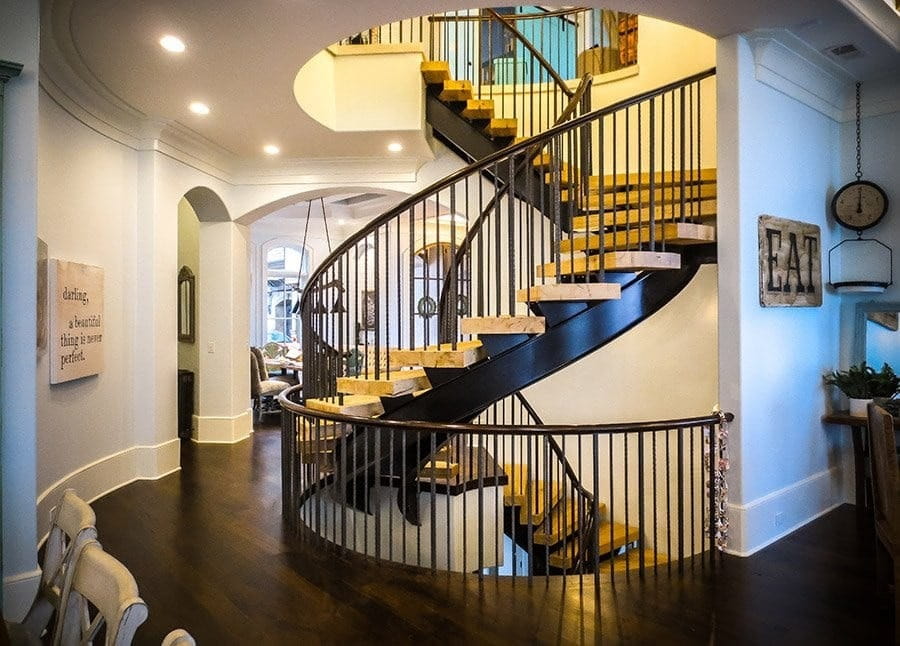
Wrought iron is the classic choice for elegant, detailed railings. It can be forged into scrolls, twists, and custom patterns, and it pairs beautifully with wood treads and handrails. Modern “wrought iron” is usually solid mild steel worked in the traditional style, offering the same look with strong, consistent stock.
Best for: traditional, transitional, and luxury interiors that want detail and warmth.
Steel
Steel is the workhorse of modern railing design. It is strong, more affordable than stainless, and easy to fabricate into slim posts, thin pickets, and horizontal bar infill. Powder coating gives it a durable, even finish in almost any color.
Best for: modern and industrial interiors, and structural railings that need to span or cantilever.
Stainless steel
Stainless steel resists corrosion, maintains a bright, contemporary finish, and requires little maintenance. It is a favorite for cable railing posts, glass railing hardware, and exterior applications near moisture.
Best for: modern interiors, cable and glass systems, coastal and exterior projects.
Aluminum
Aluminum is lightweight, rust-resistant, and cost-effective, which makes it common for exterior and deck railings. It is not as strong as steel for large custom spans, but it performs well for standard residential exterior runs.
Best for: decks, porches, and exterior stairs where weight and corrosion resistance matter.
Indoor versus outdoor metal railings
Indoors, the priority is design: sightlines, finish, and how the railing frames the space. Steel and wrought iron dominate interior stairs, often combined with wood handrails.
Outdoors, the priority is durability. Exterior metal railings must resist weather and meet load requirements, so material and finish matter more:
- Choose stainless steel or properly galvanized and powder-coated steel for longevity.
- Aluminum is a strong value option for standard deck runs.
- Confirm the railing meets exterior guard height and load code (see our stair railing height and code guide).
Popular metal stair railing design styles
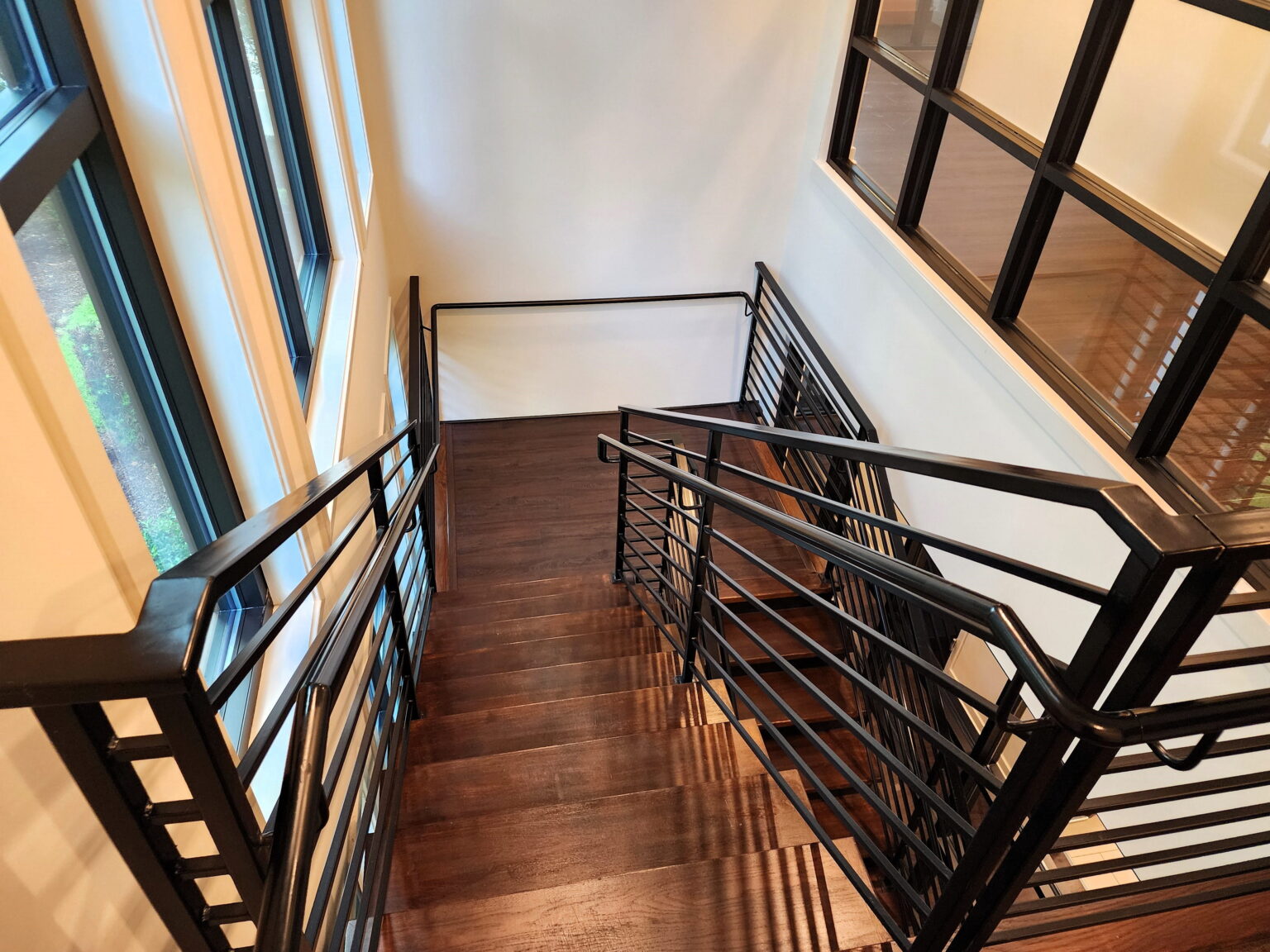
- Modern horizontal bar: thin steel top rail with horizontal bars or rods, minimal and open.
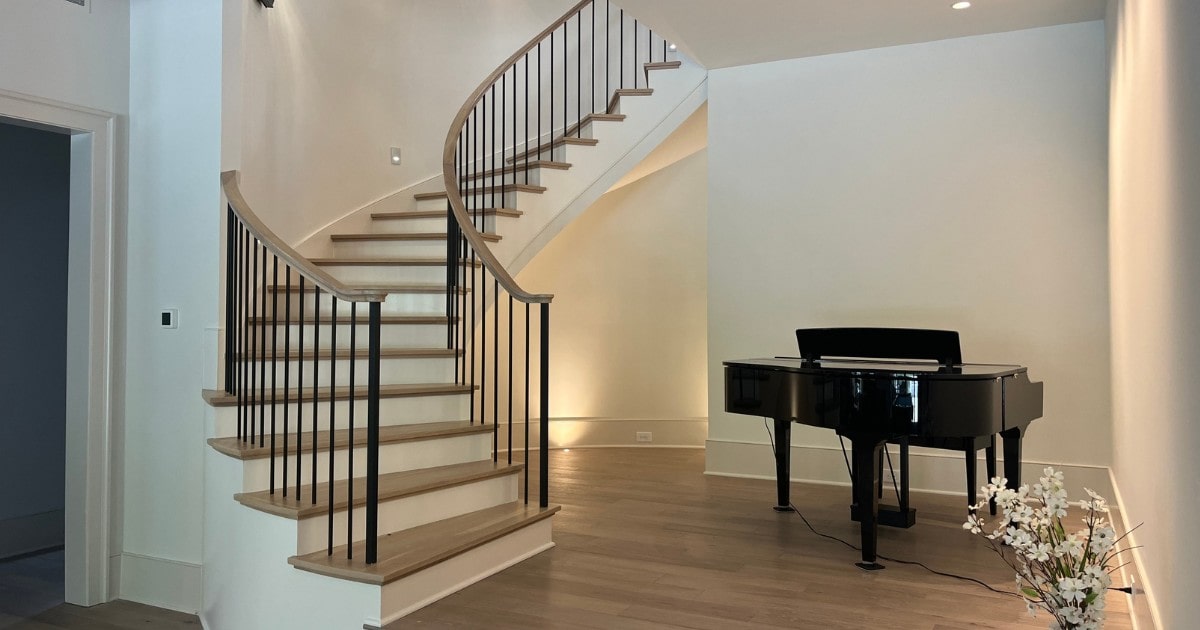
- Vertical picket: evenly spaced metal pickets, clean and timeless, easy to keep code compliant.
- Cable infill with metal posts: stainless-steel posts with tensioned cable for an open, view-friendly look.
- Glass with metal frame: metal posts and rail with glass panels for a bright, contemporary feel.
- Forged and scrolled iron: decorative traditional patterns for elegant, detailed staircases.
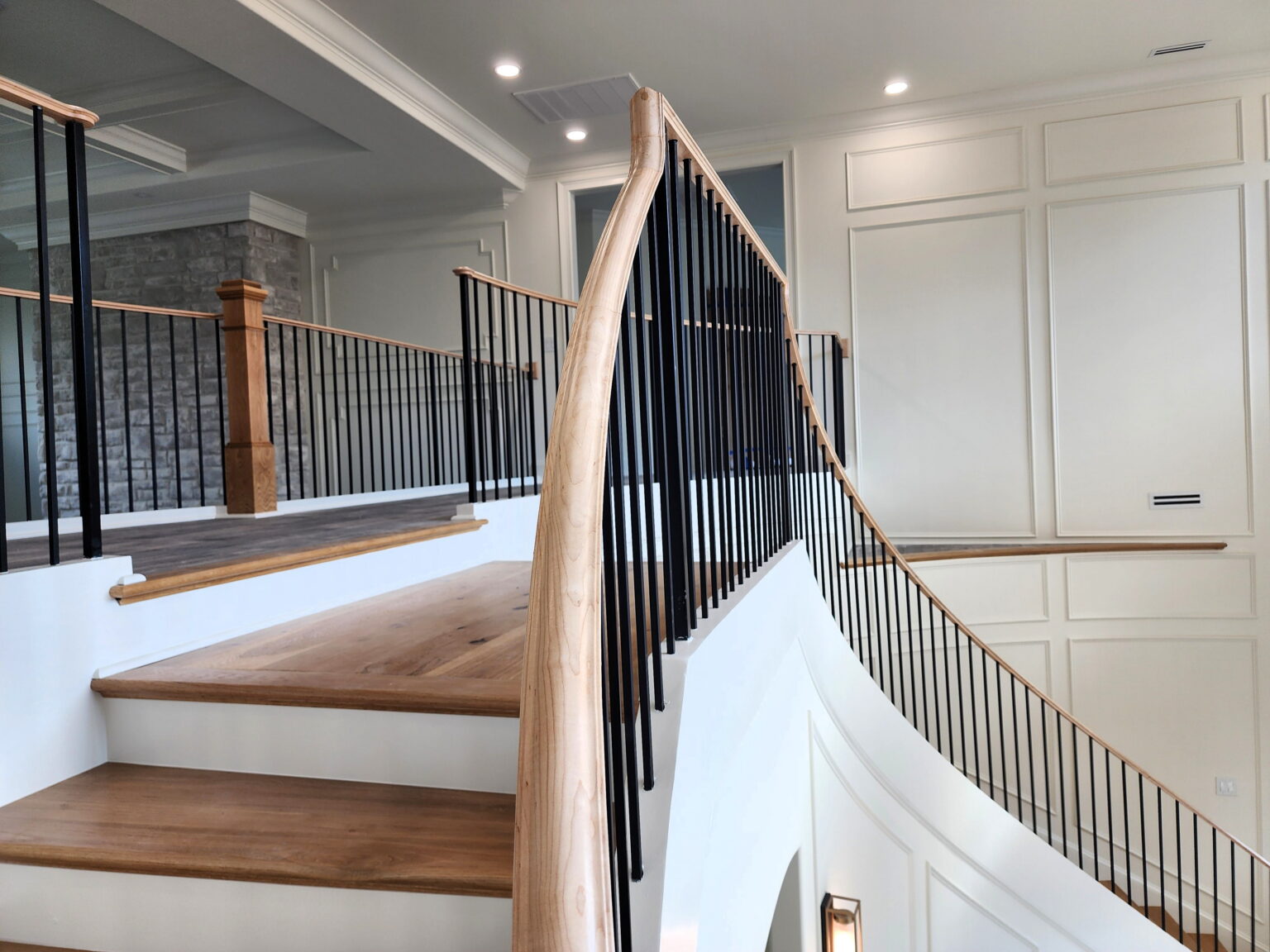
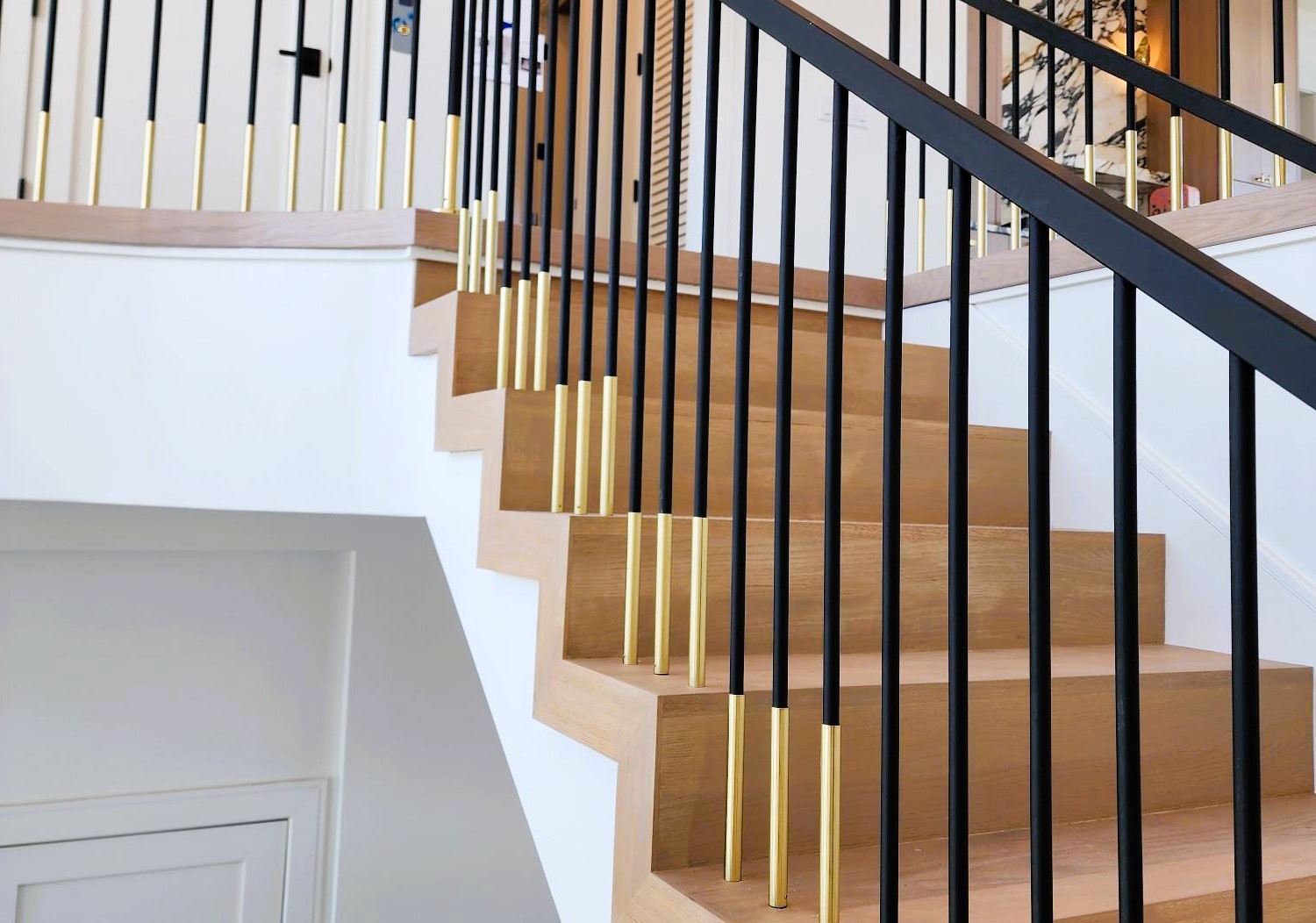
- Mixed metal and wood: a metal railing with a warm wood handrail, the most requested transitional combination.
What does a metal stair railing cost?
Cost depends on the material, design complexity, infill type, finish, and whether the railing is prefabricated or custom-fabricated. As a general guide, installed metal stair railings often range from roughly $100 to $400 or more per linear foot. Simple aluminum or steel picket runs sit at the lower end, while custom forged iron, stainless cable systems, and glass with metal frames sit at the higher end.
Main cost drivers:
- Materials: aluminum and mild steel cost less than stainless steel and hand-forged iron.
- Infill: pickets are the most economical, cable and glass cost more due to hardware and labor.
- Design complexity: curves, custom patterns, and long spans add fabrication time.
- Finish: powder coating, plating, and specialty finishes affect price.
- Site conditions: exterior anchoring and difficult access raise installation costs.
Because every staircase is different, the most reliable number comes from a project-specific quote.
Metal stair railing maintenance
Metal railings are low maintenance, but upkeep varies by material:
- Powder-coated steel: wipe with mild soap and water, touch up any chips to prevent rust.
- Wrought iron: dust regularly, address surface rust early, refinish as needed over the years.
- Stainless steel: clean with a stainless-safe cleaner to maintain the bright finish.
- Aluminum: rinse periodically, especially outdoors; essentially rust-free.
Prefab versus custom metal railings
Prefab kits are inexpensive and fast, but they come in fixed sizes and generic profiles; they can be hard to fit to real stairs, and they rarely deliver a distinctive look. Custom fabrication costs more, and it gives you:
- An exact fit to your staircase geometry.
- Code-compliant heights, spacing, and load capacity built in.
- Material, finish, and design chosen for your space.
- A durable, one-of-a-kind railing that adds real value to the home.
For a staircase that acts as the centerpiece of a home or commercial lobby, custom fabrication is almost always the better investment.
How to choose the right metal stair railing
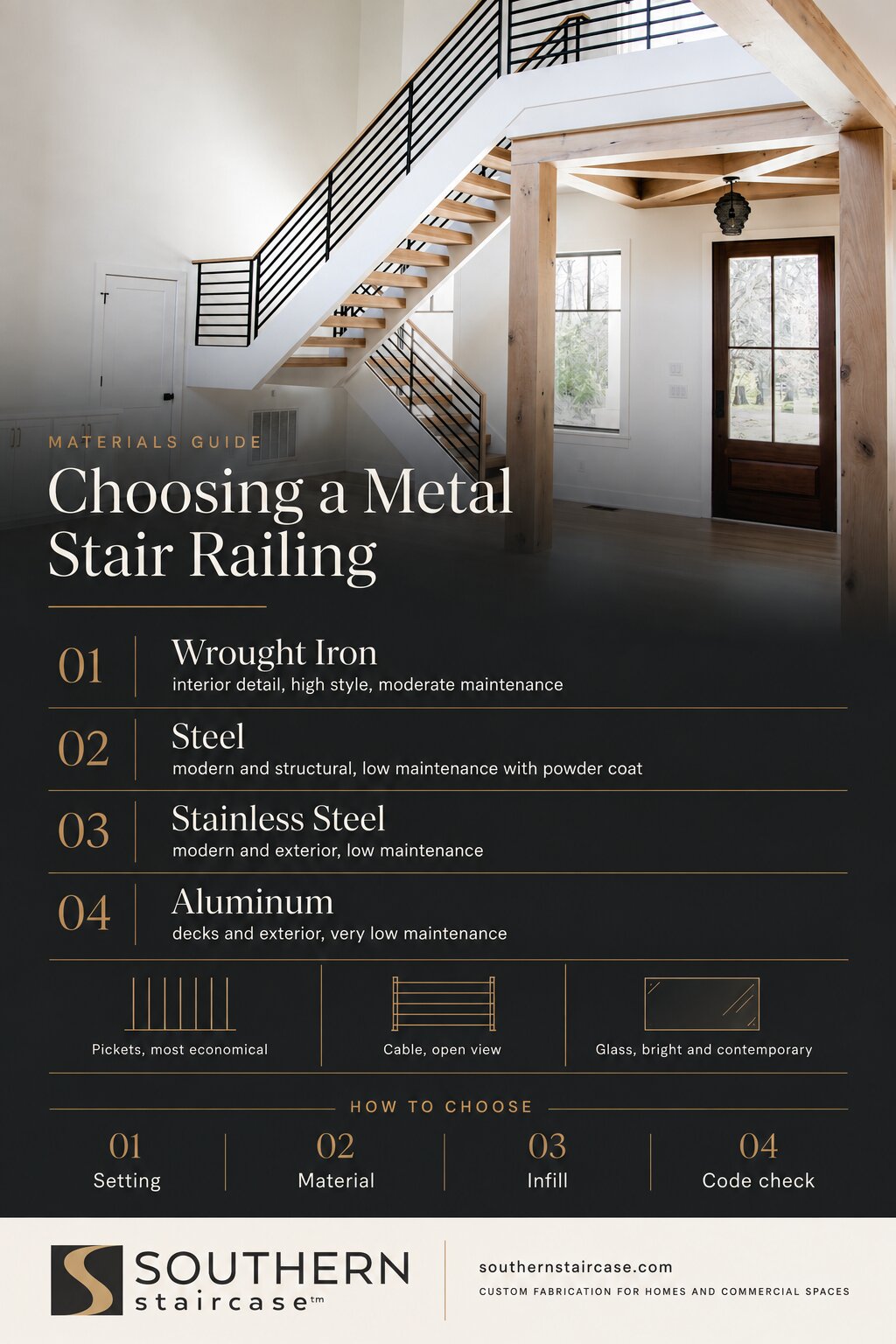
- Start with the setting: interior design railing, or exterior durability railing.
- Match the material to the goal: iron or steel for interior details, stainless steel or aluminum for exterior use.
- Pick the infill for the look you want: pickets, cable, or glass.
- Confirm the design meets local code for height, spacing, and load.
- Work with a fabricator who designs, builds, and installs the railing so it is engineered as one system.
Southern Staircase designs, fabricates, and installs custom metal stair railings in iron, steel, stainless steel, and mixed materials for homes and commercial spaces across the Southeast. Tell us about your staircase, and we will help you choose the right material, style, and infill.
Frequently asked questions
What is the best metal for a stair railing?
Steel and wrought iron are best for interior design detail and strength. Stainless steel and aluminum are best for outdoor use due to their corrosion resistance.
Are metal stair railings expensive?
They range widely. Aluminum and steel picket railings are affordable, while custom forged iron, cable, and glass systems are more expensive. Expect roughly $100 to $400 or more per linear foot installed.
Can metal railings be used outdoors?
Yes. Use stainless steel, aluminum, or galvanized and powder-coated steel, and make sure the railing meets exterior guard height and load code requirements.
Is a metal railing better than wood?
Metal is stronger, slimmer, and lower-maintenance, and it allows for more open sightlines. Many of the best designs combine a metal railing with a wood handrail.