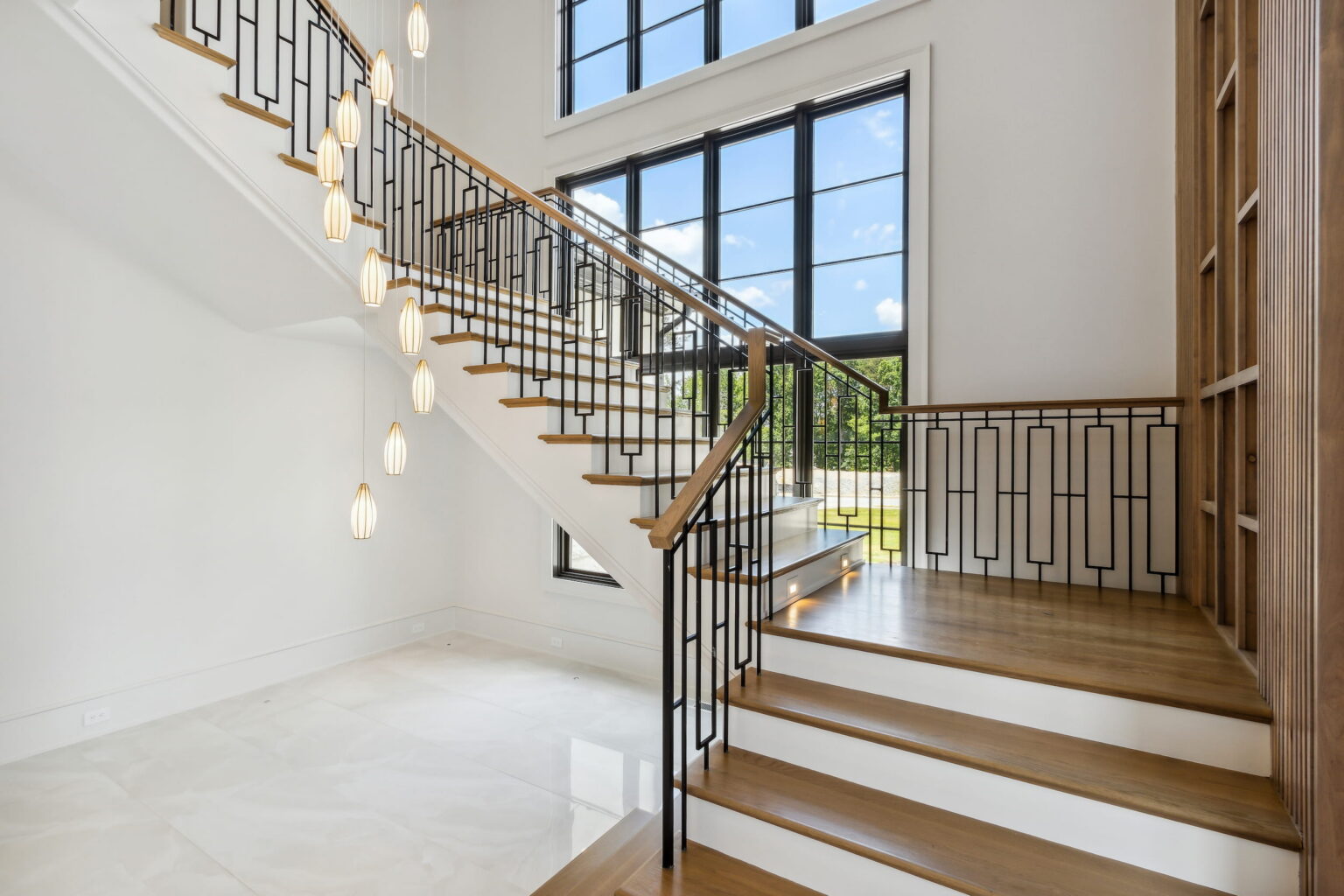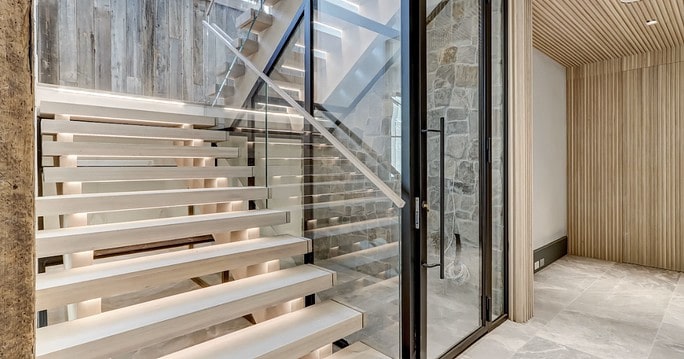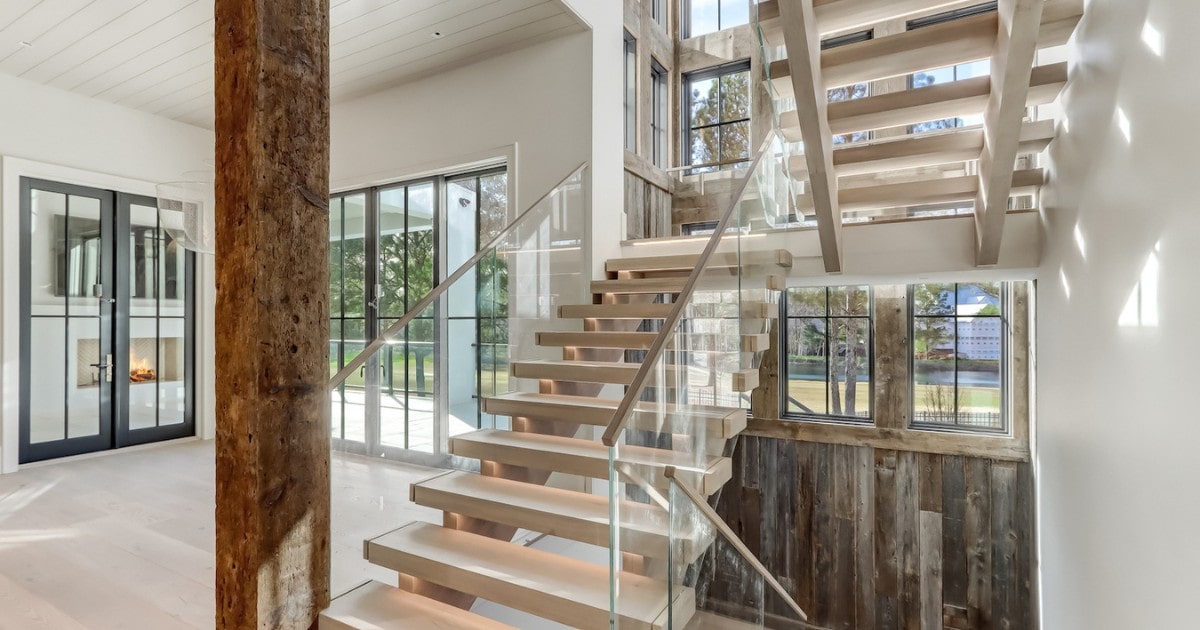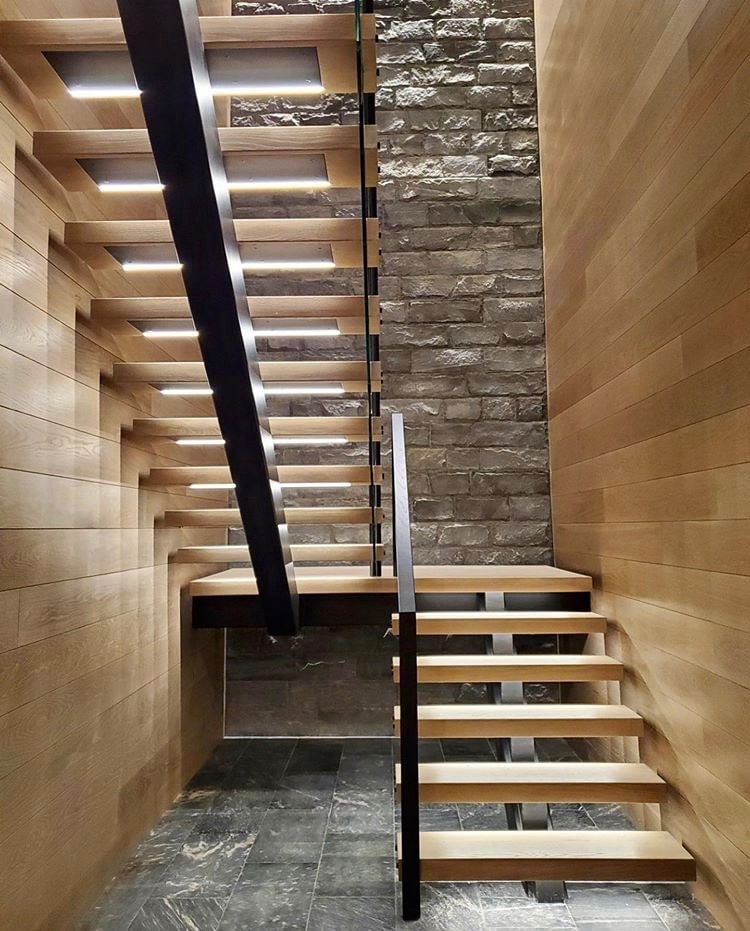
Floating stairs have become one of the defining architectural features of today’s modern staircases, celebrated for their clean profiles, open sightlines, and sculptural appeal. Within this category, mono-stringer and dual-stringer systems are the two dominant structural approaches, each delivering a distinct balance of strength, function, engineering complexity, and visual presence. Understanding their trade-offs helps homeowners, builders, and architects choose the system that best supports their project’s goals, whether creating a bold centerpiece or a subtle architectural accent.
Precision engineering and expert craftsmanship must come together to deliver floating stair systems tailored to each project’s structural demands and aesthetic vision. The comparison below outlines the differences between mono-stringer and dual-stringer systems, where each performs best, and how they impact the appearance and feel of modern stairs and curved staircases.
Key Takeaways on Modern Floating Stairs
- Mono-stringer stairs deliver the most dramatic, minimalist look for modern stairs.
- Dual-stringer systems offer more stability and are well-suited for long runs and curves.
- Both systems support open risers, custom materials, and modern railing options.
- Structural engineering plays a crucial role in determining the choice between the two.
- Each system can be tailored to enhance the architecture of modern curved staircases and contemporary interiors.
What are Mono-Stringer Floating Stairs?
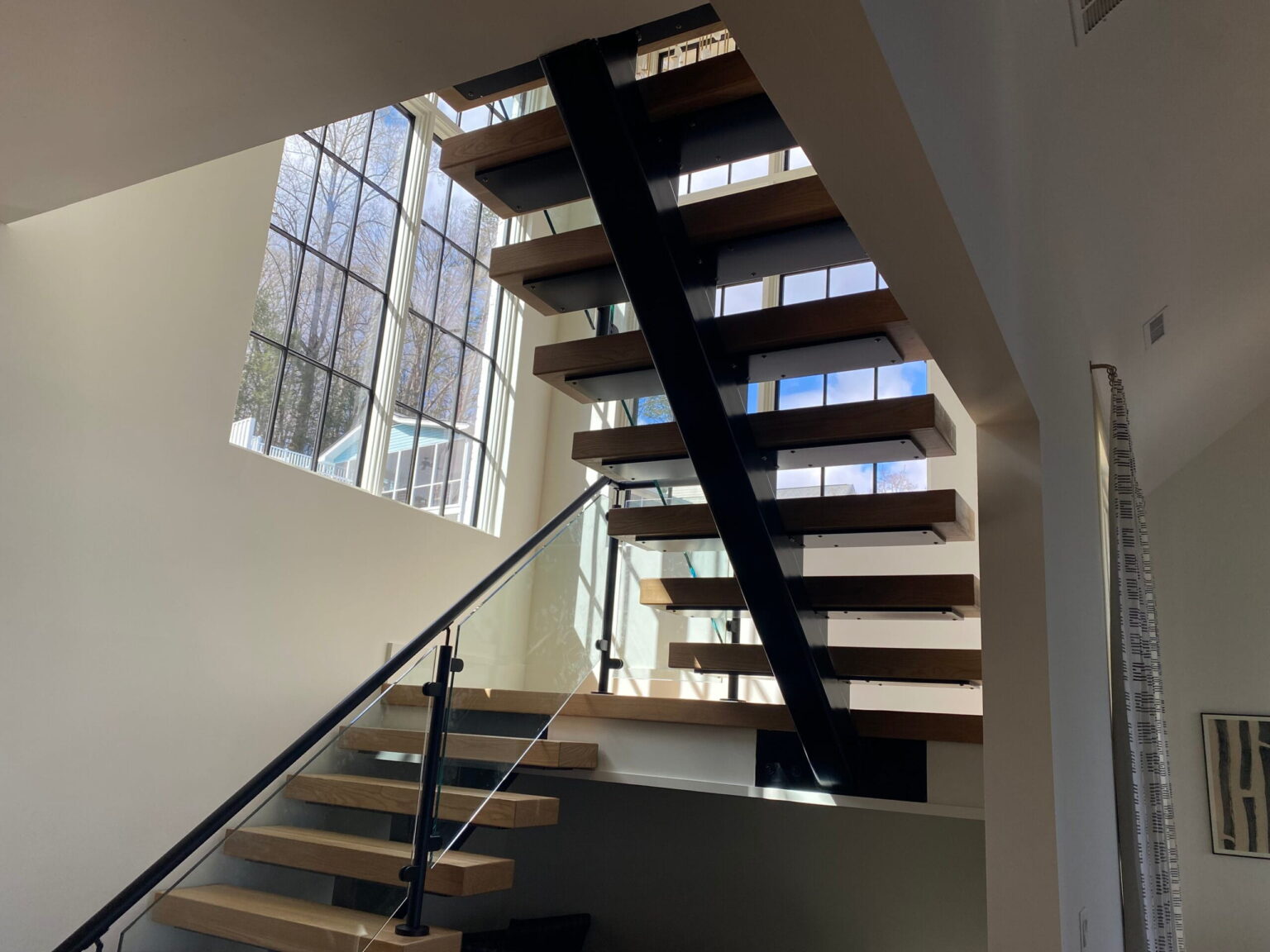
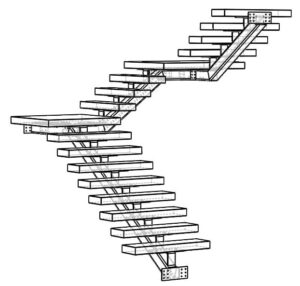
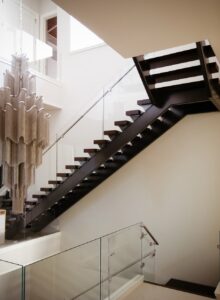
A mono-stringer stair uses a single steel spine, typically centered beneath the treads. This spine carries the entire load of the stairs, allowing the treads to appear as though they are floating in space.
Key characteristics:
- One central structural member
- Clean, minimalist look
- Strong engineering is required to support the load through a single axis
- Excellent option for open-concept homes and modern commercial spaces
The mono-stringer is the most visually dramatic option because it maximizes open space around the treads. When paired with wood, glass, or steel railings, it achieves the distinctly light and airy look characteristic of high-end modern staircases.
What are Dual-Stringer Floating Stairs?
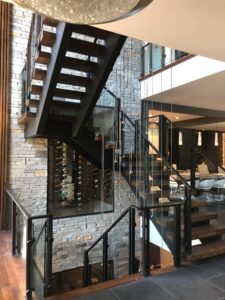
Dual-stringer stairs use two parallel stringers, typically positioned beneath the outer edges of the treads. These stringers share the load, creating a balanced structural system.
Key characteristics:
- Two structural members support each tread
- Enhanced stability and load distribution
- Slightly more visual weight than a mono-stringer
- Excellent for straight, L-shaped, U-shaped, and modern curved staircase applications
Dual-stringer systems offer more design flexibility than many people expect. When carefully engineered, they work well in both straight configurations and sweeping modern curved staircases.
Structural Trade-Offs: Which System Performs Better?
Load Capacity
Because dual-stringer systems distribute weight across two members, they can support heavier loads with less complex engineering. Mono-stringer systems can achieve the same performance, but their central spine must be engineered with greater precision and a thicker material.
Span Length
- Mono-stringers: require more robust steel for long spans
- Dual-stringers: often easier to engineer across long runs
Rigidity and Vibration
Dual-stringer stairs typically offer greater stiffness and reduced vibration. Mono-stringers can achieve comparable rigidity with proper steel sizing, but the engineering requirements can be more demanding.
Curved Stair Applications
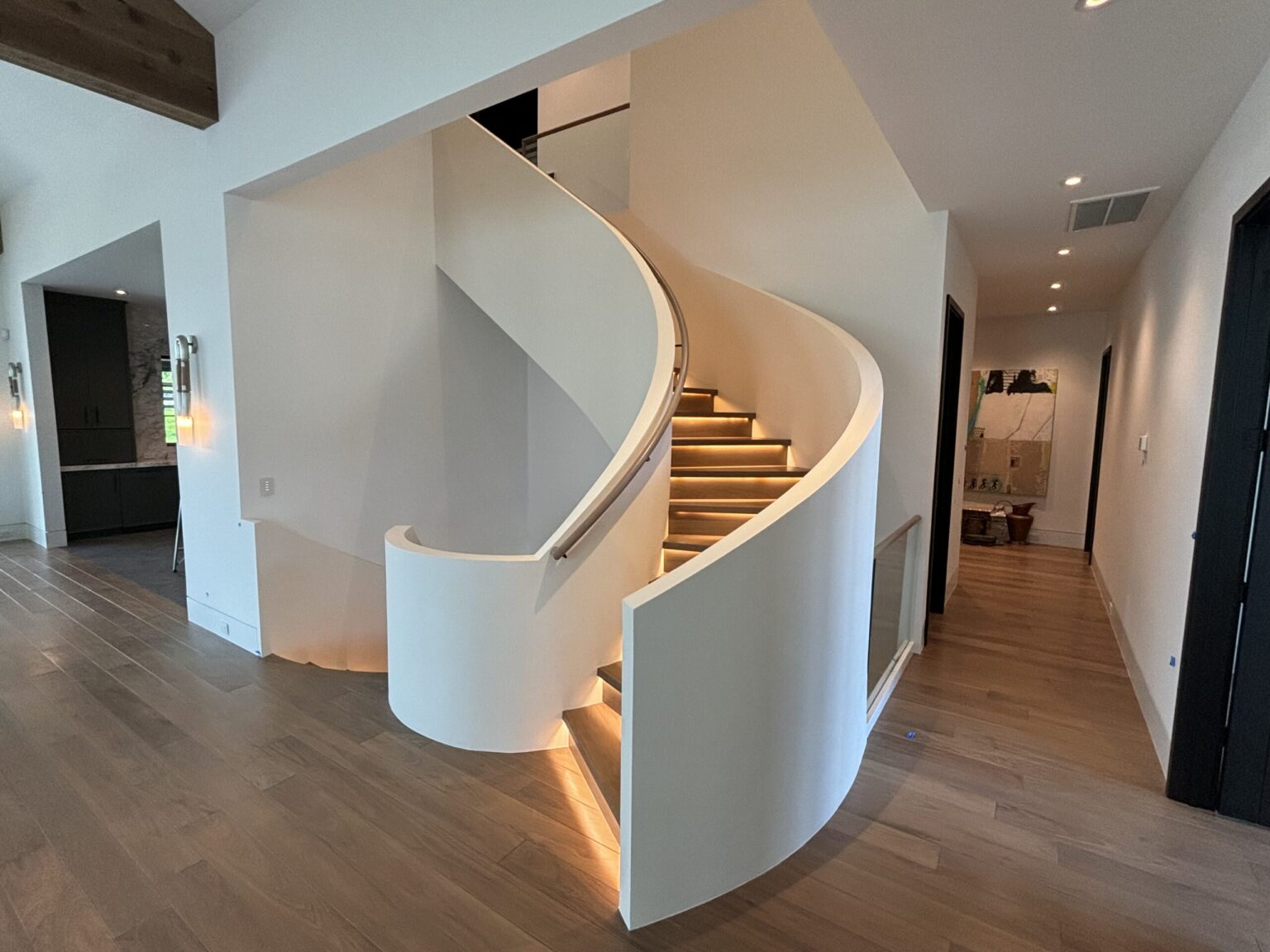
Both systems can support curved designs, though dual-stringer systems offer a smoother structural path for sweeping curves. Mono-stringers used in modern curved staircases require advanced rolling, bending, or segmented fabrication.

Aesthetic Impacts: Which Look Suits Modern Floating Stairs Best?
Minimalism
If the goal is maximum openness and simplicity, the mono-stringer is the clear winner. Its single spine recedes visually, allowing the treads to take center stage.
Symmetry
Dual-stringer designs introduce a structured, balanced look. The parallel lines create a subtle frame around each tread, contributing to a refined architectural rhythm.
Presence vs. Lightness
- Mono-stringer = bold sculptural presence with minimal bulk
- Dual-stringer = quiet strength with more visible structure
Material Pairings
Both systems work beautifully with:
- Open risers
- Wood, steel, or stone treads
- Glass railing systems
- Cable or rod infill
Mono-stringers lean toward ultra-modern aesthetics. Dual-stringers offer a versatile option, allowing for both modern and transitional looks, depending on the choice of tread and railing.
FAQ: Choosing Between Mono-Stringer and Dual-Stringer Modern Floating Stairs
Which system is more stable?
Dual-stringer stairs generally offer greater inherent stiffness due to load distribution. Mono-stringers can achieve the same stability but require elevated engineering precision.
Which is more expensive?
Costs vary widely by span, curves, materials, and finish. Mono-stringers often require more intensive engineering, while dual-stringers may use more material but less specialized fabrication. Actual pricing depends on project specifics.
Which is better for open-concept layouts?
Mono-stringer stairs create the most open visual effect, making them a favorite for high-end modern stairs.
Can both support glass railings?
Yes. Both systems pair exceptionally well with glass, enhancing the illusion of floating.
Which works best for modern curved staircases?
Dual-stringer systems are typically more efficient for curved profiles; however, mono-stringers can be engineered for curves when the design requires a dramatic focal point.
Pros and Cons of Mono and Dual Stringer Stairs at a Glance
Mono-Stringer Pros
- Ultra-minimal modern aesthetic
- Highly customizable
- Strong architectural impact
- Maximizes openness
Mono-Stringer Cons
- More complex engineering
- Potential for more vibration without proper sizing
Dual-Stringer Pros
- Exceptional stability
- Ideal for long spans and curves
- Clean, modern appearance
- Broad design flexibility
Dual-Stringer Cons
- Slightly more visual weight
- Requires careful alignment during installation
Southern Staircase Has the Modern Floating Stair Design for Your Home
Modern staircases are more than functional pathways; they are sculptural expressions of a home or building’s identity. Mono-stringer and dual-stringer floating stairs each bring distinct structural advantages and visual character. When crafted with precision and aligned with the project’s design goals, either can become an unforgettable architectural feature that elevates the entire space.
Get started on your modern floating stairs with our experts today.