
Modern and floating staircases are often described as if they defy gravity. They are carefully engineered structural systems designed to appear minimal while meeting measurable performance standards.
This page clarifies how floating stair systems work, what makes them structurally sound, and how they align with inspection and safety standards. Visual minimalism does not eliminate engineering requirements. It increases them.
A floating staircase is a stair system in which the structural support is concealed. This may include:
The appearance is light. The structure is not.
Every floating stair assembly must comply with staircase building code requirements, including uniform riser height, minimum tread depth, guard spacing, handrail continuity, and load resistance.
The absence of visible support does not change inspection criteria.
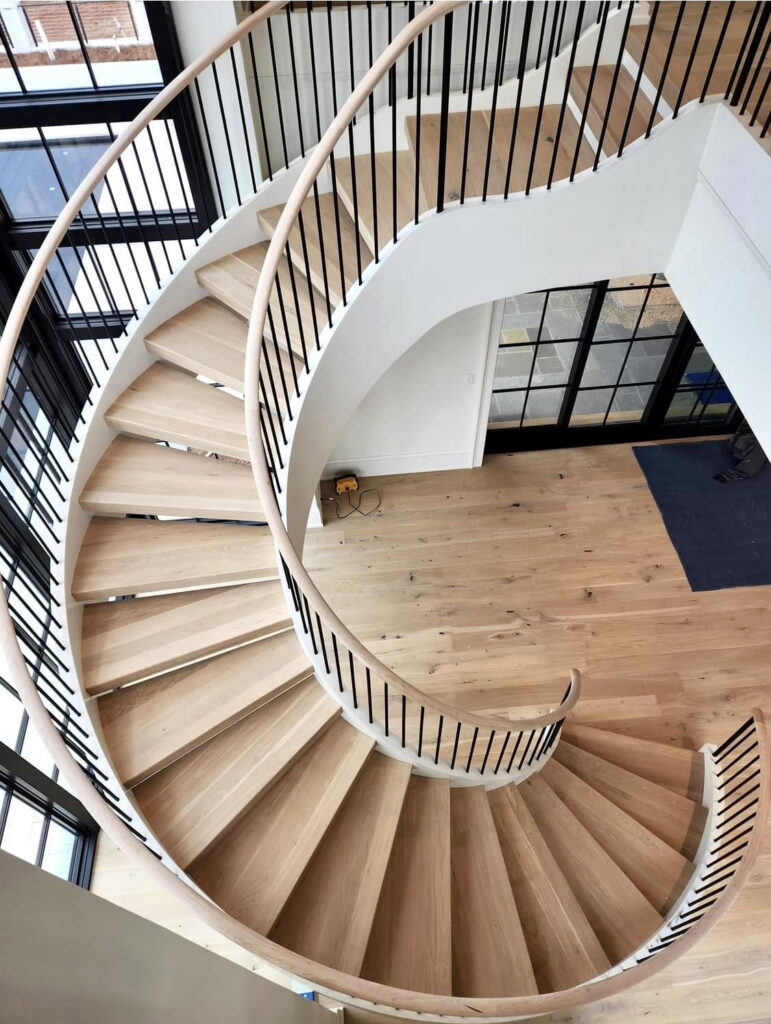
Floating stair systems rely on engineered load transfer. Common structural approaches include:
Cantilevered treads are not attached to drywall. They are connected to structural steel embedded within framing assemblies. Without proper reinforcement, deflection and long-term movement can occur.
Projects that consider these assemblies should review floating staircase safety during early design development. Structural reinforcement must be planned before walls are closed.
Floating staircases are often misunderstood. Several clarifications are essential.
Safety and performance depend on proper integration within the custom staircase design process. Geometry, anchoring, guard systems, and tread connections must be coordinated before fabrication.
Modern appearance does not replace engineering discipline.
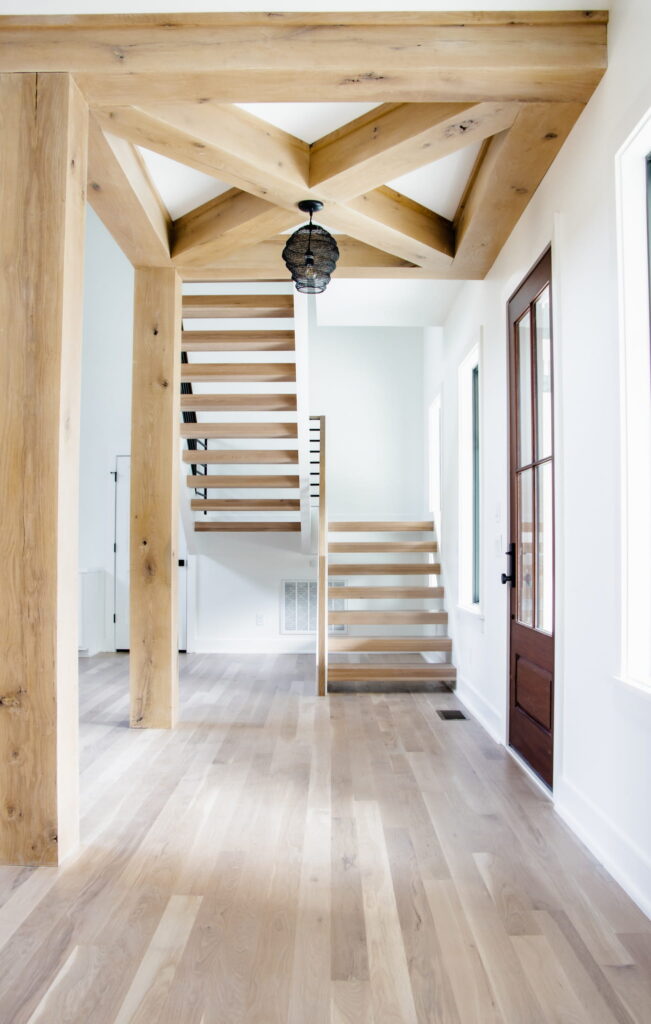
Many floating stair designs incorporate open risers. Open risers must comply with staircase building code requirements regarding maximum opening size to prevent passage of a 4-inch sphere.
Handrails must be continuous and graspable. Guard systems must resist concentrated loads. Tread surfaces must meet slip-resistance requirements.
Inspection is based on measurable criteria, not visual style.
Floating stair systems commonly incorporate:
Material coordination must occur early. Structural steel thickness, wood species stability, and guard attachment methods affect long-term performance.
A detailed comparison of structural components and finish systems is addressed within modern staircase materials and finishes. Material decisions directly influence deflection, durability, and inspection outcomes.
Environmental conditions influence stair performance. In Southeastern climates, humidity and seasonal expansion affect wood movement and joint stability.
These Southern staircase design considerations impact species selection, fastening methods, and finish systems. Wood treads must be milled and installed with allowance for movement.
Floating systems are precise assemblies. The environmental movement must be anticipated.
Floating staircases require early coordination. Wall reinforcement, steel placement, and load transfer paths must be addressed before framing is finalized.
Late-stage design changes often require structural modification. Proper sequencing within the custom staircase design process reduces rework and inspection delays.
Structural preparation determines whether the final installation performs as intended.
Modern floating staircases are subject to the same staircase building code requirements as traditional stair systems. Inspectors evaluate:
Projects that incorporate concealed steel or cantilevered assemblies must satisfy floating staircase safety considerations through measurable structural detailing.
A minimalist appearance does not change the structural obligation.
Modern and floating staircases are engineered systems. When structural detailing, material coordination, and code compliance are addressed early, the result is a stair assembly that performs reliably while maintaining architectural clarity.
Floating stair systems require structural planning before aesthetic decisions are finalized. Southern Staircase reviews project dimensions, framing conditions, and structural feasibility before fabrication. Submit your drawings or request an evaluation to confirm alignment with staircase building code requirements and floating staircase safety considerations.

Q: What makes a staircase “floating”?
A: The structural support is concealed, such as hidden steel stringers, cantilevered steel arms, or a mono-stringer beneath open treads, so the stairs appear to hover.
Q: Are modern floating staircases safe?
A: Yes, when properly engineered and installed. Safety comes from correct load transfer, structural anchorage, and properly designed guards and handrails.
Q: Do floating staircases have to meet building code?
A: Yes. They must meet the same measurable requirements as any staircase, including uniform risers, tread depth, guard spacing, handrail continuity, and load resistance.
Q: Can floating stairs have open risers, and are open risers code-compliant?
A: They can, but open risers must meet the maximum opening rule to prevent a 4-inch sphere from passing through, and guards and handrails must still meet code.
Q: What needs to happen early in the process to avoid problems?
A: Structural planning and coordination before walls are closed, including wall reinforcement, steel placement, and confirming load paths, because late changes can trigger major rework and inspection delays.
Want the modern floating look without guesswork? Get your framing conditions and structural feasibility reviewed early so your staircase is clean, code-aligned, and built to perform.
HAVE A PROJECT IN MIND?

We partner with designers, builders, and architects to design and build custom stair systems for interior and exterior spaces.
©2026 Southern Staircase | All Rights Reserved.