Material selection in a staircase affects structural performance, long-term durability, maintenance requirements, and inspection outcomes. Treads, stringers, guard systems, and finishes must function as an integrated assembly.
Below are the staircase materials, railing systems, and finishes we offer homeowners, designers, and architects.
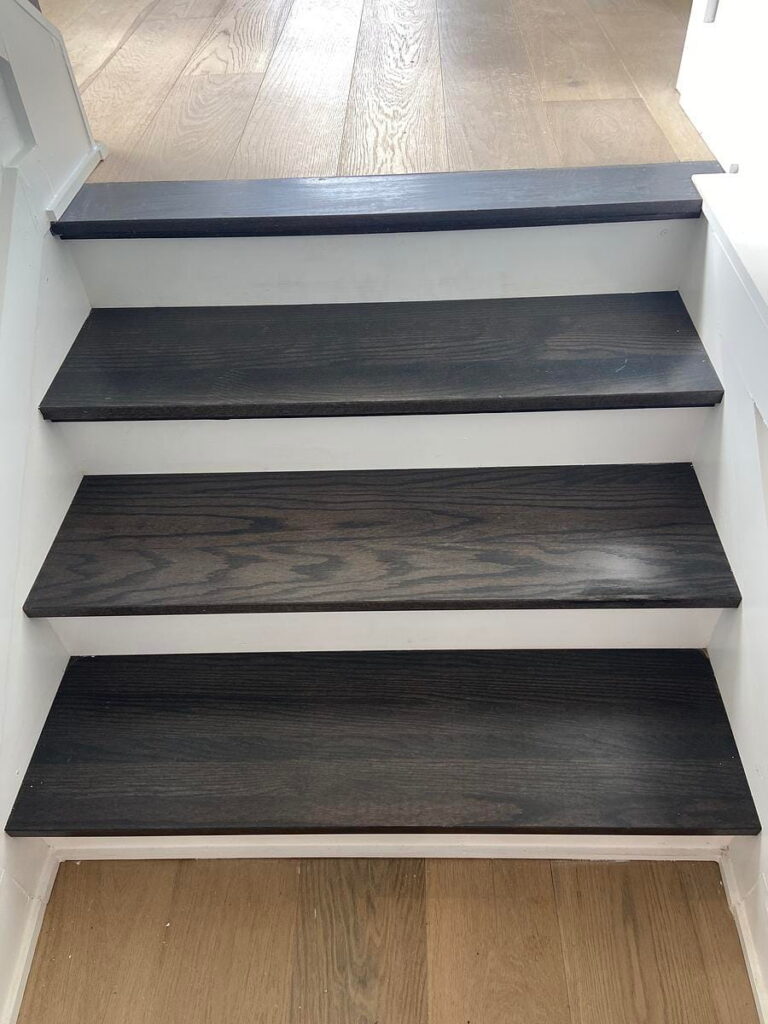
Hardwood remains one of the most common tread materials in custom stair construction. Species selection affects density, wear resistance, dimensional stability, and visual grain character.
Common species include:
White oak offers strong dimensional stability and wear resistance. Walnut provides a darker, softer profile. Maple delivers a clean surface but can show wear more quickly in high-traffic areas.
Regional humidity must be considered during selection. In Southeastern climates, wood expansion and contraction require careful milling and acclimation. Material movement must be anticipated before installation.
Cable railing systems reduce visual mass while maintaining safety compliance. The stainless steel cable is tensioned between posts to limit deflection.
Metal guard systems may include:
Cable spacing must comply with staircase building code requirements. Tension must be maintained over time to prevent sagging.
Metal systems can be powder-coated, painted, or left in a stainless finish. Environmental exposure affects long-term appearance and maintenance.

Steel is commonly used in modern stair systems for both visible and concealed structural support.
Options include:
Steel thickness and weld quality directly affect deflection and vibration. Powder coating provides durable surface protection, while painted finishes require more maintenance over time.
Steel systems must comply with staircase building code requirements regarding load resistance and anchorage. Guard systems attached to steel framing must also meet concentrated load standards.
Structural steel is not decorative trim. It is a load-bearing component.
Open-riser stair systems are common in modern design. They allow light to pass through and reduce visual weight.
Open risers must comply with staircase building code requirements that limit the allowable opening size. When combined with concealed structural support, these systems also require alignment with floating staircase safety considerations.
Cantilevered tread systems require concealed steel reinforcement. The appearance may be minimal. The structural demands are not.
Proper integration of structure and finish is addressed during the custom staircase design process to prevent movement, deflection, or finish separation.
Glass guards are used to preserve sightlines and create minimal visual interruption.
Typical specifications include:
Glass must meet impact and load requirements under the staircase building code. Attachment methods are critical. Improper anchorage can introduce movement or long-term stress.
Laminated glass adds redundancy in the event of breakage. Designers should coordinate guard selection during the custom staircase design process to ensure structural backing is incorporated into framing.
Glass is precise.
Tolerance errors are visible.

Finishes protect materials and influence maintenance cycles.
Wood finishes may include:
Steel finishes typically include:
Oil-based finishes provide durability but may amber over time. Water-based finishes maintain lighter color tones. Hardwax oils allow spot repair but require periodic maintenance.
The finish selection should align with traffic, lighting, and environmental conditions.
Detailed evaluation of wood and steel combinations is addressed within modern staircase materials and finishes to ensure compatibility between structure and appearance.
When selecting staircase materials and railing systems, decision-stage stakeholders should evaluate:
Material selection must occur before shop drawings are finalized. Changes after fabrication can affect anchorage, tolerances, and inspection.
Material choice affects more than appearance. It influences structural backing, framing requirements, and sequencing.
Designers and architects should coordinate:
These Southern staircase design considerations ensure the stair system performs within regional climate conditions and construction practices.
Material clarity reduces construction risk.
Staircase materials, railings, and finishes must operate as a unified structural assembly. When engineering requirements, environmental conditions, and code standards are addressed together, the resulting stair system performs predictably over time.
Material decisions influence structural performance and inspection outcomes. Southern Staircase reviews tread species, guard systems, structural steel, and finish compatibility before fabrication begins. Submit project details or request an evaluation to confirm alignment with staircase building code requirements and Southern staircase design considerations.
Q: What hardwood species are most common for stair treads, and how do I choose?
A: White oak, red oak, walnut, maple, and hickory are common. Choose based on wear resistance, stability, and the look you want.
Q: Are cable railings durable and code-compliant?
A: Yes, when spacing meets code, and the stainless cables stay properly tensioned to prevent sagging over time.
Q: Why do modern staircases use steel stringers or concealed steel framing?
A: Steel provides the load-bearing support for many modern designs, and thickness plus weld quality help control deflection and vibration.
Q: Are open risers and floating stair assemblies allowed by code?
A: They can be, as long as riser openings stay within code limits and the concealed structural reinforcement is engineered and installed correctly.
Q: What finish should I use for wood treads and for steel components?
A: Wood options include oil-based poly, water-based poly, and hard wax oils. Steel is often powder-coated or painted. The best choice depends on traffic, lighting, and maintenance preferences.
Want the right materials from day one? Lock in tread species, railing type, and finish system early so your staircase looks sharp, installs cleanly, and performs long-term.
HAVE A PROJECT IN MIND?

We partner with designers, builders, and architects to design and build custom stair systems for interior and exterior spaces.
©2026 Southern Staircase | All Rights Reserved.