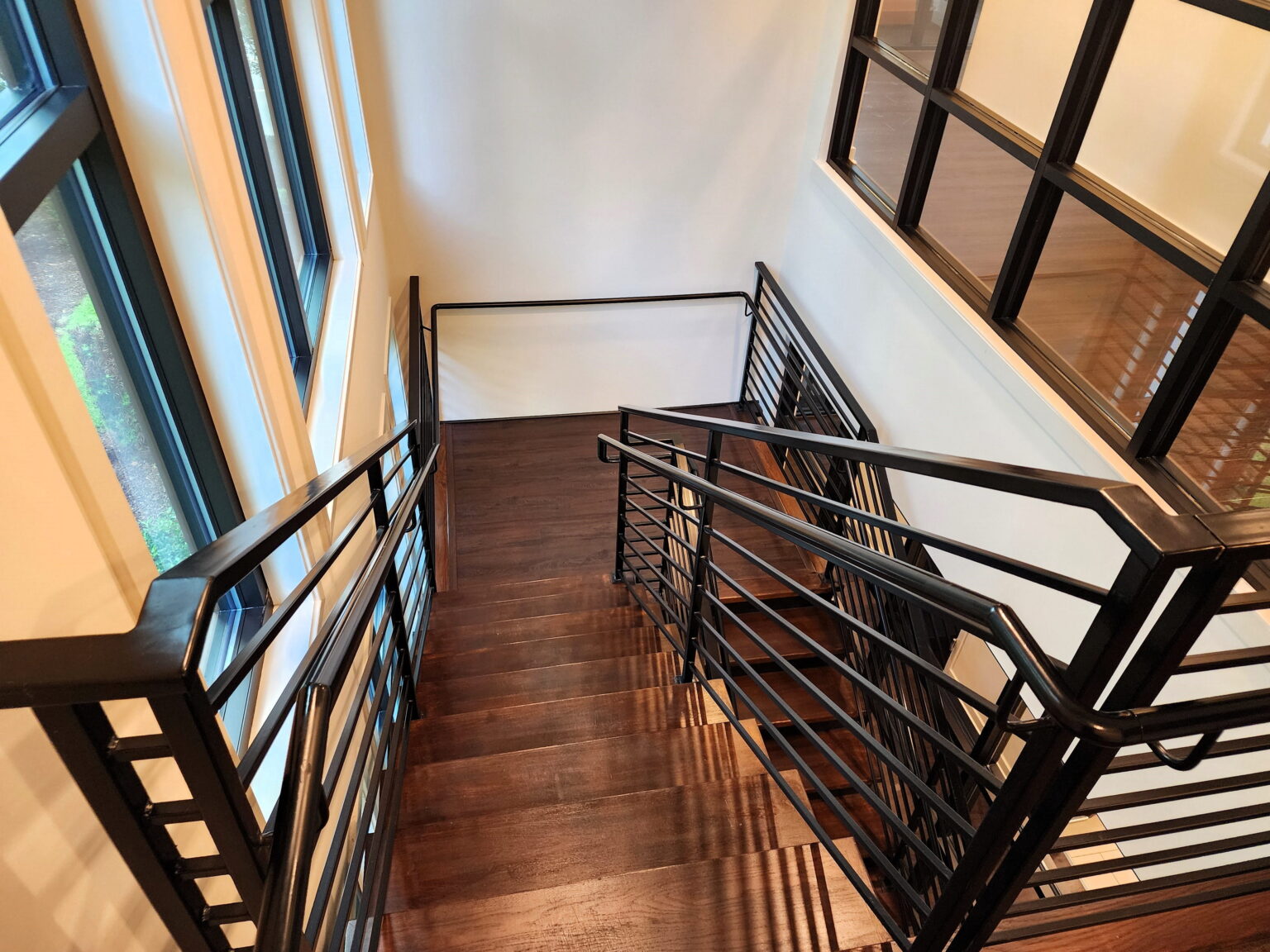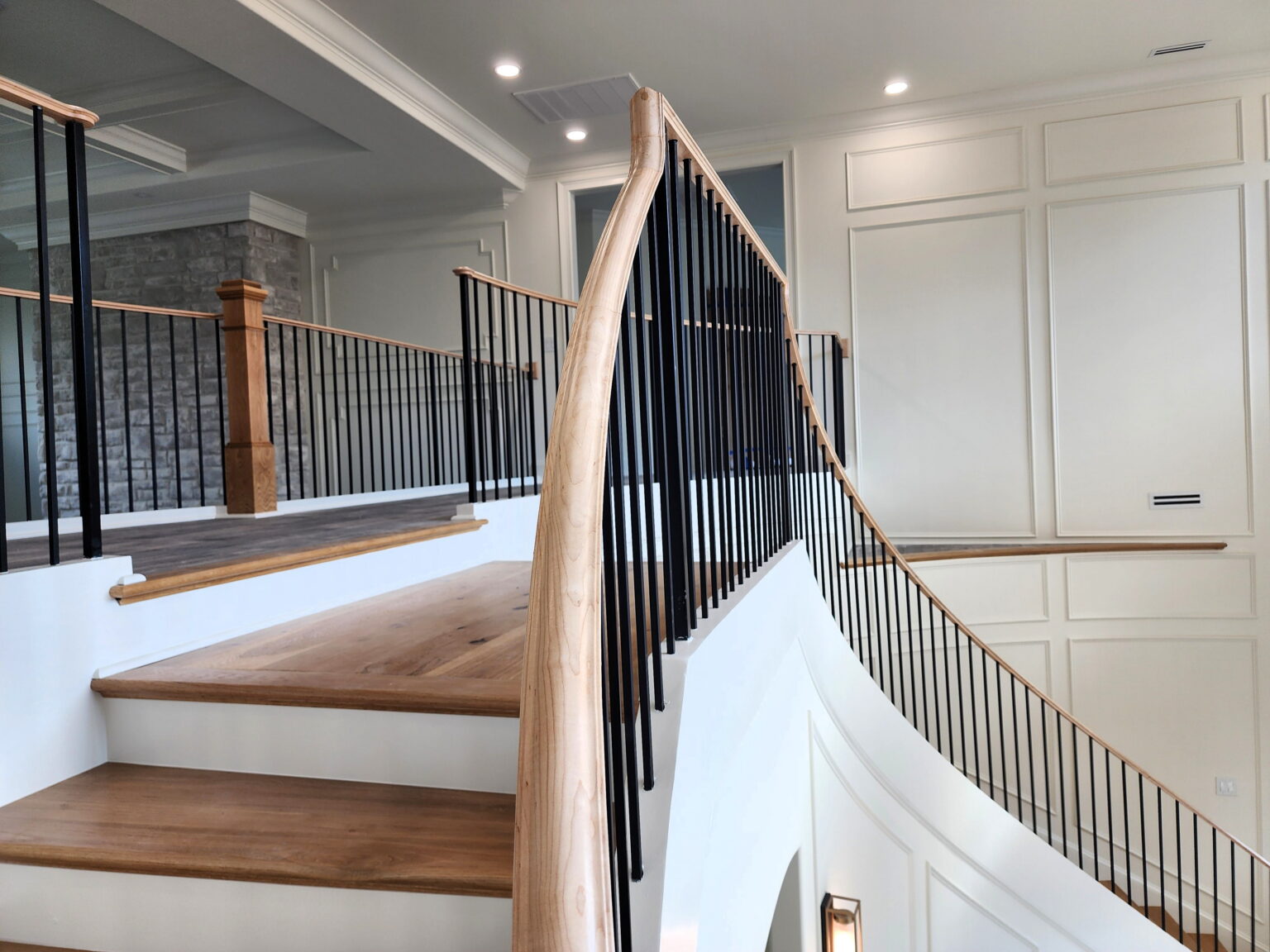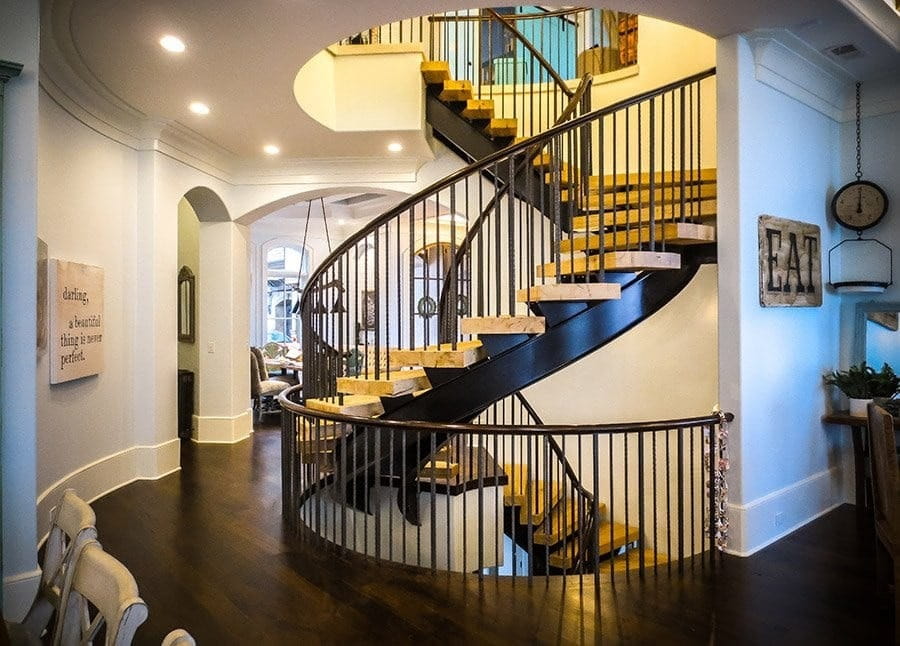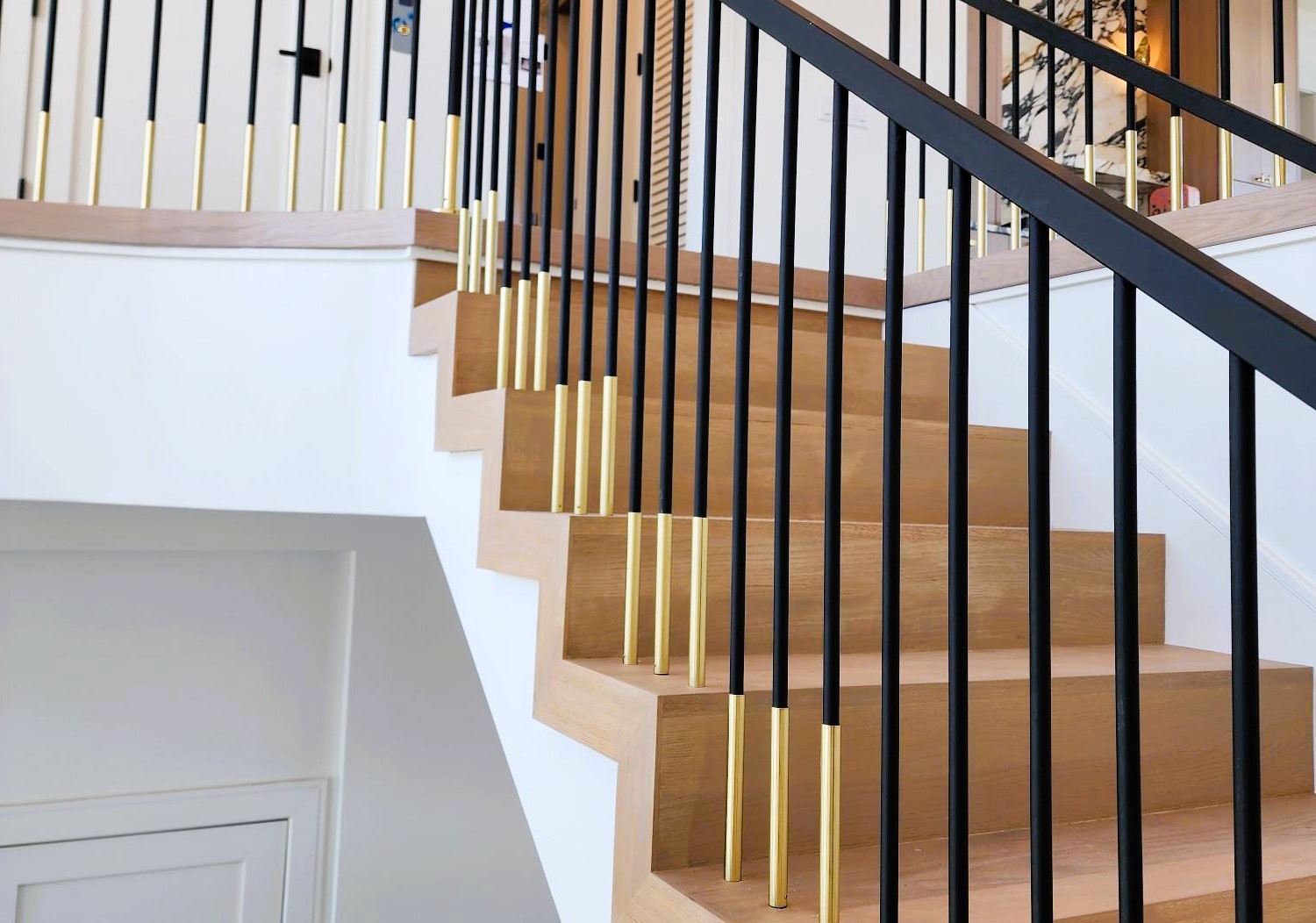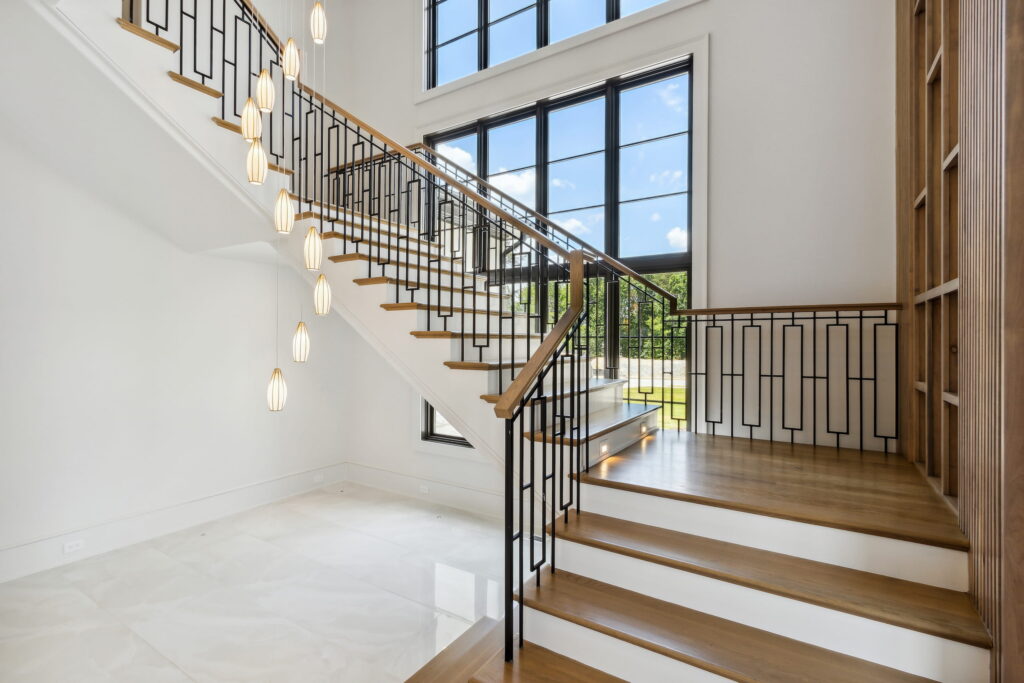
A custom modern staircase is often approached first as a visual statement and second as a structural system. That order creates risk. A staircase must resolve geometry, load transfer, anchorage, inspection criteria, and material movement before it becomes an architectural feature.
Whether the project involves a complete remodel or a new build, successful stair planning follows a disciplined framework. Our technical guide, created by our stair designers and builders, outlines how to align structure, materials, safety, and architectural intent from the beginning.
For an Impressive Custom Modern Staircase: Start with Geometry, Not Aesthetics
Every stair system begins with the floor-to-floor height and available footprint. These two dimensions determine stair tread depth, riser count, run length, and landing placement.
Uniform riser height is mandatory. Variations beyond code tolerance can fail inspection and create long-term usability concerns. Headroom clearance must also be calculated early to avoid framing conflicts.
Staircase building code requirements govern these calculations. Design flexibility exists, but only within measurable limits.
When geometry is confirmed first, design options remain realistic.
Determine Structural Support Strategy Early
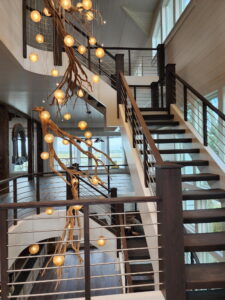
Modern staircases often minimize visible support. That does not reduce structural demand. It increases it.
Structural strategies may include:
- Concealed steel stringers
- Mono-stringer assemblies
- Cantilevered steel supports
- Integrated wall reinforcement
Floating systems in particular require early structural coordination. Wall reinforcement must be installed before drywall. Steel embedment must align precisely with tread placement.
Projects considering open-riser or cantilevered systems should review floating staircase safety considerations during conceptual planning. Structural concealment must never compromise anchorage or load resistance.
Engineering clarity prevents mid-project redesign.
Select Custom Modern Staircase Materials Based on Performance, Not Trend
Your decision on stair materials and finishes influences structural behavior, finish durability, and maintenance cycles.
Hardwood species vary in density and movement. Steel thickness influences deflection. Glass guards require precise anchorage. Cable systems require long-term tension maintenance.
A detailed breakdown of species, metals, and guard systems is outlined within modern staircase materials and finishes. Material compatibility must be evaluated before fabrication drawings are released.
Regional environmental conditions also matter. In Southeastern homes, humidity and seasonal expansion influence wood movement and joint performance. These design considerations affect fastening systems, finish selection, and installation timing.
Modern staircase materials and finishes are structural participants, not surface treatments.
The Tradeoff Between Minimalism and Engineering in a Custom Modern Staircase
The more visually minimal a stair becomes, the more precise its structural detailing must be.
Cantilevered treads require concealed steel. Glass guards require engineered anchorage. Mono-stringer systems require deflection control.
Floating stair assemblies should be evaluated against floating staircase safety considerations before aesthetic direction is finalized. Deflection, vibration, and anchorage must be engineered before finishes are selected.
Minimal design increases structural responsibility.
Address Guard Systems and Safety Early
Guard systems are frequently treated as secondary details in a custom modern staircase. They are not.
Guard height, infill spacing, and load resistance must comply with staircase building code requirements. Glass, cable, and metal stair systems each introduce different structural demands.
Open-riser designs must comply with sphere-passage limitations. Handrails must maintain continuity and graspability. Modern appearance does not modify inspection criteria.
Plan for Inspection and Long-Term Performance
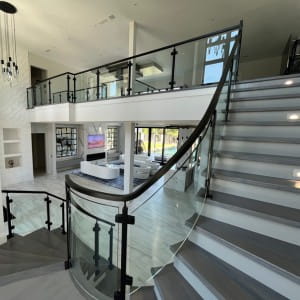
A stair must perform on day one and twenty years later.
Inspection criteria evaluate:
- Riser uniformity
- Tread depth
- Guard spacing
- Handrail continuity
- Load resistance
Long-term performance also depends on material stability, fastening systems, and environmental response.
When geometry, structure, materials, and compliance are addressed in sequence, the stair performs predictably over time. The custom staircase design process includes coordination checkpoints to verify structural backing and dimensional alignment before fabrication begins.
Integrate Your Custom Modern Staircase into the Remodel Sequence
In remodel projects, stair design cannot occur in isolation. It must be aligned with:
- Existing framing conditions
- Ceiling and floor transitions
- Mechanical and electrical routing
- Finish floor elevations
- Guard attachment backing
Late-stage changes to tread thickness, guard style, or structural support often require reengineering. Early integration reduces cost and inspection risk.
A Structured Planning Framework
A reliable stair planning sequence includes:
- Dimensional verification
- Code-based geometry calculation
- Structural support determination
- Material compatibility review
- Guard system coordination
- Fabrication detailing
- Installation sequencing
Following a defined custom modern staircase design process ensures that design ambition aligns with structural feasibility.
The result is not simply a visually modern staircase. It is a structurally integrated architectural system.
Modern staircases require more discipline, not less. Structural planning must precede aesthetic preference. Material selection must account for movement and durability. Code compliance must guide geometry.
When these elements are addressed early, the stairs become both a functional circulation system and a durable architectural feature.
In stair construction, clarity at the beginning determines performance at the end.
Common Questions on Custom Modern Staircase Planning
What makes a modern staircase structurally different from a traditional staircase?
Modern staircases often conceal structural support, which increases engineering complexity. Systems such as mono-stringers and cantilevered treads require reinforced anchoring and precise load transfer to meet staircase building code requirements.
Are floating staircases safe?
Floating staircases are safe when engineered and installed correctly. Structural reinforcement, anchorage methods, and compliance with safety considerations all determine the long-term performance of floating staircases.
Do open riser staircases meet building code?
Yes, open riser staircases can meet code if the riser opening complies with the maximum allowable sphere passage requirement and all other staircase building code requirements are satisfied.
How early should a staircase be designed in a remodel?
Staircases should be evaluated during initial layout planning. Structural backing, headroom clearance, and guard anchorage must be coordinated before framing is finalized during the custom staircase design process.
What materials are best for a modern staircase?
Material selection depends on structural span, traffic levels, environmental conditions, and aesthetic goals. A detailed breakdown of compatible systems is outlined within modern staircase materials and finishes.
Get Started Today with Our Stair Builders
Are you ready to plan your custom modern staircase for functionality and aesthetics? Partner with a stair company that holds a team of seasoned stair builders and designers.
Get in touch with our team of stair experts.